






 Portuguese
  Spanish




Mayors of Arapongas and Londrina Join Forces to Invest R$ 12 Million in New Paved Route, Creating a Practical Alternative to Tolls in the Northern Region of Paraná.
The cities of Arapongas and Londrina, located in the northern region of Paraná, have taken a strategic step to provide drivers with a new route option, without the need to go through traditional tolls.
The city halls signed, on June 20, 2025, an agreement to pave a stretch of 17 kilometers, integrating the Araguari Road and the Santa Maria Road.
The initiative, which will require a joint investment of R$ 12 million, arises in the context of the resumption of toll collections in the region, motivating the search for more economical routes for the population.
-
Scientists warn that melting ice is triggering an alarming chemical transformation in preserved areas, and the first signs are already concerning researchers worldwide.

-
China placed 198 robotic legs under a 7,600-ton school and made the building walk 62 meters in 18 days, rotating the historic structure as if a concrete structure had gained feet to escape demolition.

-
Distributor confirms the premiere of ‘Dark Horse’, Bolsonaro’s film, in 650 cinemas with 99% of copies dubbed.
-
9-year-old boy who could only hold a plank for 6 minutes in physical education class trained alone for 6 months, without needing encouragement from his parents, until he broke the world children’s record with 61 minutes and 5 seconds.


Paving the Roads: Project Details
The paving project includes two distinct sections.
The first, called Araguari Road, belongs to the municipality of Arapongas and extends for 12 kilometers.
This segment will receive an investment of R$ 7 million, allocated for the application of Hot Mix Asphalt (CQT), a technology known for its durability.
The second section, made up of Santa Maria Road and Ponto Mineiro Road, is the responsibility of the City Hall of Londrina and consists of 5 kilometers that are currently still unpaved.
An investment of R$ 5 million is planned for the execution of the paving works for this segment.
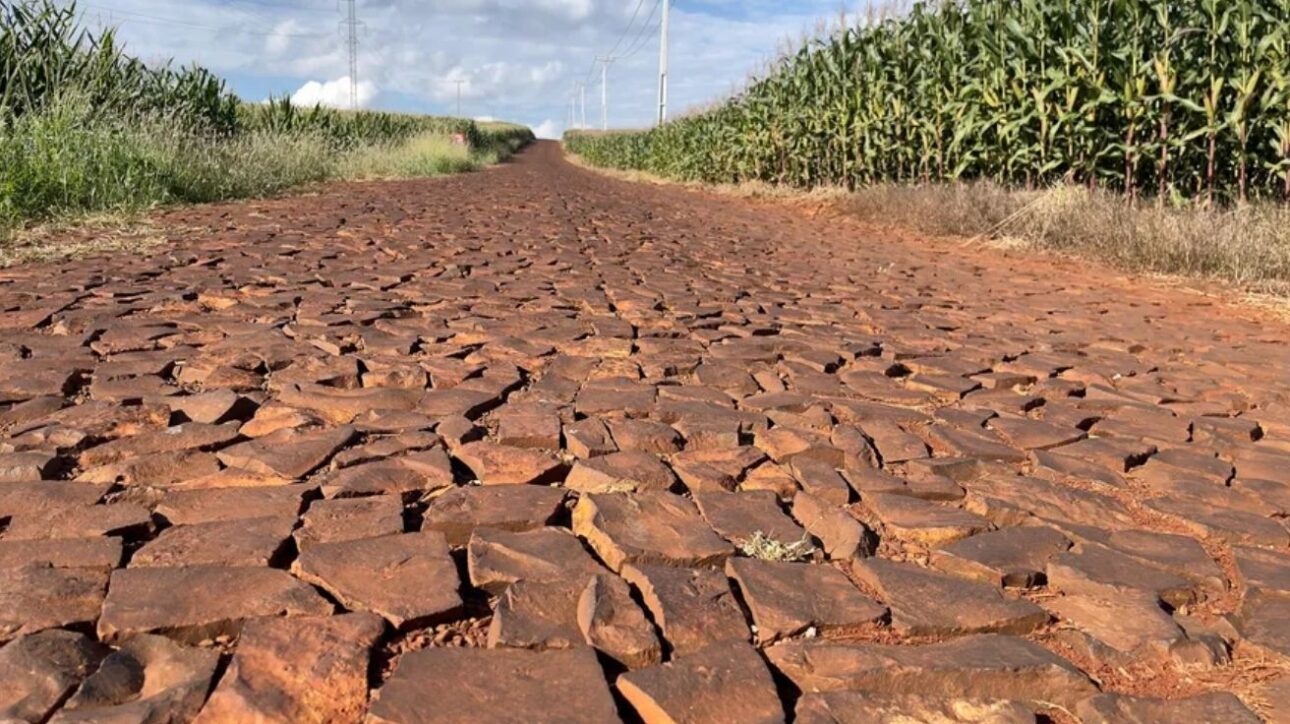
Partnership Between Municipalities Enables Alternative Route to Tolls
The commitment between the city halls was formalized in a ceremony attended by Sérgio Onofre, General Superintendent of Support for Municipalities of Paraná.
He was responsible for mediating the release of the state funds needed to enable the project.
“This is a project that not only connects Arapongas to Londrina but also establishes a strategic connection with Apucarana, Cambé, Rolândia, and several neighboring cities.
The entire northern region of Paraná is expected to benefit from the integration of these routes,” explained Onofre during the announcement.
Economic and Social Benefits for Residents and Drivers
According to the municipal administrations, the main objective is to provide an alternative that allows reducing costs for those traveling between Arapongas, Londrina, and nearby cities, especially in light of the imminent reactivation of toll plazas.
The topic of tolls has come back into focus after the announcement of the resumption of road concessions, raising concerns among drivers, rural producers, students, business owners, and other users of state highways.
According to the mayor of Arapongas, Rafael Cita, the start of the works still depends on a schedule that is in the process of being developed.
He emphasized that the release of resources and the legal procedures require detailed planning to ensure the execution of the project within the established quality standards.
“Paving these roads represents an important advancement in mobility and the local economy.
We will work to start the services as soon as possible, respecting all the planned stages,” said Cita.
Paths of Integration: Plan Enhances Access Without Toll Charges
In Londrina, the project is part of the Paths of Integration plan, an initiative aimed at bringing the main municipalities in northern Paraná closer together.
As emphasized by Mayor Tiago Amaral, the proposal aims to facilitate the movement of workers, students, rural producers, and visitors, providing more agility and safety in transportation.
The challenges of mobility between cities are longstanding, and our goal is precisely to expand access possibilities for the entire region,” Amaral pointed out, reinforcing the positive impact of the paving for different economic sectors.

Expected Impacts on Traffic and Regional Economy
The implementation of the works should also promote indirect benefits, such as encouraging the flow of agricultural and industrial production, strengthening regional tourism, and increasing the value of properties adjacent to the new paved roads.
The expectation is that with paving, the flow of vehicles will increase significantly, providing time and money savings for drivers who until now needed to go through toll plazas to access the main highway corridor in the region.
According to data from the Association of Municipalities of Northern Paraná (Amunop), around 80,000 vehicles travel monthly between Londrina and Arapongas, a figure that is expected to grow with the availability of toll-free alternative routes.
The initiative by the city halls aims, therefore, to meet a latent demand from the population and stimulate local economic development, with the expectation of attracting new investments and improving the competitiveness of the companies established in the region.
Technology and Challenges for Paving Toll-Free Route
Another relevant aspect of the project is the choice of Hot Mix Asphalt (CQT) for the asphalt covering, a technology that provides greater durability for the paving and less need for frequent maintenance.
This represents not only savings in the medium and long term but also fewer inconveniences for users in the future.
It is worth noting that despite the enthusiasm of the administrations, the execution of the works depends on factors such as weather conditions, bidding processes, and the release of environmental licenses.
The city halls of Arapongas and Londrina informed that all stages will strictly follow legal and technical requirements, prioritizing the safety and well-being of residents.
Regional Cooperation and the Future of Alternative Toll-Free Routes
With the paving of the Araguari and Santa Maria roads, access between the municipalities is expected to be facilitated, creating a efficient and economical alternative in light of the return of toll charges.
The joint action of the city halls also reinforces the importance of regional cooperation to face historical mobility challenges in Paraná.
In this context, the question remains: could the creation of alternative routes and the union of municipalities to circumvent tolls become a trend in other regions of Brazil?


