





 Portuguese
 Spanish


Setovi Mining’s plan calls for six years of work at the former Machado Mine in Catas Altas. Residents fear impacts on waterfalls and tourism, while the state prosecutor’s office seeks details about the proposed environmental reclamation
A plan to reclaim the former Machado Mine in Catas Altas, Minas Gerais, is fueling a dispute between residents and a mining company. The proposal calls for moving about 3.5 million cubic meters of material, including iron ore, over a period of up to six years, and is facing questions from the state prosecutor’s office.
Machado Mine plan calls for ore removal and heavy machinery
Setovi Mining’s proposal will be discussed Thursday (the 19th) at 1 p.m. during a meeting of Catas Altas’ Municipal Environmental Protection Council (Codema), at the city council building.
The document is a Plan for the Recovery of Degraded Areas (PRAD), a tool used to define measures for restoring land damaged by activities that caused environmental harm.
-
Phoenix Metals discovers 169 meters of gold and copper at a former Canadian mine, testing open-pit potential

-
Australian miner discovers rare earths in Bahia, Brazil, with concentrations up to 16.6%, and identifies a mineralized corridor over 2.5 kilometers

-
U.S. to ban Chinese rare earths in Pentagon products from Jan. 1, but lacks alternatives
-
African nation overtakes South Africa to become world’s third-largest iron ore exporter after shipping more than 5 million metric tons in one month


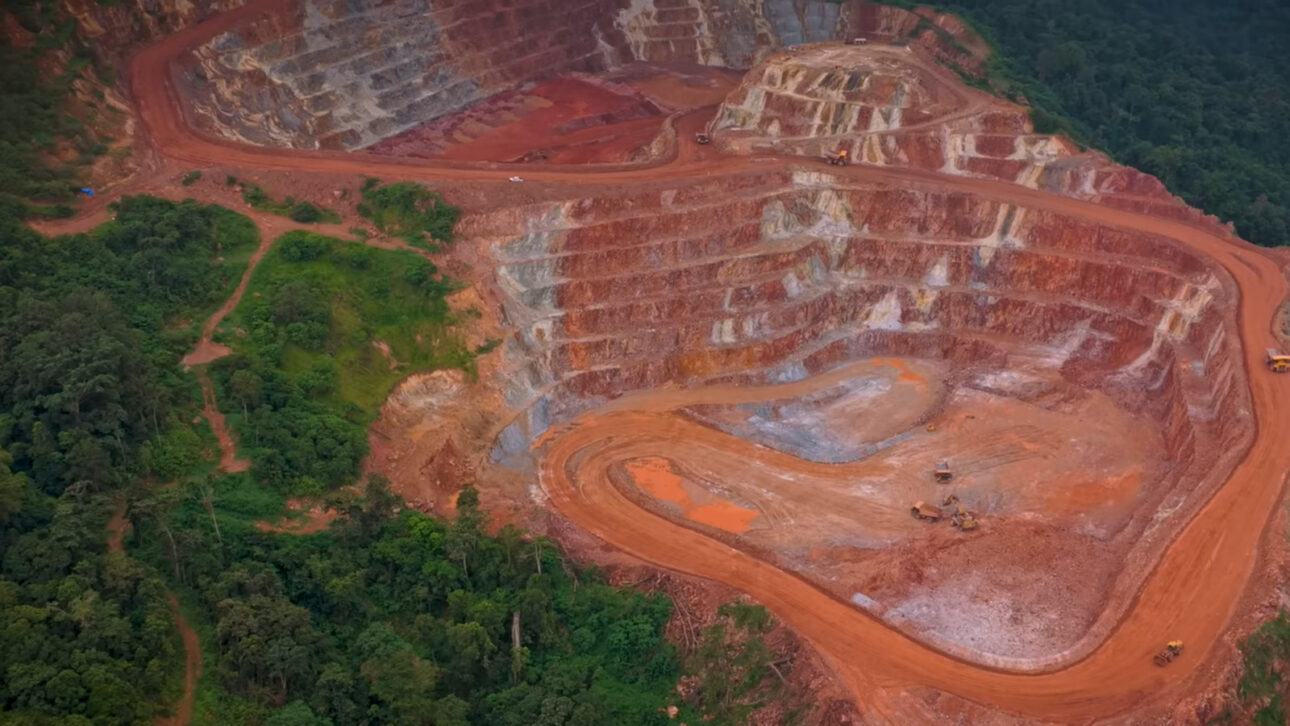
However, the volume of material slated to be moved has raised questions among residents and environmental groups in the Serra do Caraça region.
The plan includes moving 781,000 cubic meters of iron formation, a material associated with the presence of iron ore, as well as another 2.77 million cubic meters of rock.
These materials include shale, phyllite and quartzite. Together, the volumes total about 3.55 million cubic meters, which would be moved over an estimated period of five and a half to six years.
To carry out the work, the proposal calls for trucks, loaders and a mobile screening circuit, equipment used to separate materials by size.
The presence of screens, a product stockpile area and production targets has also prompted questions about whether the extracted ore could be put to commercial use.
Residents argue that the work should be limited to stabilizing the slopes, which are inclined earth or rock structures that must meet safety requirements.
State prosecutor’s office seeks explanations about volumes and risks to water
The Minas Gerais State Prosecutor’s Office (MPMG) is monitoring the process and has asked Setovi for technical explanations of why such a large volume of material must be moved.
Its requests include justifications for the proposed volumes, an assessment of alternatives that would involve less earthmoving, and information about the planned destination of the ore and other materials.
Another concern is water resources near the former mine, particularly the streams that feed Santa and Maquiné waterfalls.
A dossier prepared by residents points to a lack of specific hydrogeological studies, a survey of springs and flow-rate measurements in the plan submitted.
Hydrogeological studies help assess how groundwater behaves and how it relates to surface waterways.
The proposal sets a minimum 50-meter buffer from waterways. Residents question whether that distance would be enough to prevent environmental impacts.
In June, an inspection by the Environmental Police did not identify any recent mining activity at the site. But a one-time inspection does not replace specific studies or systematic monitoring of the water.
The MPMG referred the case to its Environmental Enforcement Coordination Office to assess reports of reduced flow at the waterfalls. It also asked its Geoprocessing Unit to examine satellite images.
Environmental audit also faces scrutiny
The project’s technical review is another matter being monitored by the Public Prosecutor’s Office of Minas Gerais (MPMG).
Germinar Engenharia Ambiental issued a favorable opinion on the Plan for the Recovery of Degraded Areas (PRAD), subject to conditions. In 2022, the company had also prepared a report on slope stability for the Catas Altas city government.
In light of this history, the MPMG requested documents proving the audit’s independence and information about measures taken to prevent potential conflicts of interest.
The agency is still reviewing the company’s contract.
The Public Prosecutor’s Office also requested information from the city government and Codema about previous studies, public participation, and procedures related to landscape protection.
The Municipal Council for Cultural Heritage (Compac) was asked to assess issues related to preserving the mountain range’s landscape and cultural heritage.
2025 agreement requires reclamation and a future conservation unit
The former Machado Mine has been inactive for about 10 years. The area has suffered degradation, including landslides and sediment buildup in waterways, worsened by the 2022 rains.
In 2025, a court-approved agreement between the MPMG, Setovi, and the city government established an obligation to reclaim the area.
After the work is completed, the land must be donated to the municipality to establish a fully protected conservation unit.
The agreement allows ore to be removed only when essential to the reclamation work, and subject to the required environmental permits and licenses.
This means the document does not authorize mineral extraction for commercial purposes.
The Public Prosecutor’s Office itself clarified that it had not approved the PRAD and does not have the authority to issue environmental licenses.
Residents want the plan rejected at this Thursday’s meeting
The Salve a Santa, Salve Catas Altas movement organized a petition asking Codema to reject the proposal submitted by the mining company.
Clóvis Augusto, a member of the Movement for Popular Sovereignty in Mining (MAM), says the demand is to reclaim the slopes without allowing mining.
The movements have also voiced concern about possible restrictions on access to waterfalls, as well as the effects of dust, noise, traffic, and changes to the landscape on tourism.
The plan was presented to Codema in July but has not yet received final approval.
If it is rejected, Setovi will still be required to reclaim the area and must revise the project and submit it again.
The mining company had not responded to questions from Brasil de Fato MG by the time the original article was published.
Article data and information: Brasil de Fato.


