






 Portuguese
  Spanish


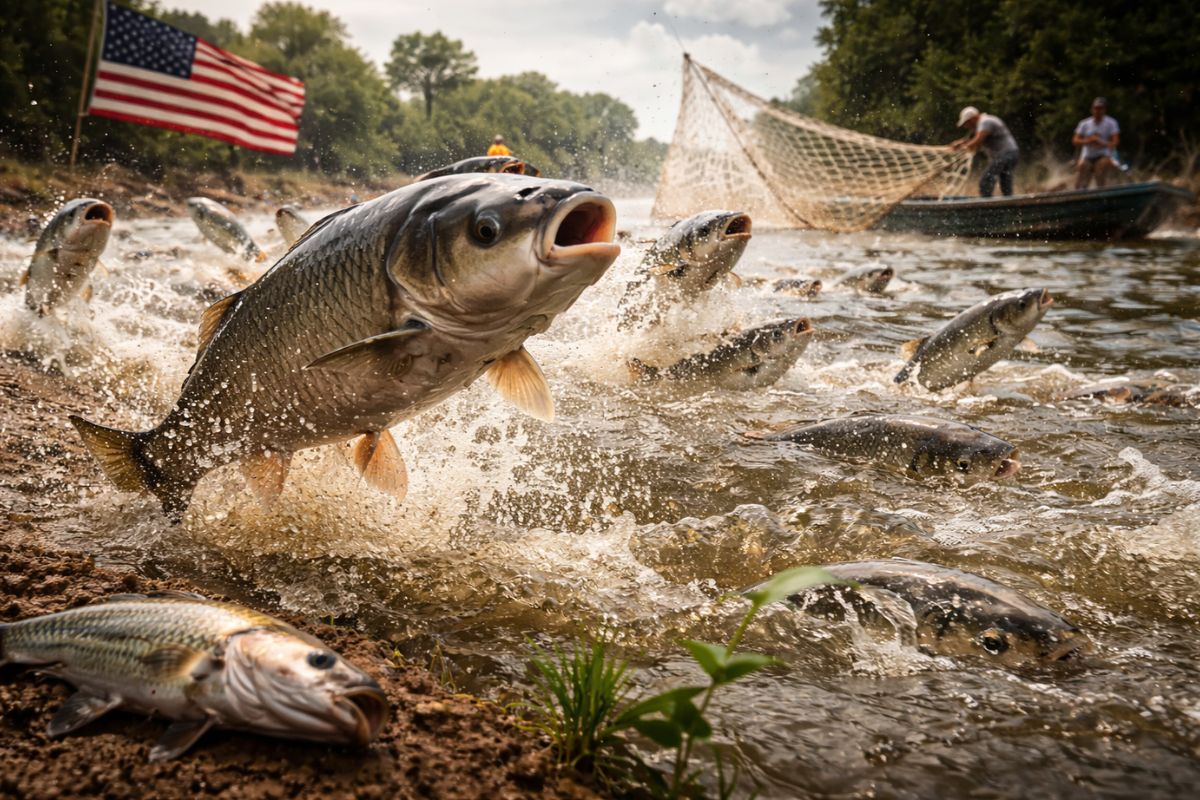


In The United States, Invasive Carp Introduced In The 1970s Escaped From Fish Farms And Sewage Treatment Plants, Colonized The Mississippi River Basin In The 1980s, And Now Make Up 95% Of The Biomass In Some Areas. They Filter Plankton, Eat Mollusks, Cloud Rivers, And Threaten The Great Lakes With Freshwater Fishing
In The Tennessee Hills, A Classic Case Of Invasive Species Has Already Become The Landscape: Kudzu, A Climbing Vine Capable Of Covering Trees, Shrubs, Soil, And Even Structures. In The Rivers And Canals Of The United States, However, The Crisis That Concerns Fishery Managers The Most Involves Invasive Carp, A Group Of Fish Introduced By Human Action That Have Gained Scale In Large Basins.
In The United States, Invasive Carp Have Spread Through Canals And Approached The Great Lakes, Where There Is Award-Winning Fishing For Salmon And Lake Trout. The Warning Includes Numbers And Containment Measures: In Some Rivers Of The Mississippi And Illinois, They Have Already Reached 95% Of The Biomass, And Electric Barriers Have Been Used To Discourage Migration Toward Lake Michigan.
What Defines An Invasive Species And Why Does It Become A Crisis

Invasive Species Are Those Introduced Outside Their Native Range And Have The Potential To Cause Damage Or Have Already Caused Damage In The New Location.
-
Xiaomi Unveils Smart Glasses in Brazil with 12MP Camera, 4K Video, and AI Features, Challenging Ray-Ban Meta

-
Volkswagen Unveils Bold Strategy to Compete with Chinese Automakers in Brazil, Featuring 5,000 Parts, 76% Localization, and a Surprising Turnaround
-
Three Teens Win Global Prize for Low-Cost AI Microscope Diagnosing Malaria Species in Seconds for Remote Villages
-
Xiaomi Unveils Revolutionary Fridge: Eliminates Odors in 3 Minutes, Sterilizes in 2, Offers 508 Liters in Compact Design, Operates at 31 dB, and Is Smartphone-Controlled.


The Impact Is Felt When They Compete With Native Species For Resources Or Habitat And When They Alter The Structure Of The Community, With The Risk Of Reducing The Number Of Native Species And Even Pushing Populations Toward Local Extinction.
The Example Of Kudzu In Tennessee Illustrates The Pattern: Abundant Resources And Few Predators Can Allow For Accelerated Growth And Domination Of The Environment.
In The Aquatic Case, Invasive Carp Occupy Freshwater Routes, Gain Density, And Pressurize Food Chains That Sustain Native Fish And Fishing.
How Invasive Carp Entered The United States

The History Of Invasive Carp Begins In The United States In The 1970s.
They Were Imported Mainly By The Fishing Industry And Sewage Treatment Plants, Which Used The Filtration Capacity Of These Carp To Reduce Excess Plankton In Ponds.
The Turning Point Was The Escape.
Some Of The Fish Escaped These Systems And Found A Network Of Connected Rivers And Canals, The Type Of Water Infrastructure That Facilitates Large-Scale Colonization.
The Colonization Of The Mississippi River Basin And The Biomass Explosion

By The 1980s, Invasive Carp Had Already Colonized Channels Of The Mississippi River Basin, Including The Missouri And Illinois Rivers.
The Advance Is Described As The Result Of Two Combined Characteristics: Vast Appetite And Rapid Reproduction, Which Allow For Accelerated Population Growth When Conditions Favor The Group.
The Most Compelling Data Cited To Dimension The Invasion Is The Composition Of Life In The River: In Some Sections Of The Mississippi And Illinois Rivers, Carp Have Reached Up To 95% Of The Biomass.
In Ecological Terms, This Means That Most Of The “Living Weight” Of The System Becomes Dominated By An Invader, Compressing Ecological Space For Native Species.
Plankton And Mollusks: How Invasive Carp Pressure Native Fish
Invasive Carp Do Not Function As A Single Species, But As A Group Of Related Species, With Diets That Target Different Parts Of The Ecosystem.
Black Carp Eat Mussels And Snails, Limiting The Availability Of These Organisms For Native Fish And Damaging Crustacean Populations.
Meanwhile, Silver Carp Consume Plankton, A Key Food For Many Species Of Native Fish In Their Larval And Juvenile Stages.
When Plankton Becomes The Target, The Impact Hits The Early Life Of Fish, Which Can Reduce Recruitment And Weaken Populations Over Time.
Cloudy Rivers, Difficult Fishing, And An Unexpected Risk For Boaters
In Addition To Competition For Food, The Advance Of Invasive Carp Is Described As Capable Of Clouding Entire Rivers And Worsening Conditions For Native Species And Freshwater Activities.
The Invasion Also Gained A Physical And Dangerous Component For Ordinary People.
In Rivers And Canals Already Colonized, The Silver Carp Is Known To Jump When Startled By The Sound Of Motorboats.
This Behavior Causes Accidents: The Fish Can Land Inside The Boat Or Directly Hit Passengers, A Side Effect That Has Turned The Presence Of The Invader Into A Real Risk For Recreation And Work In The Rivers.
Great Lakes In Sight: The Largest Freshwater Fishery And The Corridor To Lake Michigan
The Strategic Concern Arises In The Great Lakes, In The United States, Where Freshwater Fishing Is Described As The Largest In The World And Includes Valued Species Such As Salmon And Lake Trout.
Invasive Carp Have Already Colonized Rivers And Canals That Lead To Lake Michigan, Including A Major Supply Waterway Connecting The Great Lakes To The Mississippi River.
This Detail Matters Because The Connection Between Basins Creates A Dispersal Corridor.
If The Carp Cross This Boundary, The Risk Ceases To Be Regional And Can Become A Continental Scale Problem For Fishing, Biodiversity, And The Local Economy.
Electric Barriers, Political Pressure, And International Disputes
To Try To Prevent The Carp From Leaving The Canal, Electric Barriers Have Been Used In An Effort To Discourage Migration.
Even With This Measure, The Threat Has Been Described As Serious Enough To Involve Political Pressure And Institutional Debate.
U.S. States And Canada Have Even Made A Petition To Keep The Chicago Canal Permanently Separated From Lake Michigan.
The Scene Also Includes An International Dimension Linked To Access Canals Between The United States And Canada, Showing How Ecology, Fishery Management, And Politics Intersect When An Invasive Species Settles.
Why The Invasive Carp Crisis Is Not Just Environmental
Invasive Carp Leave A Harsh Lesson: When A Species Enters A System With Resources And Connected Routes, Containment Becomes A Race Against Time.
The Case Involves Diet, Reproduction, Water Infrastructure, Risk To People, Disputes Between States, And Binational Concerns.
At The Center Of It All Is The Security Of An Economic And Food Chain Based On Freshwater.
The Question, Raised In The Debate Itself, Remains Open: Will The Carp Prove To Be Just An Annoyance, Like Other Invaders, Or Could It Destabilize The Main Freshwater Fishing Hub Linked To The Great Lakes?
Do You Think The United States Should Permanently Separate The Chicago Canal From Lake Michigan To Block The Invasive Carp, Even With Economic And Logistical Impact?


Yes,next they will be every river and inland lake in the Great Lakes vacinity.take the hit now screw the man made channel ,fill it in.use railways and trucking.we’ll adjust to that inconvenience,easier than GL,s full of carp