Portuguese
  Spanish


The world’s largest offshore wind station has left the Chinese port of Nantong heading towards the waters of Guangdong: a colossal structure of 25 thousand tons, two gigawatts of capacity, and high-voltage direct current technology that promises to bring clean electricity to regions increasingly distant from the coast, and rewrite the limits of maritime engineering.
The China took another monumental step in its race for leadership in clean energy. On May 27, 2026, the world’s largest offshore wind converter station left the port of the city of Nantong, in Jiangsu province, heading towards the coastal waters of Yangjiang, in Guangdong. Its name is Haifeng Heart, “Heart of the Wind Sea,” in free translation, and it carries not only 25 thousand tons of steel but also six world records in the energy industry.
The platform was built by Shanghai Zhenhua Heavy Industries Co., Ltd. (ZPMC), a Chinese heavy equipment manufacturer, and will be installed to connect two immense wind farms to the national power grid. When fully operational, the station is expected to generate approximately six billion kilowatt-hours (kWh) of renewable electricity per year, enough energy to power millions of homes and businesses and drive China’s ambitious decarbonization plans.
A floating mountain of steel
To grasp the scale of what was placed in the sea, just imagine an eight-story building lying on the water. The structure is about 85.5 meters long, 82.5 meters wide, and approximately 44 meters high. It weighs 25 thousand tons, or about 27,500 tons in the American measurement system, making it one of the largest offshore energy structures ever built in history.
-
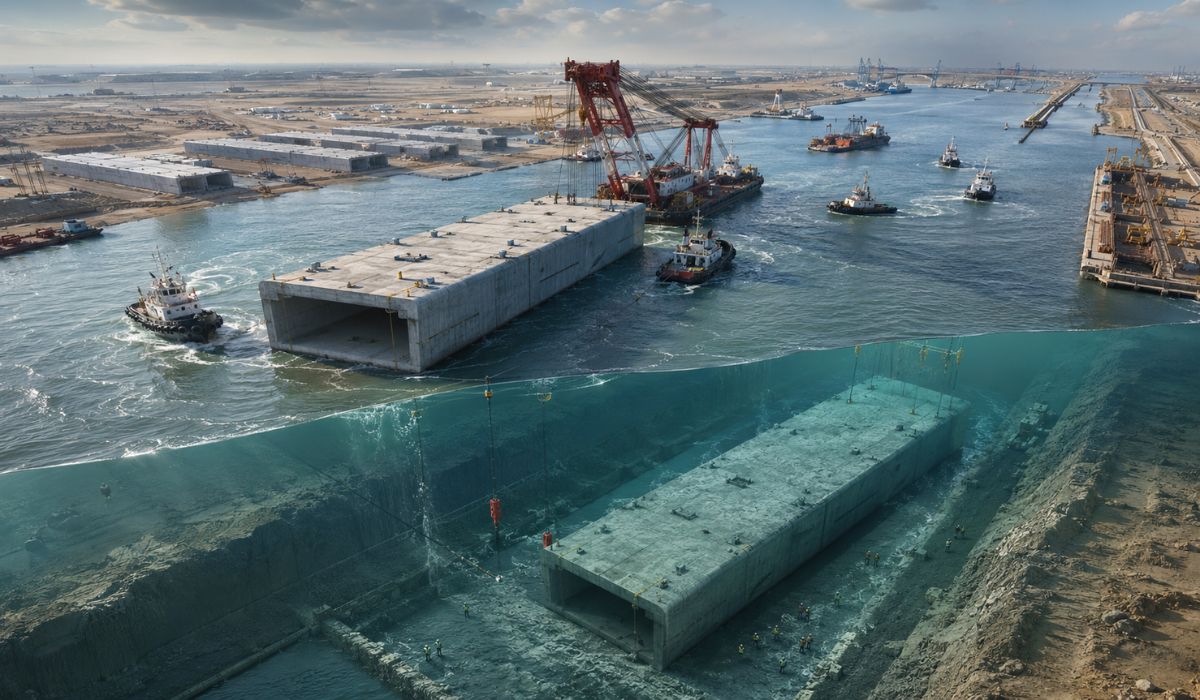
Iraq floats and sinks under an arm of the Euphrates 10 giant concrete boxes of 46,000 tons and 125 meters each to assemble a 2.4 km submerged tunnel and open a new land route between Asia and Europe.

-
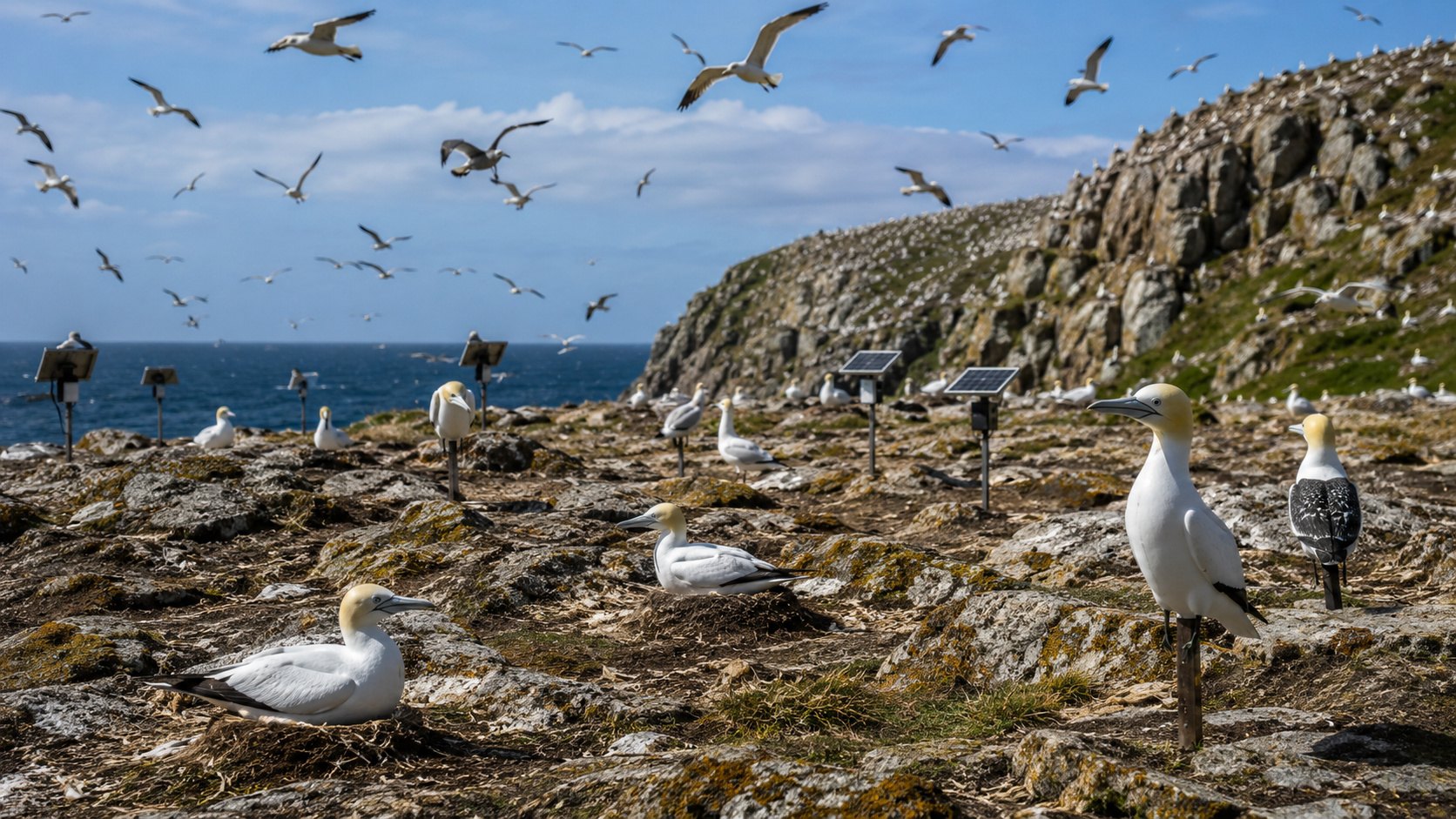
Scientists use more than 20,000 artificial birds and solar speakers to “trick” seabirds, reactivate nesting routes, and revive a colony on an island that seemed abandoned.

-
She spent 73 years breathing inside an iron lung, survived the aftereffects of polio, and became the last woman in the United States dependent on the equipment before dying at 78 years old.
-
Brazilian students created a $1 filter using pine bark, cotton, and 3D-printed parts to clean cassava wastewater, reduce the toxicity of a hazardous waste, and transform contaminated water into biofertilizer.


The engineering approach was equally innovative. ZPMC used a modular manufacturing model, where onshore assembly, equipment integration, and installation progressed in parallel, rather than sequentially. Yan Bing, a senior specialist at the company, described the method as an integrated model of “onshore assembly, transportation as a single unit, and installation by floating,” a strategy that increased efficiency and execution quality and serves as a reference for future projects of this magnitude.
Six records, one platform

The Haifeng Heart is not just large. It is technically revolutionary. ZPMC listed six unprecedented milestones set by the project, and each of them represents a real leap in the boundaries of what offshore engineering can do today.
The first and most immediate is the transmission capacity: two gigawatts (GW) in a single unit, making it the largest offshore converter station in the world. It will support the Yangjiang Qingzhou V and Qingzhou VII wind farms in the Three Gorges region, which together have exactly the same installed capacity of 2 GW.
The second record is the highest voltage flexible direct current (DC) transmission system ever used in offshore wind energy: ±500 kilovolts (kV). Along with it, the project is also the first in the sector to combine alternating current (AC) and direct current (DC) technologies within the same transmission system. It also marks the first use of ±525 kV submarine cables for long-distance transmission of renewable energy generated at sea.
Why convert AC to DC in the middle of the ocean?
The central question behind all this engineering may seem technical, but it has an elegantly simple answer: the physics of electrical transmission punishes those who try to carry alternating current over long distances underwater.
Wind turbines naturally generate alternating current. The problem is that transmitting AC through submarine cables over tens or hundreds of kilometers results in significant energy losses. The solution is to convert this alternating current into direct current still on the offshore platform before starting the journey across the ocean floor.
ZPMC explains that this conversion “reduces transmission losses over long-distance submarine cables, unlocking access to high-quality wind resources located more than 100 kilometers from the coast and supporting expansion into deeper and more remote waters.” In other words: the farther from the coast the stronger winds are, the more necessary a station like the Haifeng Heart becomes.
The Chinese race for offshore wind
The launch of the Haifeng Heart does not happen in a vacuum. China has been rapidly investing in offshore wind energy as part of its climate goals, and projects like the Yangjiang Qingzhou parks are central pieces of this strategy. The ability to transmit energy from parks located more than 100 km offshore, something that was previously technically unfeasible or economically prohibitive, opens an entirely new frontier for wind expansion in the country.
Flexible DC transmission technology, combined with high-capacity converter platforms like this one, is what makes this expansion possible. It’s not just about building bigger turbines or more of them, but about solving the logistical problem of bringing this energy to where it is consumed, without losses that would make the project uneconomical.
ZPMC stated that the project will support the “centralized submarine cable transmission system for the Yangjiang Qingzhou V and Qingzhou VII offshore wind farms of the Three Gorges,” a statement that summarizes, in practical terms, the role of this monumental structure: to be the electrical heart of a complex that will redefine the scale of offshore wind in the world.
What Comes Next
The next step for the Haifeng Heart is the definitive installation in the waters of Yangjiang. Once operational, the station will begin receiving electricity generated by the Qingzhou V and VII park turbines, converting it from AC to DC, and sending it via submarine cable to the land grid, a continuous flow of clean energy that, summed over a year, reaches the projected six billion kWh.
The project also functions as a laboratory for the future. The modular approach, the integrated construction model, and the unprecedented application of ±525 kV cables create a set of learnings that, according to ZPMC itself, will serve as a model for similar projects. In a global scenario where decarbonizing the electric matrix is increasingly urgent, solutions that allow the exploration of distant and deep winds have immense strategic value.
The largest offshore wind station in the world is at sea. And it may not be the largest for long.
And you, do you believe that Brazil has the potential to develop offshore wind energy projects on a similar scale? Could the Brazilian coast host a platform like the Haifeng Heart? Leave your opinion in the comments.