






 Portuguese
  Spanish
  5 min of reading
  2 comments


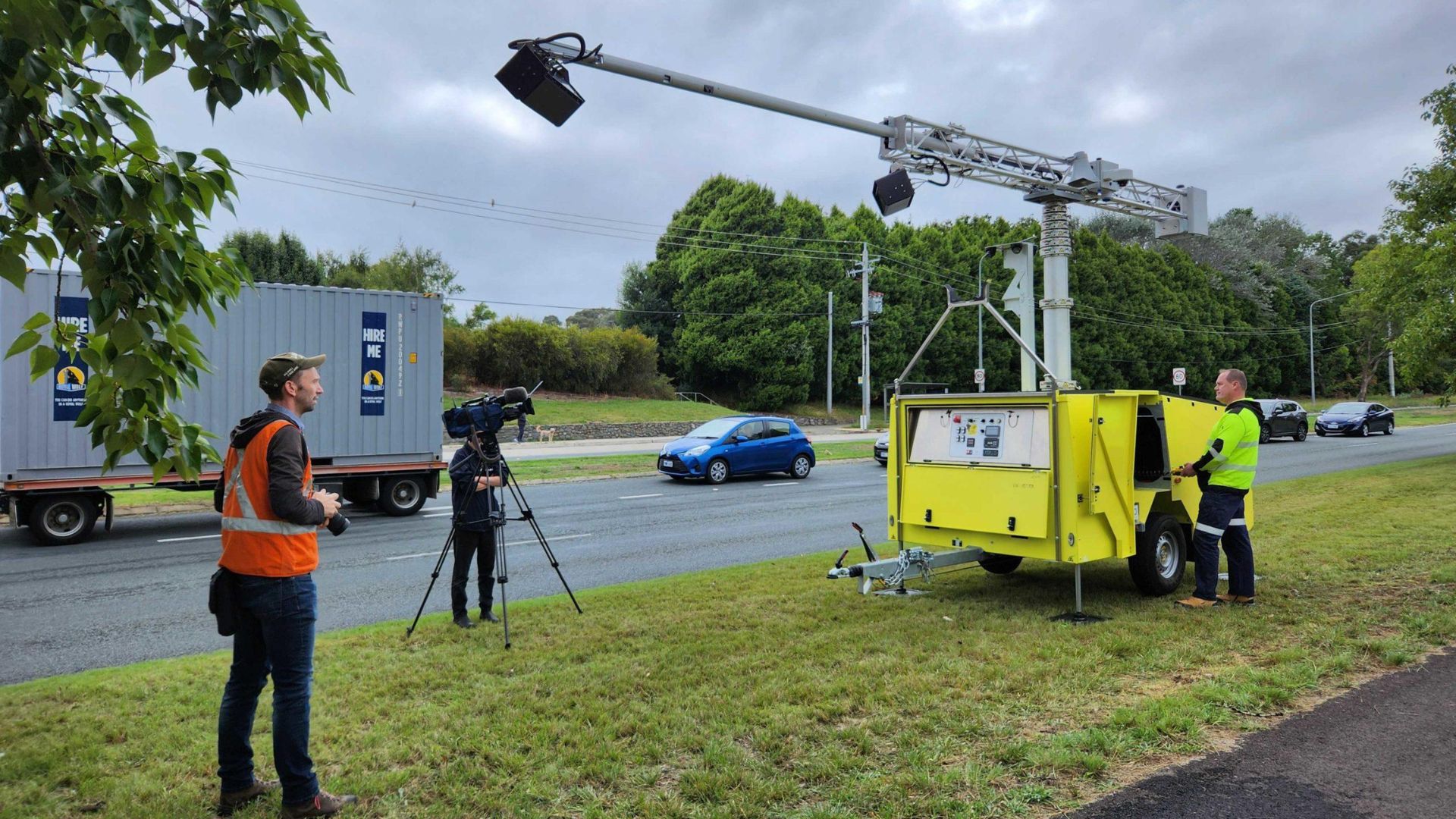


Electronic monitoring now observes behavior inside the vehicle and expands the driver’s responsibility for all occupants, including those in the back seat, using technology already present on the urban roads of Canberra.
Drivers traveling through Canberra, in the Australian Capital Territory, now face a type of electronic monitoring that extends the reach of traffic cameras inside the vehicle.
Equipment already used to catch illegal mobile phone use while driving now also detects people without seat belts or with the device improperly placed, including in the back seat.
The measure came into operation on November 3, 2025 and reinforces the driver’s accountability for what happens in all seats of the car.
-
Helicopter Drops 180 Tons of Sand and Gravel on Swedish River to Revive Ecosystem Damaged by Decades of Exploitation

-
Brazilian Company Launches Retro Smartphone with 48 MP Camera, T9 Keyboard, and Privacy Features for Social Media-Free Use

-
Self-Taught Chinese Farmer Builds 5-Ton Submarine from Scrap, Launches It in Anhui River
-
Invisible Induction Technology Enables Wireless Power for Blenders, Coffee Makers, and Air Fryers, Reducing Countertop Cables





Electronic monitoring reaches passengers in the back seat
The change alters a perception still common among drivers, that certain infractions could only be verified through in-person approaches.
In the ACT, the acronym for the territory where the Australian capital is located, cameras have started to identify not only the driver’s behavior but also situations involving passengers, including those in the back seat.
The local government reports that infractions detected by the equipment generate fines and can result in penalties for the driver when passengers are not properly restrained.
In practice, the camera is no longer seen solely as a tool aimed at speeding, running signals, or using a phone, but rather functions as a broader observation system for road safety.

The effect is immediate in urban traffic, especially during short trips, when some occupants tend to relax rules that remain mandatory regardless of the distance traveled.
Technology utilizes cameras already installed in traffic
Instead of deploying a parallel network, the ACT decided to expand the function of devices that were already spread throughout the road network.
According to the official traffic safety camera program, the territory operates with different equipment, including fixed and portable detectors for infractions associated with mobile phone use.
These devices, previously known as mobile phone detection cameras, have also started to check seatbelt compliance.
This point helps explain why the initiative gained traction.
The expansion did not depend on the visible installation of new infrastructure, which means that enforcement has been strengthened based on technology already incorporated into the local traffic routine.
Additionally, the ACT government maintains this model within a broader strategy that also includes cameras for speed, running red lights, and other risky behaviors.
Incorrect seatbelt use also results in fines
Another central aspect of the regulation is the definition of what constitutes an irregularity.
The requirement is not limited to the presence of a buckled seatbelt.
According to official guidance, the equipment must be firmly adjusted to the body and laid flat, without twists, folds, or positions that compromise its function in the event of a collision.
Among the examples cited by the local government are using the belt under the arm, behind the back, or with the seat excessively reclined, situations where the occupant appears to comply with the rule but reduces the protection offered by the device.
Thus, the new enforcement targets not only the absence of a seatbelt but also forms of use that may be visually subtle and, at the same time, relevant to safety.

Driver can be punished for passengers without seatbelts
The accountability of the driver for passengers is one of the most sensitive points of the measure.
The official material from the ACT and the traffic rules manual for the territory make it clear that the driver must ensure that all occupants are correctly using the seatbelt or appropriate restraint device.
This obligation already existed in local legislation, but the novelty is that electronic enforcement has begun to systematically address this type of conduct.
In the case of violations recorded by the cameras, the penalty reported by the government is A$ 574 and 3 points on the license.
The ACT also states that drivers can face penalties when their passengers are unprotected, which increases the pressure on drivers to check proper seatbelt use before starting a trip.
In practical terms, the rule transforms the rear seatbelt check into part of the mandatory driving routine.
Government points to impact on the reduction of deaths in traffic
The government’s explanation for the measure is directly linked to road safety policy.
According to the ACT administration, the seatbelt is one of the simplest and most effective ways to prevent serious injuries and deaths in accidents.
The official material also argues that wearing a seatbelt doubles the chance of survival in a serious collision, a point used to justify the expansion of enforcement within vehicles.
This discourse positions technology less as an isolated instrument of punishment and more as a step in a public policy based on ongoing monitoring, standardization of enforcement, and behavior change.
Nonetheless, the symbolic effect is significant: the presence of a camera on the road no longer suggests attention only to speed or traffic lights but signifies surveillance over internal habits of the vehicle.
Medical exemptions require formal proof
The system also preserves an administrative route for exceptional situations recognized by law.
Those with a medical exemption related to seatbelt use who receive a fine can present documentation to Access Canberra, the agency responsible for local government services.
The official guidance states that the driver who received the notification must request the removal of the penalty and attach the medical certificate, even when the exemption is for a passenger.
This detail shows that technological expansion has not eliminated review mechanisms for cases provided for in regulations.
Still, the design of the system reaffirms the central logic of the policy adopted in Canberra: that electronic control is no longer limited to the exterior of the vehicle and has begun to incorporate, with greater precision, behaviors that previously relied mainly on the direct observation of a traffic officer.




this is another way to make money and claim the are making the roads safe. why not put the police back on the road like they did in the past. that would work more then sending a fine weeks later.
So in the case of a passenger having a medical exemption, how do you confirm that that was who actually got pinged?