Portuguese


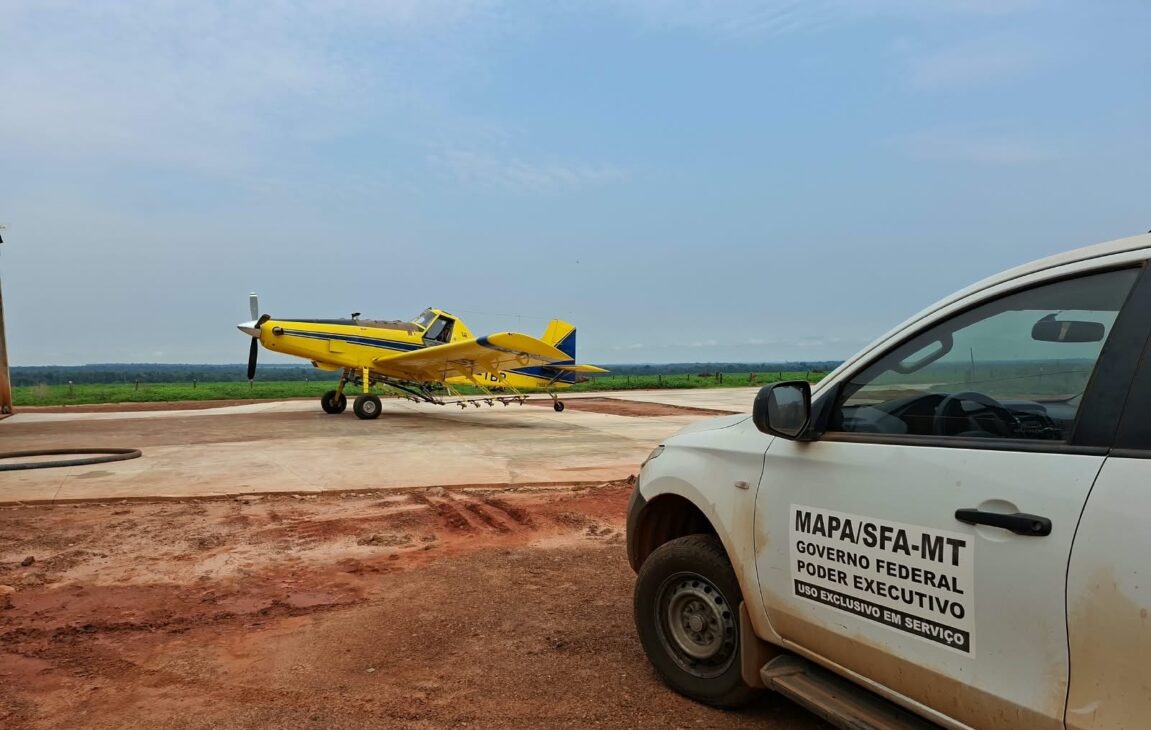

At 21 establishments across six municipalities, inspectors also found 380 kilograms of pesticides and required upgrades to decontamination pads. The inspection covered farms and agricultural aviation companies.
From November 23 to 26, teams from Brazil’s Ministry of Agriculture and Livestock (Mapa) and the Mato Grosso Institute of Agricultural Defense (Indea-MT) visited Canarana, São José do Xingu, São Félix do Araguaia, Querência, Marcelândia and Feliz Natal. The municipalities are in the area around the Xingu Indigenous Territory, where pesticide use has prompted federal agencies to call for inspections.
During the visits, inspectors examined inventories of agricultural products, spraying records and facilities used to clean aircraft. The inspections aimed to check compliance with rules governing pesticide use, application and storage, both on farms and in agricultural aviation operations.
Expired products and purchases without import authorization
The seized materials included pesticides past their expiration dates and products purchased without import authorization. The account released by Mapa on November 27 does not identify the manufacturers, brands or active ingredients in the batches found. The ministry said the manufacturers will be responsible for retrieving the material.
-

-
-
-




Inspectors also issued notices requiring establishments to bring their documents into compliance and make improvements to decontamination facilities. The violation notices were issued for breaches of the law, but the announcement does not say how many companies or properties were cited or break down the violations by municipality.
The 13 violation notices do not necessarily correspond to 13 different establishments, since a single location may receive more than one citation. Mapa did not disclose the amount of any fines related to the violations found in November.
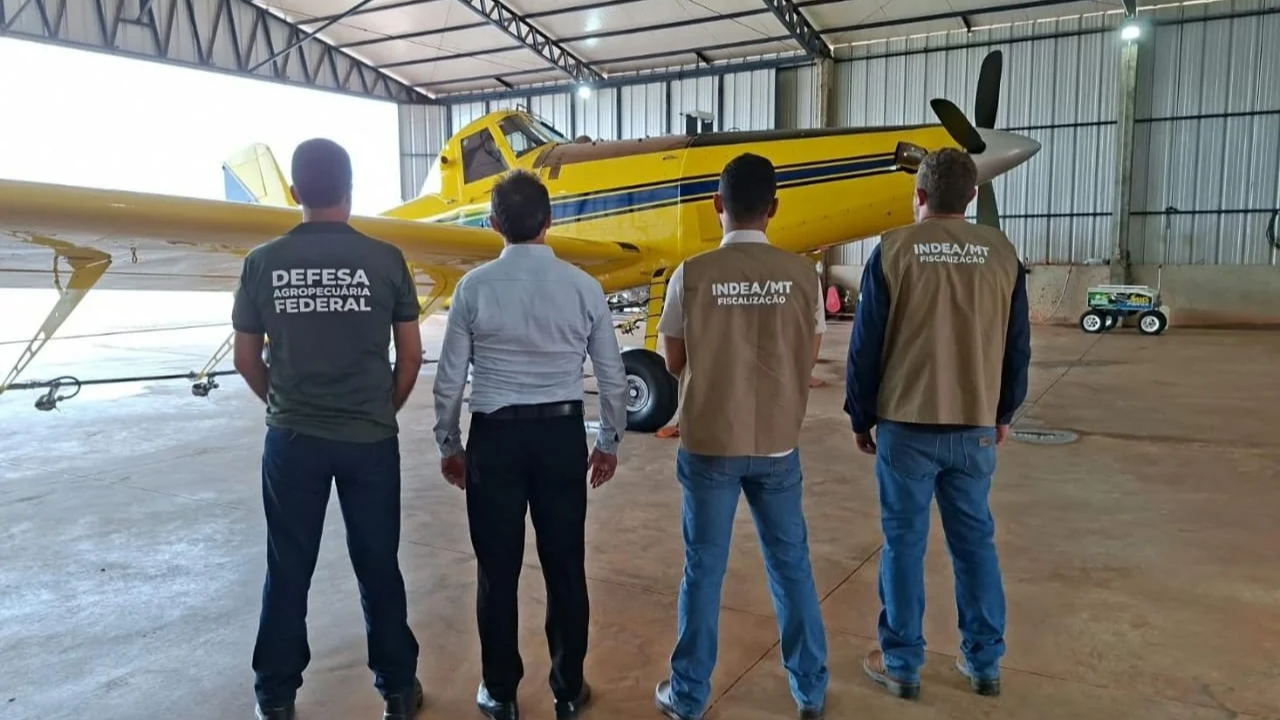
Decontamination pads and spraying reports inspected
One focus of the inspections was decontamination pads, facilities used to clean agricultural aircraft and manage the waste generated by that work. Mapa maintains specific inspection guidelines for agricultural aviation that include reviewing these facilities and checking their compliance with technical standards.
Document review is another part of the inspection. Operators must keep records of their operations, application maps, reports and agronomic prescriptions. These documents make it possible to identify where the products were used, which inputs were applied and who was technically responsible for the applications.
Inspectors also checked whether required distances were maintained when spraying near sensitive areas. The applicable rules vary depending on the type of operation and the product. The November bulletin does not specify which distances were measured or attribute any potential improper application to a particular property.
The team included six federal agricultural inspectors and one agronomist from Brazil’s Ministry of Agriculture and Livestock (Mapa), as well as six state agricultural and forestry inspectors and one inspector from Mato Grosso’s Institute of Agricultural and Forestry Defense (Indea-MT). In all, 14 professionals from the two agencies took part in field activities.
Another inspection in the Xingu had already resulted in R$42.9 million in fines
On October 21, the Federal Public Prosecutor’s Office (MPF) released the results of Operation Ceres, conducted by Brazil’s environmental agency Ibama in early 2026. In that operation, separate from the one now carried out by Mapa and Indea, inspectors issued 19 violation notices and imposed R$42.9 million in fines.
The MPF said irregularities identified during Operation Ceres included improper storage of pesticides, expired products, improper disposal of packaging and waste, and aerial spraying without an environmental license.
Federal oversight intensified after the MPF, Brazil’s Labor Prosecutor’s Office and the Federal Public Defender’s Office issued a recommendation in October 2025. The document called for measures to protect Indigenous communities from exposure to pesticides. Studies and accounts cited by the MPF pointed to the presence of these substances in water and food samples from the region.
In a report published in October 2026, the MPF also said Mapa had identified 34 agricultural aviation operators in nine municipalities in the monitored area and requested records of applications made in 2025.
In its November update, the ministry did not detail the deadlines given to establishments formally notified to correct irregularities or say when manufacturers would complete the collection of seized products.