






 Portuguese
  Spanish


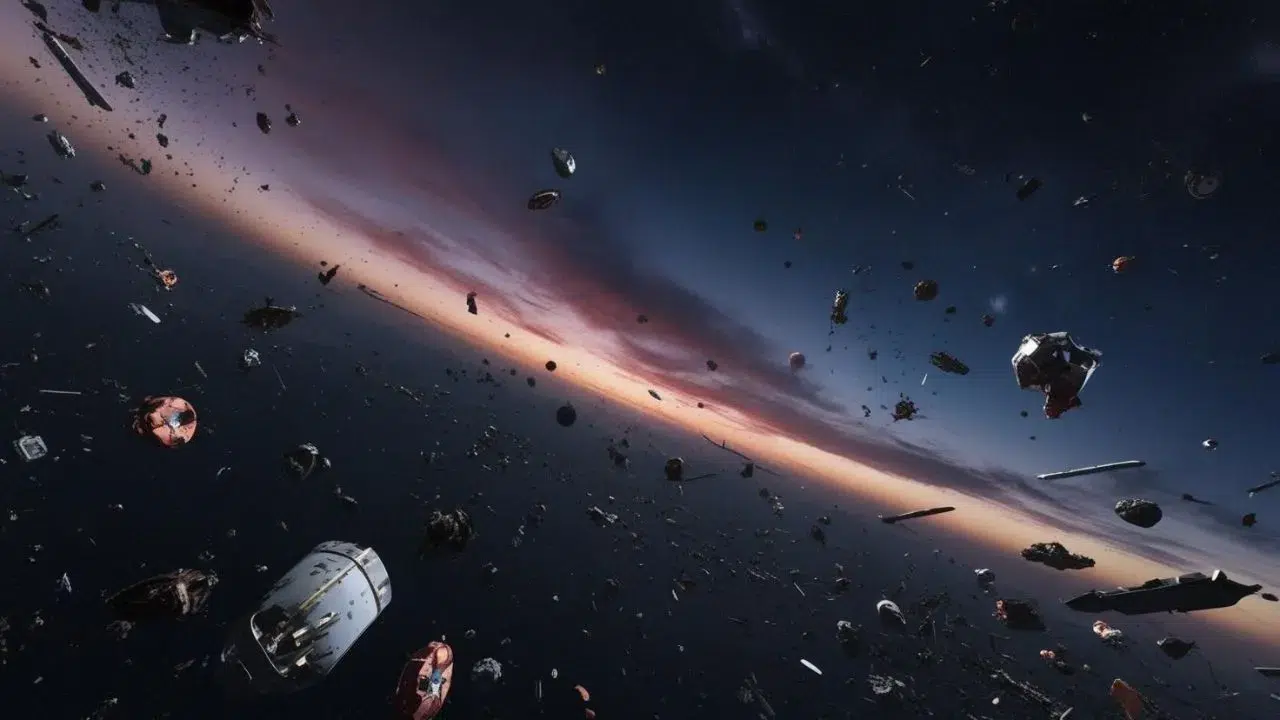

The Advancement of Space Exploration and the Increase in Launches Are Raising the Risk of Space Debris Hitting Aircraft, According to Research Study.
The risk of collisions between space debris and commercial airplanes is rising, according to a study from the University of British Columbia in Canada. Researchers analyzed reentry patterns of rocket bodies and the distribution of air traffic, concluding that the chance of impact is increasing with the rise in space activity.
With the launch of thousands of satellites, such as those in SpaceX’s Starlink project, and an increasingly crowded sky filled with airplanes, concerns about safety are growing.
Although there are technologies to track space objects, the unpredictability of uncontrolled rocket reentries still poses a challenge.
-
UFG’s Innovative Use of Air Conditioner Drip Saves 400 Liters of Water Daily in Brazilian Public Building

-
China Builds Underwater Wall After Discovering Technology That Could Shift Military Balance in the Pacific, Study Reveals Why the Asian Power Reacted Now

-
After Over 8 Months in a Simulated Mars Habitat in Houston, 4 NASA Volunteers Communicate Almost Silently and Will Exit in October
-
Natural Phenomenon Turns Black Sea Turquoise Blue Due to Billions of Microscopic Organisms


A Growing Risk of Hitting Airplanes
Researchers point out that regions of high air density, such as those surrounding major airports, have a 0.8% annual chance of being hit by a piece of space debris.
This rate rises to 26% in wide yet busy airspaces, such as in the northeastern United States, northern Europe, and metropolitan areas in the Asia-Pacific region.
According to estimates from The Aerospace Corporation, in 2021, the probability of an airplane fatally colliding with a falling object from space was 1 in 100,000.
A small fragment of a rocket or satellite can be enough to cause critical damage to an aircraft, especially if it hits the windshield or engine. Studies indicate that even debris weighing one gram can pose a significant danger.
With this increasing risk, authorities may be forced to close airspaces preventively, which can lead to congestion, delays, and flight cancellations. The study highlights that this decision presents a dilemma for aviation authorities, as the economic and operational impact can be significant.
Previous cases demonstrate the issue. In 2022, fragments of the Chinese Long March 5B rocket forced emergency measures to be adopted, with airspaces being temporarily closed.
Since the prediction of the exact location of space debris reentry is imprecise, large areas may be affected by airspace restrictions.
To mitigate this risk, researchers advocate for increased investment in controlled rocket reentry technologies. Although this is a viable solution, only 35% of launches utilize this method, shifting the responsibility onto the aviation industry to deal with potential impacts.
Currently, there are over 2,300 rocket bodies orbiting Earth. Eventually, all these objects will reenter uncontrollably, increasing the pressure on aviation authorities to develop effective risk management strategies.
Cooperation between government agencies and private companies will be essential to ensure the safety of global airspace in the coming decades.
With information from wionews.





❤️Aqui você pode colocar seu rosto em qualquer vídeo ou foto) Por favor, avalie-o ➤ Ja.cat/gosea