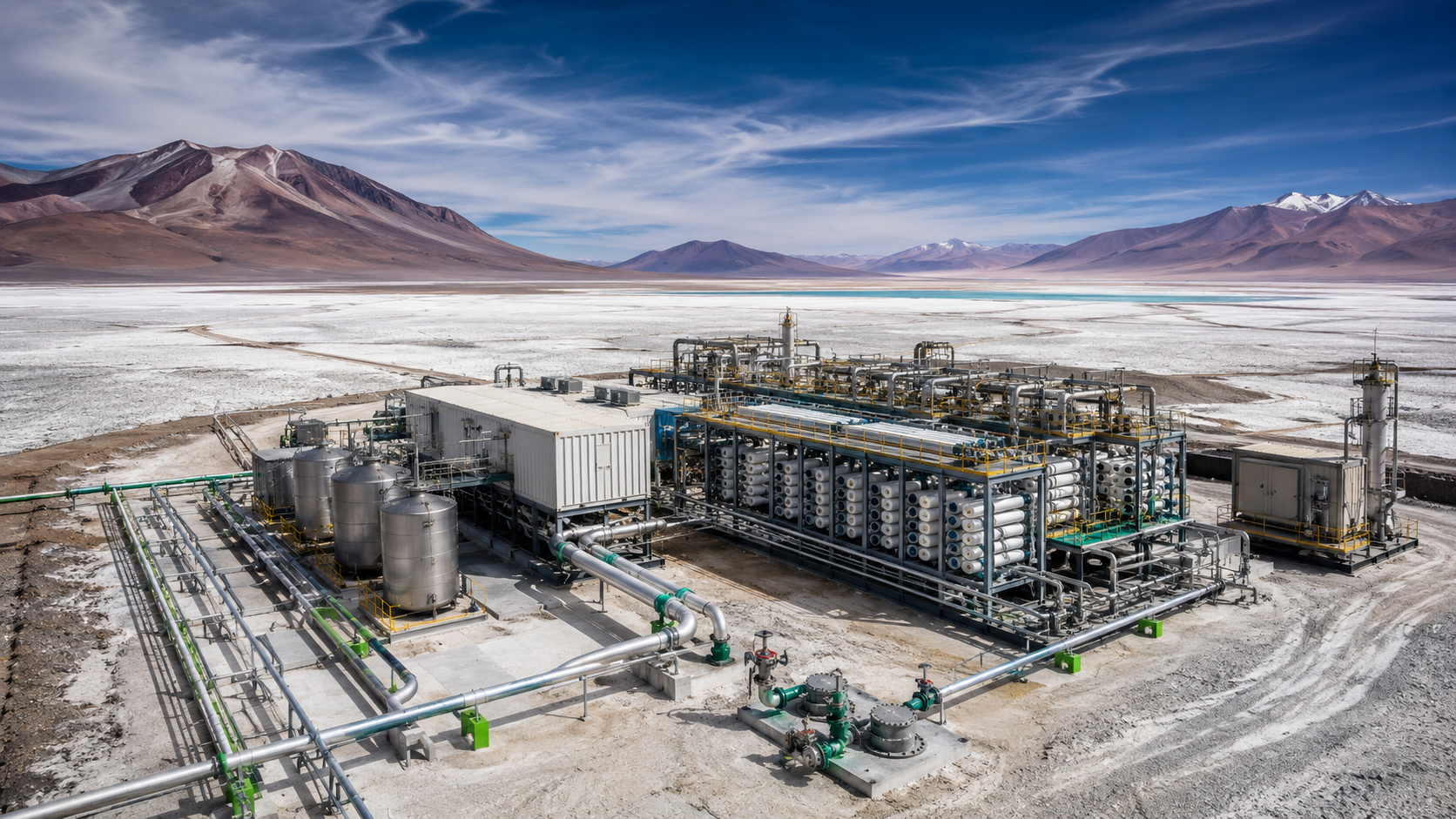
Portuguese
  Spanish


In an isolated region of Canada, the Cigar Lake mine combines artificial freezing, remote machines, and radiological control to extract uranium in one of mining’s most complex underground environments.
The Cigar Lake mine, in northern Saskatchewan, Canada, operates in one of the highest-grade underground uranium deposits known to the nuclear industry.
Extraction occurs in an unstable rock area, with the presence of pressurized water and radiological risk, which led the operation to adopt artificial ground freezing, high-pressure water jetting, and remotely operated systems to reduce direct worker exposure to the ore.
The venture is operated by Cameco Corporation and is located in the Athabasca Basin, a Canadian region associated with high-grade uranium deposits.
-
2,000-Year-Old Gold Rings Found with Human Bones in Thailand Reveal Rare Burial and Feature Ancient Indian Inscription

-
Lenovo Unveils Legion Y700 Tablet with RGB Backlighting, 5G, and SIM Card Support

-
World’s First Nuclear Hydrogen Unit Begins Operation: Copper-Chlorine Technology with Initial Capacity of 150 Liters per Hour, Aiming for 3,000 Liters per Hour
-
Mechanics Retrofit Old Fiat Uno with BYD Electric Motor for Silent, Low-Voltage Operation Reaching Nearly 60 km/h in Home Test
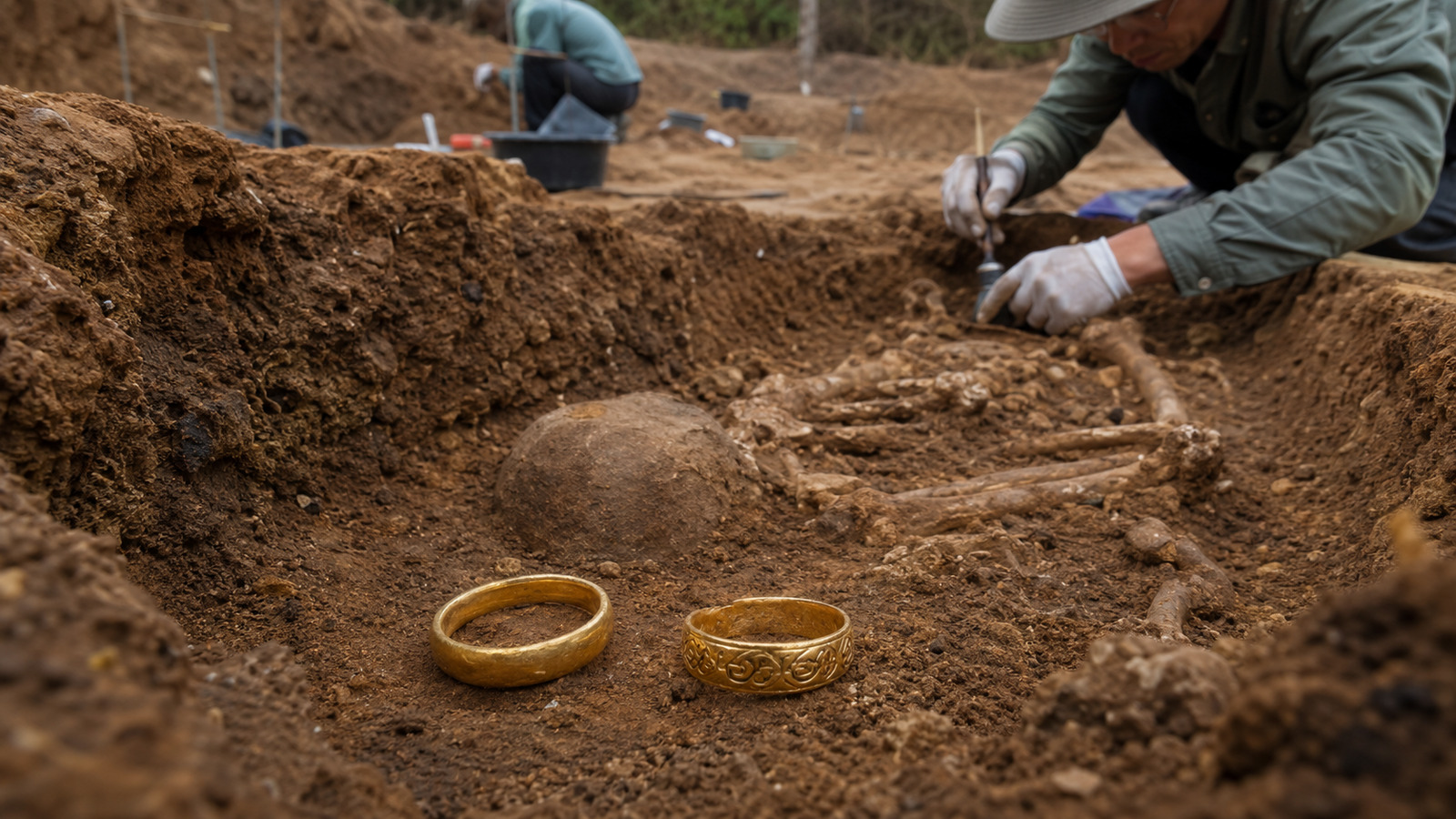


According to the company, Cigar Lake is the highest-grade uranium mine in operation worldwide.
The Canadian Nuclear Safety Commission classifies the site as a licensed nuclear facility, subject to federal oversight.
Production began in 2014, and commercial operation was declared in May 2015.
Since then, the mine has been cited in technical documents in the sector as a case study for engineering application in a highly complex underground environment, mainly due to the combined use of frozen ground, remote mining, and controlled ore transport.
Uranium mining under water and pressure
The Cigar Lake ore body is associated with porous, water-saturated sandstone formations.
This condition makes conventional excavation difficult, as direct opening of galleries can increase the risk of water ingress, loss of rock stability, and radiological exposure in work areas.
To reduce these risks, Cameco uses artificial ground freezing around the extraction zones.
The process consists of circulating chilled brine through underground pipes, with the aim of freezing the water present in the rock and forming a more stable barrier around the ore.
According to the company’s technical information, the brine used in this system can reach temperatures close to minus 40 degrees Celsius.
Freezing time varies according to rock characteristics, the amount of water present, and the area prepared for mining.
Only after meeting the defined operational parameters is the section released for the next stage.
This technique does not eliminate all operational risks but creates a more controlled physical condition for ore removal.
Freezing helps contain pressurized water and reduces ground instability at the point where jetting will be performed.
Water jets replace explosives in the mine
Ore extraction at Cigar Lake is done by the jet boring system, a jet mining method developed for this type of deposit.
The technique operates from tunnels located below the mineralized zone and allows the equipment to work without the direct presence of workers in the area of highest exposure.
Instead of explosives or manual excavation, the machine directs high-pressure water jets against the frozen ore.
The force of the jet fragments the material and forms a mineral slurry, composed of water and uranium ore particles.
This mixture flows through pipelines for grinding, thickening, and pumping stages.
Remote operation is one of the measures adopted to reduce occupational contact with high-grade ore.
Workers monitor procedures from protected areas, while equipment performs fragmentation at the extraction point.
This arrangement changes the logic of traditional underground mining.
Instead of deploying teams to the mining face, the mine uses remotely controlled equipment and closed systems to remove material from the rock.
Transport of Cigar Lake ore
After jetting, the ore does not circulate in exposed blocks through the underground galleries.
The material, in the form of pulp, flows through pipelines and undergoes internal processes before reaching the surface.
This closed flow reduces direct handling and limits the dispersion of particles in work areas.
On the surface, the material is conditioned in appropriate containers for transport.
According to Cameco, the ore extracted at Cigar Lake is transported by road to the McClean Lake mill, operated by Orano, approximately 70 kilometers from the mine.
The transport stage follows specific rules for radioactive material, with safety, documentation, and operational control requirements.
In Canada, uranium mines and mills depend on licenses and oversight from the Canadian Nuclear Safety Commission, in addition to provincial environmental authorizations.
There is no official confirmation, in the consulted sources, that autonomous trucks of the AGV type are a central part of the underground ore loading at Cigar Lake.
What appears in documented form is the use of the remotely operated jetting system, pipelines for mineral pulp, and specialized road transport to McClean Lake.
Underground Radiation Monitoring
Automation at Cigar Lake serves both operational and safety functions.
In a high-grade uranium mine, the control of radon, gamma radiation, air quality, and water circulation requires continuous monitoring, with measurement instruments installed at strategic points of the operation.
Sensors and monitoring systems help identify changes in environmental and radiological conditions.
When there is a significant change, the team can adjust ventilation, access to specific areas, and occupational protection procedures.
The Canadian Nuclear Safety Commission requires uranium mines and mills to maintain radiation protection, environmental control, and nuclear and hazardous substance management programs.
These programs include inspections, reports, and verification of indicators related to worker safety and environmental protection.
In the case of Cigar Lake, the separation between operators and ore is one of the central elements of the exposure reduction strategy.
Cameco reports that the system was designed to prevent direct contact of employees with the ore during the most critical stages of extraction.
Environmental Licensing and Local Communities
The mine’s location, in a region of lakes, boreal forests, and northern Saskatchewan communities, amplifies the importance of environmental control.
The licensing of a uranium mine of this size includes studies, monitoring programs, and contingency plans for water, soil, air, and effluents.
Cameco must demonstrate to regulatory bodies that the freezing, containment, ventilation, and water treatment systems operate within approved limits.
The operation also depends on provincial authorizations related to pollutant control and water resource use.
The Canadian Nuclear Safety Commission renewed the mine’s license in 2021, after a public hearing and analysis of contributions from agency staff, the company, and external participants.
The process included interventions from Indigenous groups, local representatives, and other interested parties.
The relationship with communities in the region is part of the public monitoring of the undertaking.
In uranium projects, information on environmental performance, occupational health, employment, and mitigation measures typically integrates reports and consultation stages.
Technology Applied to Underground Mining
Cigar Lake combines characteristics that make extraction technically difficult: high uranium grade, rock with water presence, underground pressure, and the need to limit human exposure.
The solution adopted by the operation combines artificial freezing, remote jetting, and closed transport of mineral pulp.
The mine’s experience shows a trend in underground mining in high-risk environments: moving equipment, not workers, to the most exposed areas.
This change depends on integrated control systems, sensors, pipelines, shielding, and safety protocols.
The ore extracted at Cigar Lake supplies the nuclear fuel chain, after processing and subsequent conversion and enrichment stages performed outside the mine.
As it involves radioactive material, the operation requires stricter regulatory controls than those applied to most conventional mineral activities.
The least visible part of this process lies in the engineering that precedes uranium extraction.
Before the ore reaches the surface, it is necessary to freeze the rock, control water, operate machines remotely, pump mineral slurry, and continuously monitor the radiological conditions of the underground environment.