






 Portuguese
  Spanish


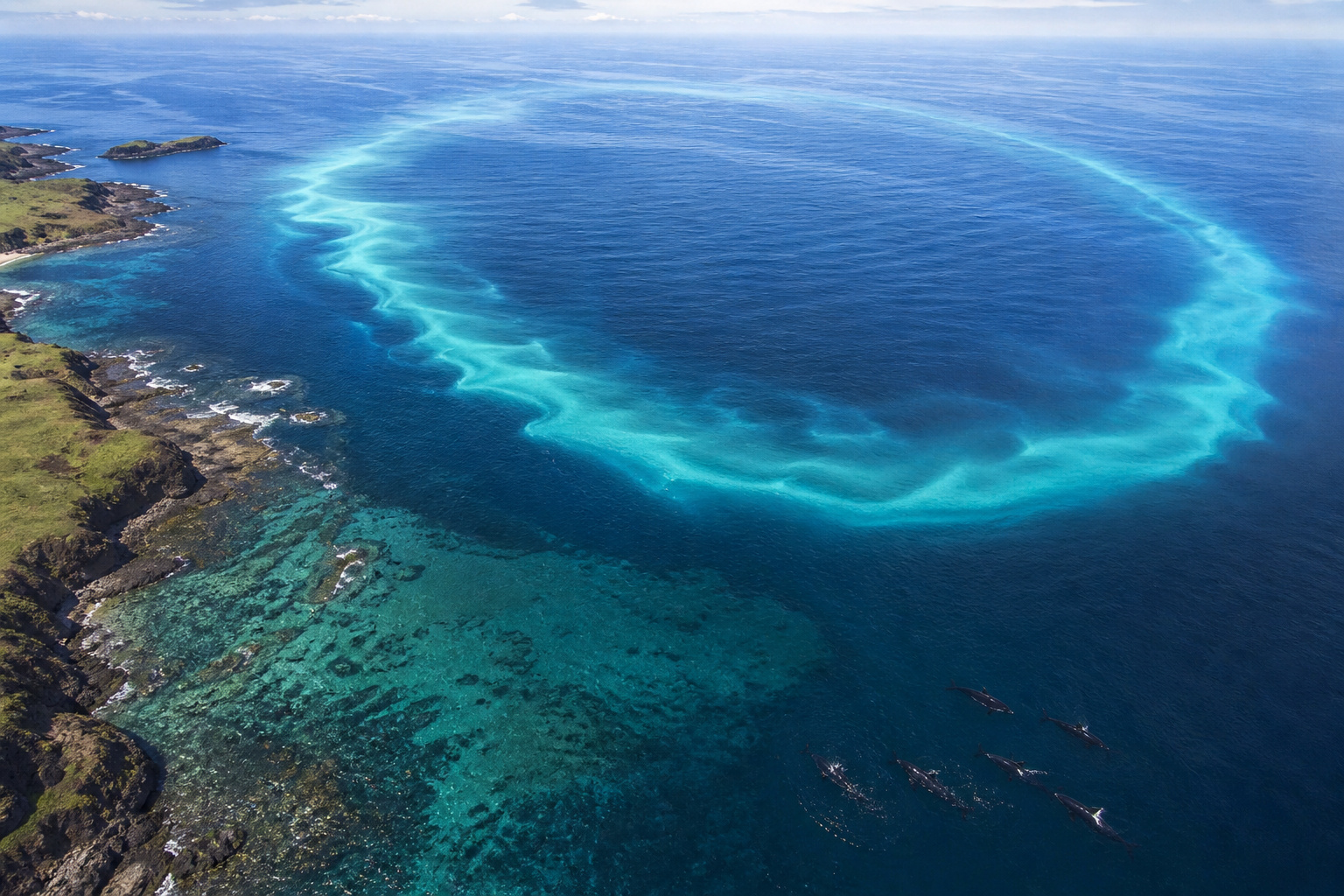


Phytoplankton luminous halo recorded by NASA satellite in the Chatham Islands reveals how cold, nutrient-rich waters sustain one of the most productive ecosystems in the South Pacific, attract impressive marine species, and at the same time help explain why this region of New Zealand has become one of the planet’s largest natural traps for pilot whales.
A huge bright ring in the ocean caught attention after being recorded by a NASA satellite in the waters around the Chatham Islands, New Zealand. The luminous formation is composed of phytoplankton, a group of microorganisms that flourishes when cold, deep, nutrient-rich waters reach the surface.
This phenomenon occurs over the Chatham Rise, an underwater structure that functions as a natural ramp in the South Pacific. Although the image seems merely curious, it reveals an impressive paradox: the same region that concentrates marine life is also among the largest pilot whale stranding sites on the planet.
Phenomenon seen from space reveals the strength of the Chatham Rise
The Chatham Islands are located about 840 kilometers off the coast of New Zealand, in a region marked by strong oceanic productivity. Beneath these waters, the Chatham Rise pushes cold, mineral-rich water from the depths to the surface, creating ideal conditions for the proliferation of coccolithophores, photosynthetic microorganisms that form dense, luminous patches.
-
This Mars rover may finally reveal if life ever existed on Mars.

-
A nearly 70-year-old Chinese inventor has registered 90 patents and created a device that stores water in the roots, helping seedlings survive drought while trying to transform the arid slopes of the Loess Plateau into green areas without relying on heavy irrigation.

-
Researchers want to change the way of producing rare earth magnets, reducing purification steps and making better use of the elements found in Swedish deposits.
-
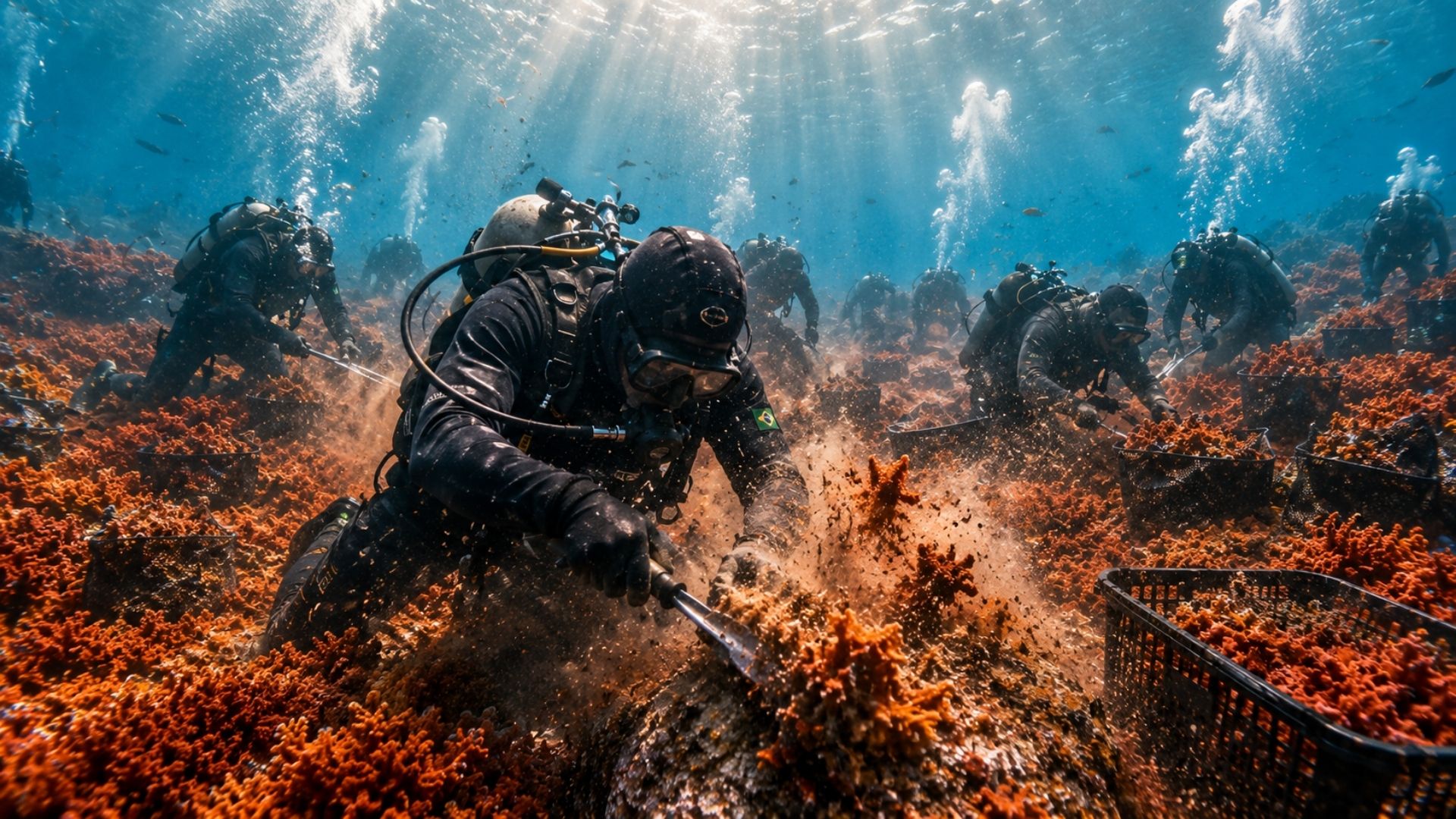
5.5 tons pulled from the seabed: a ‘living carpet’ of invasive coral was suffocating the Baía de Todos-os-Santos until the Brazilian Navy descended with divers, steel brushes, and acid salt to carry out the largest eradication operation of the species ever conducted in the country.



According to NASA satellite records, these formations can be seen from space, even without special filters. Thus, the bright ring is not just a visual spectacle, as it indicates the presence of an essential food source for various marine species.

Biodiversity transforms Chatham Islands into a natural laboratory
The high concentration of phytoplankton feeds zooplankton, which sustains fish, squid, and crustaceans. Subsequently, the abundance of food attracts penguins, albatrosses, seals, and large cetaceans. The region also gathers at least 25 species of cetaceans, including orcas and sperm whales.
For this reason, researchers consider the waters around the Chatham Islands a true oceanic biodiversity hotspot. Furthermore, the presence of so many species in a single location allows for the observation of behaviors difficult to track in the open sea, transforming the area into a natural laboratory for studies on food chains, migration, and ecological balance.
Pilot whales face mass risk in the region
Despite the biological richness, the Chatham Islands also carry a worrying history of strandings. Since 1901, over 4,000 pilot whales have stranded in the region. The worst episode occurred in 1918, when over a thousand animals died in a single historical record. In October 2022, nearly 500 whales died in two strandings separated by a few days.
Pilot whales, especially the species Globicephala melas, live in close-knit family groups. This social bond aids in cooperative hunting and group protection, but it can also increase risk during a stranding. When one individual gets too close to the coast and becomes trapped, others may follow. Thus, collective behavior can turn an individual error into a tragedy of great proportions.

Coastal geography amplifies cetacean disorientation
The geography of the Chatham Islands also contributes to the problem. Deep waters close to the coast create areas where animals can easily lose their bearings. Additionally, gently sloping sandy beaches increase the risk during low tide.
According to research published in the New Zealand Veterinary Journal, cetacean strandings result from a complex combination of environmental and behavioral factors. Therefore, there is no single cause capable of explaining all episodes, which makes prevention difficult for scientists, conservationists, and local teams.

Conservation faces difficult decisions in the Chatham Islands
Pilot whale strandings are not just an animal tragedy. They also serve as signs of changes in the marine ecosystem, such as alterations in currents, food scarcity, or noise pollution. For this reason, these cetaceans are seen as important indicators of ocean health.
In the Chatham Islands, however, rescue efforts face practical limits. The presence of sharks in shallow waters prevents safe attempts to return the animals to the sea. Thus, New Zealand conservation teams may resort to euthanasia to prevent prolonged suffering, which sparks debates about environmental emergency, animal welfare, and human capacity to intervene in natural phenomena.
Science investigates link with ocean changes
Researchers from the University of Glasgow recently published a study on pilot whales in the PLOS One journal, following a large stranding in Scotland in 2023. The work reconstructed feeding patterns in the weeks prior to the incident.
The results suggest that changes in feeding areas can push populations into more dangerous coastal zones. This strengthens the hypothesis that climate changes in the oceans influence the risks of mass strandings.
The Chatham Islands remain among the most studied places in the world in this context. After all, does the same phenomenon that illuminates the ocean and sustains an explosion of life also help reveal one of the most intriguing natural traps for pilot whales?


