Portuguese
  Spanish


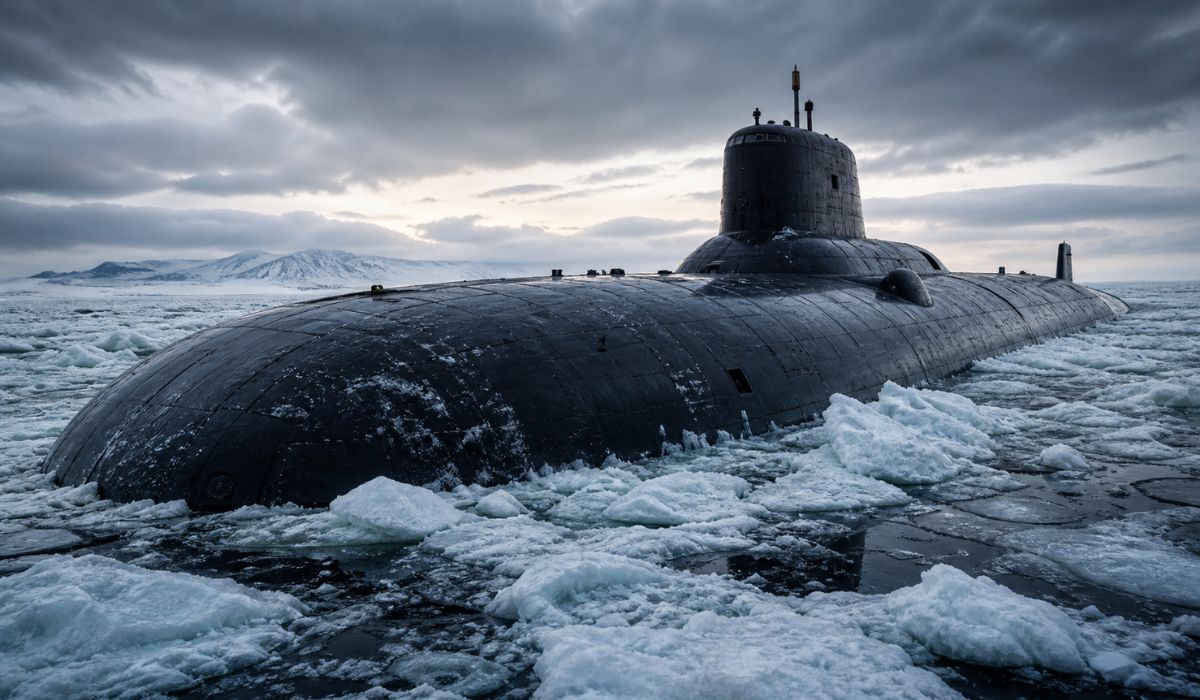

Created for nuclear missions under polar ice, the Typhoon combined unusual dimensions, prolonged autonomy, and internal areas rare in military submarines, becoming one of the most studied vessels in Soviet naval engineering.
The largest military submarine ever built was developed by the Soviet Union to operate in one of the most difficult areas to monitor during the Cold War: the Arctic.
Known in the West as the Typhoon class, Project 941 Akula was 175 meters long, about 23 meters wide, and had an estimated submerged displacement of 48,000 tons.
The vessel could perform prolonged missions, with operational autonomy often associated with up to 120 days.
-
In Brazil’s backyard: Tesla, by Elon Musk, announces official operations in Uruguay, where electric vehicles already make up 20% of new cars but still leaves out the largest market in the region.

-
This Mars rover may finally reveal if life ever existed on Mars.
-
A nearly 70-year-old Chinese inventor has registered 90 patents and created a device that stores water in the roots, helping seedlings survive drought while trying to transform the arid slopes of the Loess Plateau into green areas without relying on heavy irrigation.

-
Researchers want to change the way of producing rare earth magnets, reducing purification steps and making better use of the elements found in Swedish deposits.


The project’s purpose was to keep Soviet nuclear missiles in launch position under the cover of polar ice, away from the direct surveillance of ships, aircraft, and satellites of adversary powers.
Because of its dimensions, the Typhoon began to be compared to a submerged city.
The association also gained strength due to reports of unusual internal areas in submarines, such as a gym, sauna, and a small swimming pool.
Typhoon submarine was created to patrol the Arctic
Project 941 Akula began development in the 1970s, a period marked by the nuclear dispute between the United States and the Soviet Union.
In the military logic of the time, ballistic missile submarines had a central function: to guarantee response capability even after a potential attack against land bases.
NATO classified these submarines as Typhoon.
In Soviet nomenclature, Akula means “shark,” but the name can cause confusion because NATO itself used “Akula” to identify another Russian class, focused on attack submarines.
In the case of Project 941, it was a nuclear ballistic missile submarine, a category known by the acronym SSBN.
Six units were completed.
The first, the TK-208, was later named Dmitry Donskoy.
It became the best-known unit of the class, partly because it remained in service longer and was used, after modernization, as a test platform for new weapon systems.

Multiple hulls gave space and redundancy to the Soviet submarine
The Typhoon’s size was not only a result of the need to transport large missiles.
The vessel also needed to house nuclear reactors, navigation systems, torpedoes, command areas, communication equipment, and accommodations for a large crew during prolonged patrols.
To accommodate this structure, designers adopted an architecture different from that used in many conventional submarines.
The Typhoon had two main pressure hulls, installed parallel within an outer hull.
This configuration is often described as similar to a “submerged catamaran”.
Between the hulls were the missile launch tubes.
This solution increased the vessel’s width but allowed essential systems to be distributed in separate areas.
In operational terms, this division also increased equipment redundancy, an important characteristic in submarines designed for long and isolated missions.
The structure also helped explain its operation in the Arctic.
Submarines of this type needed to navigate under ice, operate in cold waters, and, in certain situations, surface in areas covered by frozen layers.
This capability made the polar region relevant to Soviet strategy, as it hindered tracking by conventional means.
Pool and sauna on the Typhoon had an operational function
Reports about the existence of a small swimming pool, sauna, and gym on board appear in specialized publications and historical descriptions of the Typhoon class.
These areas are often cited as examples of less restricted internal conditions compared to smaller submarines.
The presence of these features also had a practical function.
On missions that could last for months, crew members were subjected to confinement, rigid shifts, absence of natural light, and a continuous operational routine.
In these cases, spaces for exercise and physical recovery helped reduce wear and tear during extensive patrols.
This aspect differentiated the Typhoon from many submarines of the same era.
While several vessels prioritized maximizing space for systems and weaponry, Project 941 had dimensions that allowed for more spacious internal areas.
The difference, however, did not eliminate the risks and restrictions of a submerged mission.
Typhoon’s nuclear arsenal was aimed at strategic deterrence
The Typhoon’s main military function was to transport and launch ballistic missiles.
The class was designed to carry up to 20 R-39 missiles, known by their Western designation SS-N-20.
These missiles could carry multiple nuclear warheads, in line with the Cold War’s strategic deterrence doctrine.
The submarine also had torpedo tubes, but its main mission was not to pursue enemy ships.
The priority was to remain hidden, preserve launch capability, and serve as part of the so-called nuclear triad, formed by land-based missiles, strategic bombers, and ballistic missiles submarines.
Nuclear propulsion allowed for long submerged periods without the need for reactor refueling.
In practice, the limit of a patrol depended more on factors such as food, maintenance, crew conditions, and operational planning.
Therefore, the 120-day autonomy should be understood as mission capability, and not as proof that a specific unit remained exactly that period under the ice without interruption.
During the Cold War, operating in polar regions had strategic value.
The ice made detection difficult and created natural barriers for adversary forces.
At the same time, navigating these areas required reinforced systems, trained crew, and detailed planning, as surfacing or communicating could be more complex than in open sea.
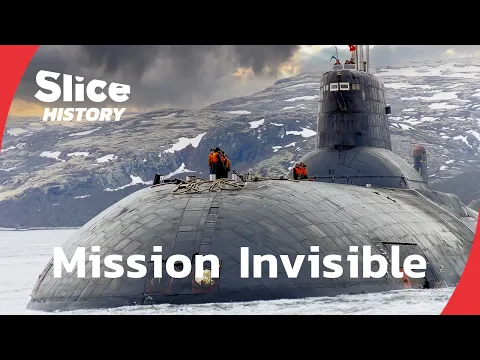

Dmitry Donskoy marked the end of the Typhoon class
With the end of the Soviet Union in 1991, the maintenance of the Typhoon class became a heavier burden on the Russian military structure.
The operating cost was high, part of the original armament was decommissioned, and new projects began to occupy the strategic space of the old Soviet submarines.
Russia later invested in more modern submarines, such as those of the Borei class.
In this context, the Typhoons were gradually deactivated, dismantled, or removed from operational duties.
The best-known exception was the Dmitry Donskoy, which remained in use for longer after undergoing modernization.
The Dmitry Donskoy was used as a test platform for the Bulava missile and participated in activities related to the Russian Navy before leaving active service.
The unit was officially decommissioned in February 2023, ending the operational trajectory of the Typhoon class.
There are later records of proposals to preserve the Dmitry Donskoy as a museum ship.
The transformation of a nuclear submarine of this size, however, requires complex steps, such as nuclear fuel removal, structural adaptations, and cost definition.
Therefore, any museum destination depends on technical, financial, and administrative decisions.
Even out of service, the Typhoon remains a reference in studies on military naval engineering.
Its dimensions, multi-hull architecture, operation under ice, and the presence of unusual internal areas help explain why the project still sparks interest in science, technology, and military history content.