






 Portuguese
  Spanish
  4 min of reading
  0 comments


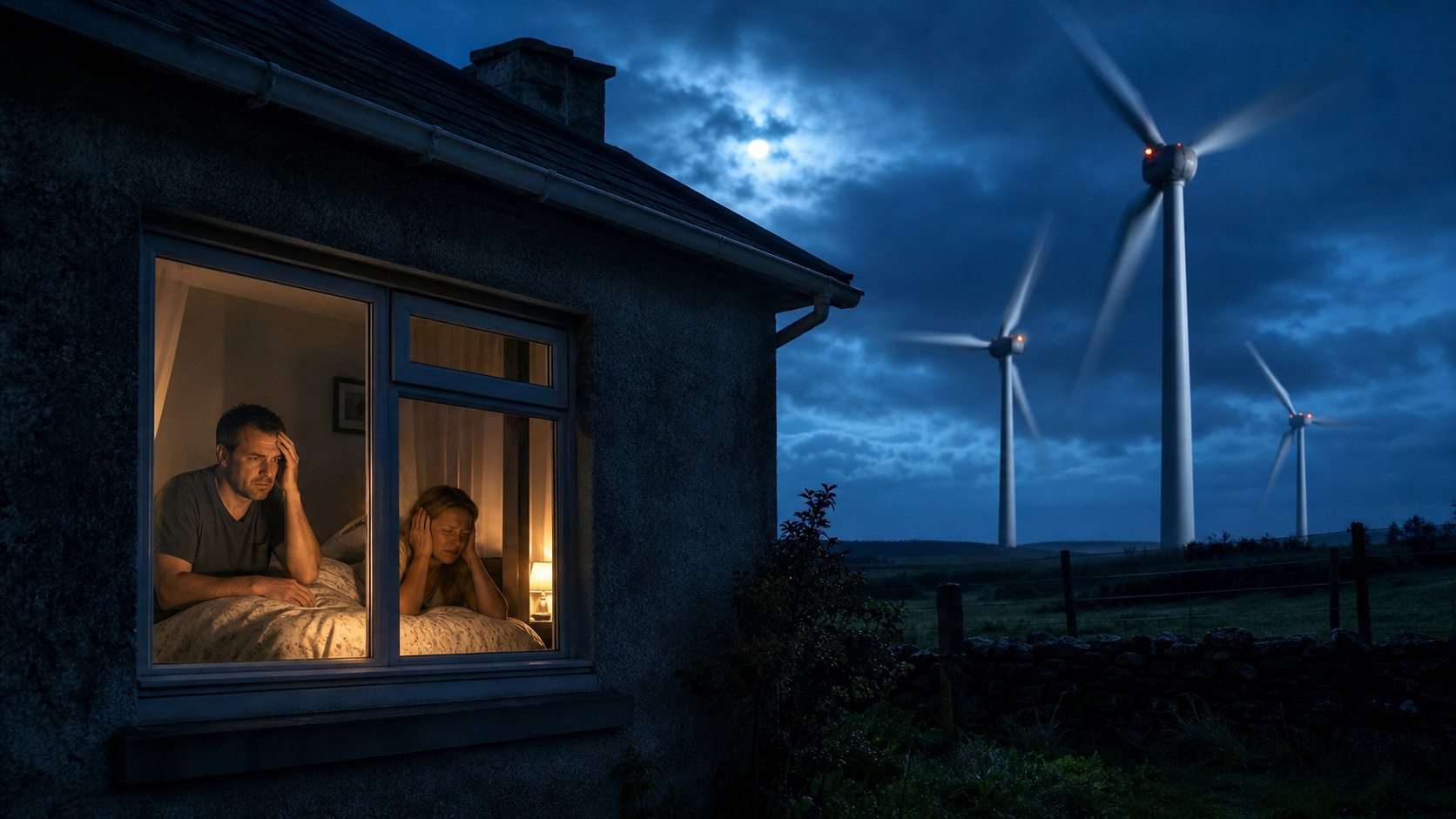
High Court decision orders three wind turbines in Wexford to be shut down, exposes noise and vibration near homes, places wind energy at the center of a dispute over sleep, neighborhood, and quality of life, and shows that the energy transition can also knock on the door of those living next to renewable parks
A couple couldn’t sleep due to **wind turbines in Ireland**, and the case ended with a High Court order to completely shut down three structures of the Gibbet Hill wind farm in Wexford.
The decision placed **clean energy** in an unusual position. Instead of appearing solely as a climate solution, wind energy became the subject of a domestic dispute over noise, vibration, sleep loss, and a decline in quality of life.
The investigation was published by **The Journal, a news portal covering Ireland**. The case gained traction because it marked the first time an Irish court ordered the complete shutdown of turbines due to noise nuisance.
-
At 29 years old and tired of the corporate routine, a young man leaves his 11-year career, sells almost all his possessions, buys a sailboat, and sets off from Oregon to Hawaii accompanied only by his cat.

-
Saudi takes his Toyota Hilux 4×4, leaves Riyadh, crosses 23 countries, and drives about 6,000 kilometers for almost three weeks to northern Norway to fulfill the dream of seeing the northern lights.

-
An 84-year-old mother wakes up before midnight in Japan, keeps a family bakery open for 55 years, and sells cheap handmade bread; the shop in Fukuoka produces up to 400 units a day with the help of her son.

-
Tired of seeing her salary disappear with the mortgage, a 24-year-old sells her £125,000 house, buys a van for £13,000, invests £6,000, transforms the vehicle into a home, and decides to live on the roads of Europe.




Wind turbine noise moved from the environmental sphere to an in-home problem
The case began with a simple complaint to understand. The couple claimed to suffer from **constant noise**, vibration, and sleepless nights due to the turbines installed near their residence.
For those looking from afar, a wind turbine might seem just part of the renewable energy landscape. For those living nearby, however, its continuous operation can become a difficult presence to ignore.
The central point of the decision was the impact on daily life. The discussion was not limited to energy production. It entered the bedroom, rest, and routine of those who claimed they couldn’t sleep.
High Court ordered three turbines at Gibbet Hill wind farm to be shut down
The High Court ordered the **complete shutdown of three turbines** at the Gibbet Hill wind farm in Wexford. The measure was harsher than a simple reduction in operation.
The court did not merely order operational adjustments. The order directly affected part of the wind farm and imposed the complete shutdown of the turbines involved in the case.
This consequence made the episode even more impactful. A project linked to the **energy transition** ended up defeated in a dispute over silence, rest, and quality of life.
The Journal detailed the case that set a precedent against the noise of the energy transition
**The Journal, a news portal covering Ireland**, detailed that the decision was treated as the first order for the complete shutdown of wind turbines in the country due to noise nuisance.
Nuisance is a legal term used for situations where an activity significantly disrupts another person’s life. In simple terms, it’s when the disturbance exceeds limits and interferes with the normal use of a home.
In the Wexford case, the nuisance cited involved **noise**, vibration, and sleep loss. Therefore, the decision became an important precedent for other disputes between wind farms and nearby residents.
Clean energy became the villain of silence in a neighborhood dispute
Wind energy is often presented as one of the solutions to reduce dependence on more polluting sources. Nevertheless, the Irish case shows that a clean source can also generate conflict when it gets too close to residences.
The problem is not just in the idea of generating renewable energy. The discussion arises when the operation of the turbines affects the rest, silence, and sense of well-being of those living nearby.


Therefore, the case was marked by a strong image: **turbines created to generate clean energy were condemned to silence** after a domestic dispute.
Permanent shutdown, compensation, and legal precedent increase the weight of the decision
The impact of the decision was real. The case involved the **permanent shutdown of part of the park**, compensation, and the creation of a legal precedent regarding wind turbine noise.
For residents, the decision shows that noise complaints can, then, gain traction when they affect health, sleep, and daily routine at home. For companies in the sector, the episode raises an alert about location, operation, and relationship with neighboring communities.
Wind energy continues to be an important source within the energy transition. However, the case makes it clear that no renewable project is outside the debate about its practical effects on people’s lives.
The energy transition also makes noise when it gets close to the window
The Wexford case summarizes an increasingly common tension. The world needs clean energy, but residents also need silence, rest, and quality of life.
The decision against the three wind turbines does not erase the importance of renewable energy. It merely shows that the energy transition does not happen in a vacuum. It occupies land, changes landscapes, and can affect those who live nearby.
In the end, the dispute in Ireland reveals a simple and powerful point: clean energy also needs to be a good neighbor.
Do you think wind farms should have stricter limits near homes when residents report sleep loss, even if it reduces renewable energy production? Leave your opinion in the comments and share this post with those who follow the future of energy.


-

2 people reacted to this.