Portuguese
  Spanish


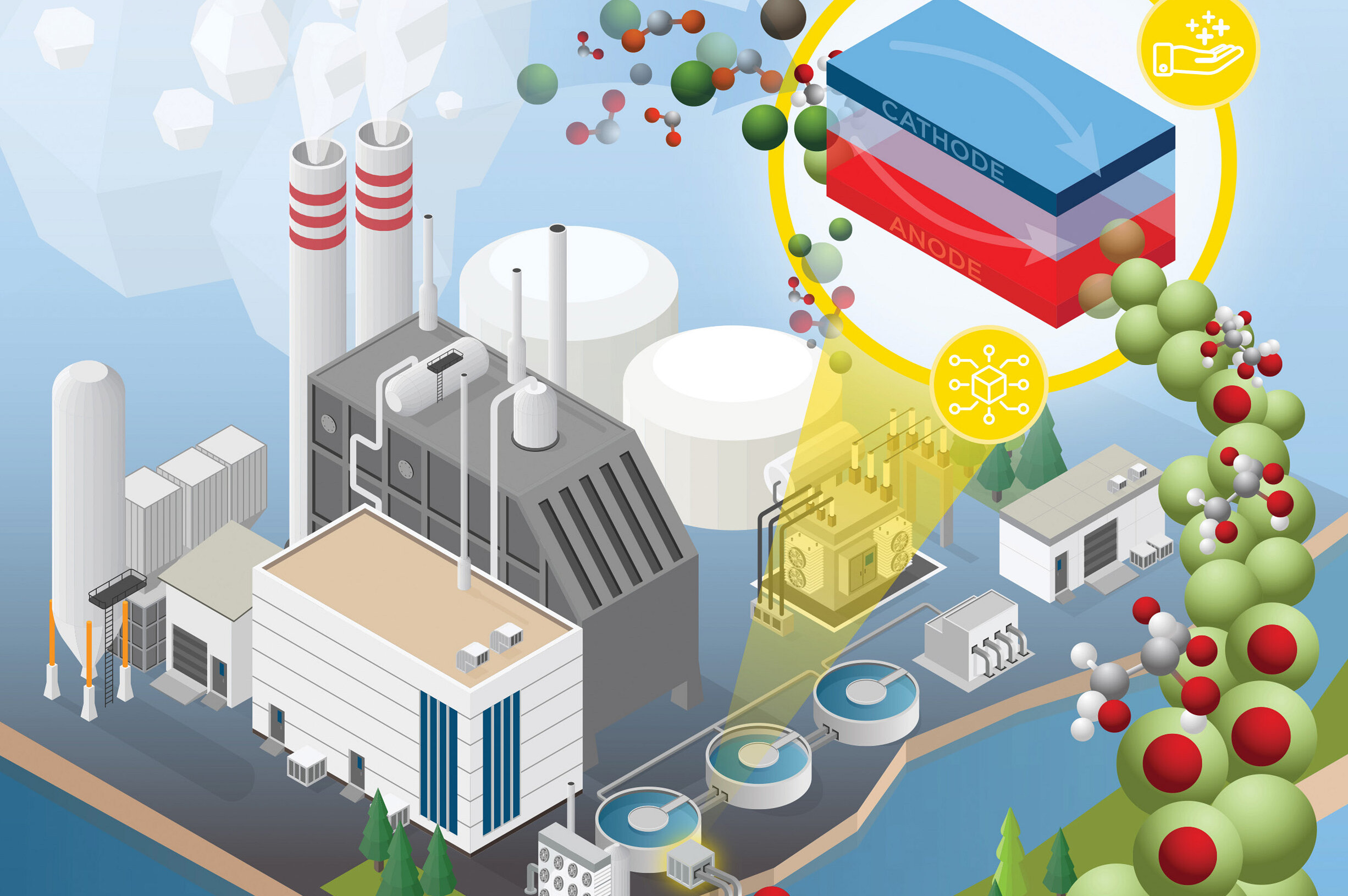

Researchers Created an Innovative Solution That Combines Biodiesel With Wastewater Treatment. The Technique Allows Capturing Carbon From the Atmosphere While Generating Valuable Chemical Compounds, Offering Environmental and Industrial Benefits.
Biodiesel is known as a cleaner alternative to petroleum diesel. However, its production process still generates waste that concerns environmentalists and scientists.
A new study from The University of Michigan presents a promising solution: treating the wastewater generated in biodiesel production while capturing CO₂ and producing valuable compounds. The research aims to combine sustainability, innovation, and economy into a single process.
How Biodiesel Generates Waste and CO₂
Biodiesel is made from vegetable oils, animal fats, or even restaurant grease. This material undergoes a process called transesterification.
-
Engineers Develop Jacket That Converts Air Humidity Into Drinkable Water, Producing Up to 900 ml Daily for Hikers, Campers, Rescuers, Rural Workers, and Military in Remote Areas

-
NASA Plans to Repurpose Mars Rover for Lunar Mission, Sending a 1-Ton Nuclear-Powered Vehicle to Explore the Moon’s South Pole Without Solar Dependence
-
Early Humans Made Beds Nearly 200,000 Years Ago in African Caves, Study Reveals

-
Japanese Smart Bike Detects Cyclist’s Intent to Turn and Potential Falls


In this step, an alcohol, usually methanol, and a catalyst break down the fat molecules. The result is biodiesel and a byproduct: glycerol.
The biodiesel proceeds for use as fuel. Glycerol, which is highly present in the wastewater, can cause environmental damage.
If improperly disposed of, it consumes oxygen in the water and can suffocate fish and other aquatic organisms.
This wastewater needs to be treated. Researchers want to go beyond simple treatment: transforming this waste into something valuable.
Glycerol: From Villain to Ally in the Process
The central idea of the study is to use glycerol itself to generate energy and useful chemicals. This is done through a technique called glycerol redox electrochemical reaction (GOR, in English).
This reaction allows using glycerol as a source of electrons, significantly reducing energy consumption—between 23% and 53% less, depending on the catalyst used.
Unlike previous processes that required ultra-pure water and precious metals, this new approach uses cheaper catalysts.
One of them, nickel, stands out. It is not only accessible and easy to produce, but it also can produce valuable compounds, such as formate, a product used in the food industry that can be worth up to 146 dollars per liter.
A Process With Multiple Benefits
In addition to transforming glycerol into chemical products, the process also captures CO₂—another byproduct of biodiesel combustion.
This CO₂ can come directly from the exhaust gases of the production process. With the electrochemical reduction technique of CO₂ (eCO₂R), it is possible to convert this gas into new useful substances.
When combined, the two reactions—GOR and eCO₂R—form an integrated system that:
- Treats wastewater
- Reuses CO₂
- Produces commercially valuable compounds
According to the study’s authors, this represents an important advance towards industrial sustainability.
Challenges With the Use of Nickel
Despite the potential of nickel catalyst, the research revealed a problem: its stability over time.
In laboratory tests, scientists used a synthetic version of wastewater containing glycerol, methanol, soap, and water.
This liquid was inserted into a flow cell, with nickel and platinum electrodes. During 24 hours, a constant electric current was applied.
At the end of the period, the current dropped by 99.7%. This occurred because particles formed during the reaction blocked the nickel electrode, hindering proper functioning.
In other words, nickel works well at the beginning but loses efficiency quickly.
Pathways for the Future
The good news is that researchers are already working on solutions. One of them is to implement regular cleaning and maintenance schedules for the electrodes. This way, it will be possible to maintain the system’s efficiency for a longer time.
Joshua Jack, one of the study’s authors, states that the developed method offers a new way to analyze the stability of catalysts.
The data obtained could help in developing more robust processes, both for waste treatment and for applications in other environmental areas.
Kyungho Kim, the lead researcher, highlights that the combination of technologies allows for more sustainable management of waste and CO₂. According to him, this is an important step towards “green chemistry.”
Potential for Expansion
Biodiesel production is on the rise. This creates a real opportunity to capitalize on waste streams that were once treated solely as a problem.
With more efficient and stable processes, it is possible not only to treat this waste but also to generate value from it. Products like formate, used in various industries, demonstrate that the waste from one stage can turn into profit in another.
This study represents more than a technical innovation. It proposes a new model for the clean energy sector, where waste is seen as a resource.
At the same time, it reduces environmental impacts and maximizes the materials used in production.
There are still challenges, such as improving the durability of catalysts. But the path is laid out. And it points towards a future where clean energy and sustainability go hand in hand.