Portuguese
  Spanish


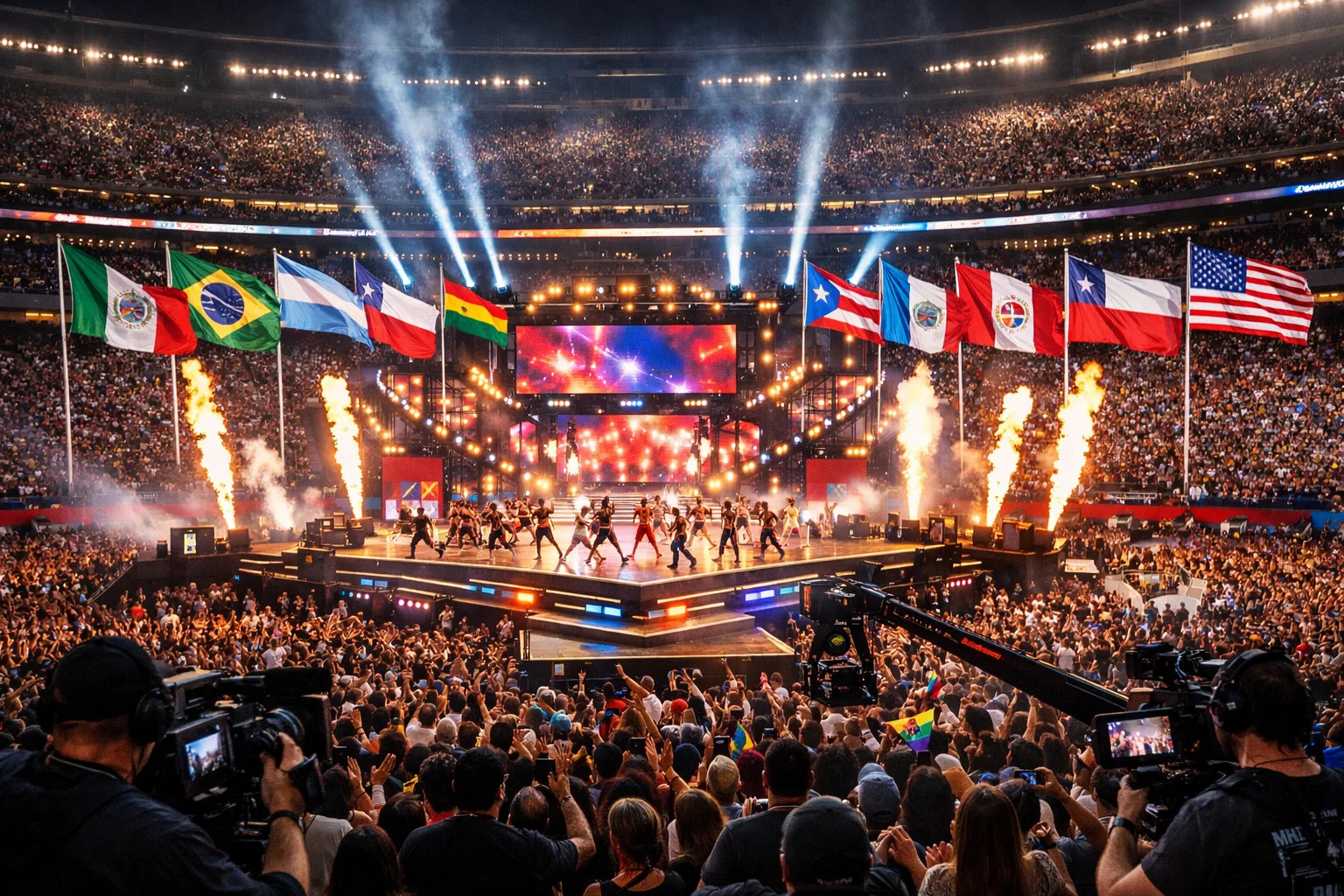


Even Being One of the Biggest Names in Latin Music, the Artist Only Received the Amount Foreseen in the Union Contract, While the NFL Funded the Show and Assured Global Exposure to More Than 250 Million People
The Super Bowl LVIII, held last Sunday (8), once again dominated the headlines and social media — and this time, one of the main reasons was Bad Bunny’s performance. The Puerto Rican singer, 31, led the traditional halftime show and quickly became one of the most talked-about subjects of the day. But, after all, how much did Bad Bunny earn to sing at the Super Bowl?
The information was disclosed by specialized entertainment and sports outlets, such as The Athletic, which detailed the financial rules behind the biggest sporting event in the United States. Contrary to what many believe, the artist did not receive a million-dollar fee from the NFL to take the stage.
Why Was Bad Bunny’s Fee at the Super Bowl Only US$ 1,000?


Although the Super Bowl halftime show is considered the most valuable stage in live entertainment, the NFL does not pay large sums to artists. In practice, the organization only covers expenses related to the production and logistics of the show.
-
Entrepreneur Turns Rio Cemetery Canteen into a Successful Snack Chain Generating $4.9 Million Annually and Expanding to Metro Stations

-
Rare fox feared “extinct” found alive on Caribbean island after over two decades without official sightings

-
21-Year-Old Brazilian Student Turns Homemade Popsicle Hobby into $100,000-a-Month Business

-
Australia Dumps Hundreds of Thousands of Tons of Gravel into Rivers to Restore Natural Barriers and Reverse 150 Years of Erosion





Furthermore, according to the SAG-AFTRA union — which represents television professionals and musical artists — the established payment is about US$ 1,000 per day of work, equivalent to approximately R$ 5,000. This amount includes rehearsals, performance, and other commitments related to the presentation.
Therefore, despite the grandeur of the event, Bad Bunny received only the so-called “union rate,” something symbolic when compared to his status as one of the most streamed artists in the world.
The Real Payment Is in Global Exposure
If the fee seems modest, on the other hand, the exposure is incomparable. According to Jon Barker, NFL Senior Vice President and Head of Global Events, taking the Super Bowl stage means reaching 250 million people at once, not counting social media, streaming, and reruns.
The numbers help to understand this logic. In 2023, for example, Rihanna’s show attracted a record 121 million viewers. During the performance, she promoted her brand Fenty Beauty by touching up her makeup on stage, a strategy that, according to Launchmetrics, generated US$ 5.6 million in earned media in the first 12 hours after the game.
In other words, even though the direct payment is US$ 1,000 per day, the indirect return can reach much higher figures. Other artists who have performed at the halftime show — such as Shakira, Justin Timberlake, and Bruno Mars — recorded significant increases in streams and sales after participating in the event.
The Performance That Celebrated Latin Identity and Culture
On the stage set up for Super Bowl LVIII, Bad Bunny not only sang — he built a narrative. The opening was by “Tití Me Preguntó,” a moment when he declared: “How Rich It Is to Be Latino.” This phrase served as a thread throughout a performance marked by identity, politics, memory, and spectacle.
During the show, the artist also performed reggaeton hits like “Safaera,” “Party,” “Voy a Llevarte a PR,” and “EoO.” In addition, stars like Jessica Alba, Karol G, and Pedro Pascal participated in the festivities, further amplifying the buzz on social media.
Consequently, even receiving an amount considered symbolic, Bad Bunny bets on the same strategy as other major entertainment names: turning minutes on stage into streaming growth, tours, commercial partnerships, and strengthening his global brand.
Thus, when asking how much Bad Bunny earned to sing at the Super Bowl, the answer goes far beyond the US$ 1,000 per day established by the union. The real business is in global projection, in enhancing his personal brand, and in the ability to convert visibility into million-dollar contracts after the final whistle.
Source: InfoMoney