Portuguese
  Spanish


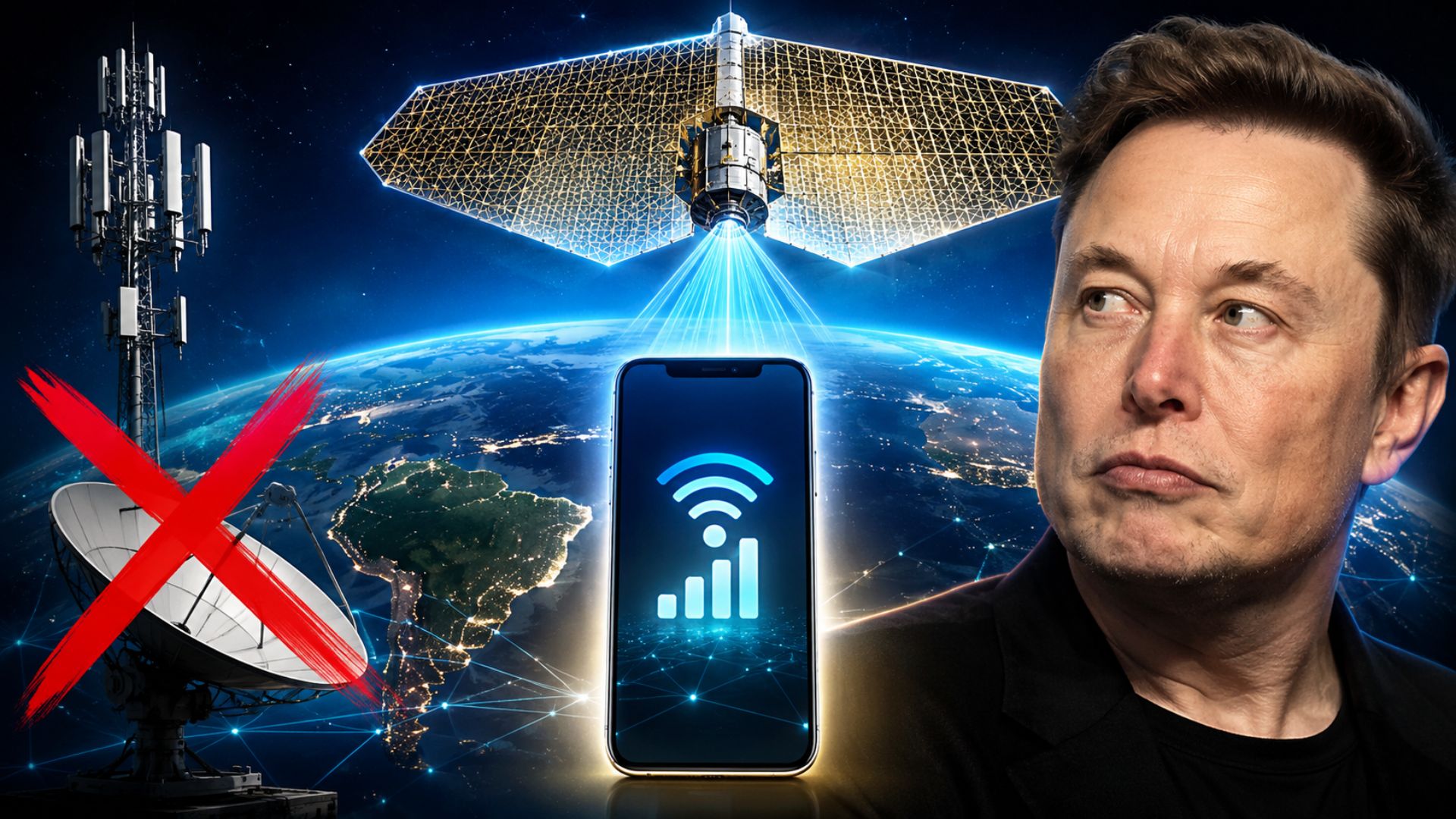

Authorized by Anatel, AST SpaceMobile intends to use satellites with giant antennas to connect 4G and 5G smartphones directly to space in regions without terrestrial coverage, with partnerships already established with TIM, Claro, and Vivo to integrate the service into existing mobile plans.
Anatel has authorized the operation of AST SpaceMobile in Brazil, paving the way for the American company to bring satellite connectivity to rural areas, forests, highways, and coastal regions where conventional cell towers do not reach or provide insufficient signal for reliable communication.
The technology used by the company is called direct-to-device (D2D), a model that allows regular smartphones with 4G or 5G technology to connect directly to AST SpaceMobile’s satellites without needing any additional equipment, external antenna, or special app installed on the device.
The system works like a “space cell tower”: when the user enters an area without conventional signal, the device automatically switches from terrestrial connection to satellite connection, keeping the service active without the user needing to take any manual action to activate the switch.
-
Chinese Man Transforms Home into 10-Story Pyramid Over 8 Years, Defying Authorities Before Demolition

-
Faced with College Costs, Brazilian Student Lived in a Minivan for Nearly Two Years to Graduate Debt-Free
-
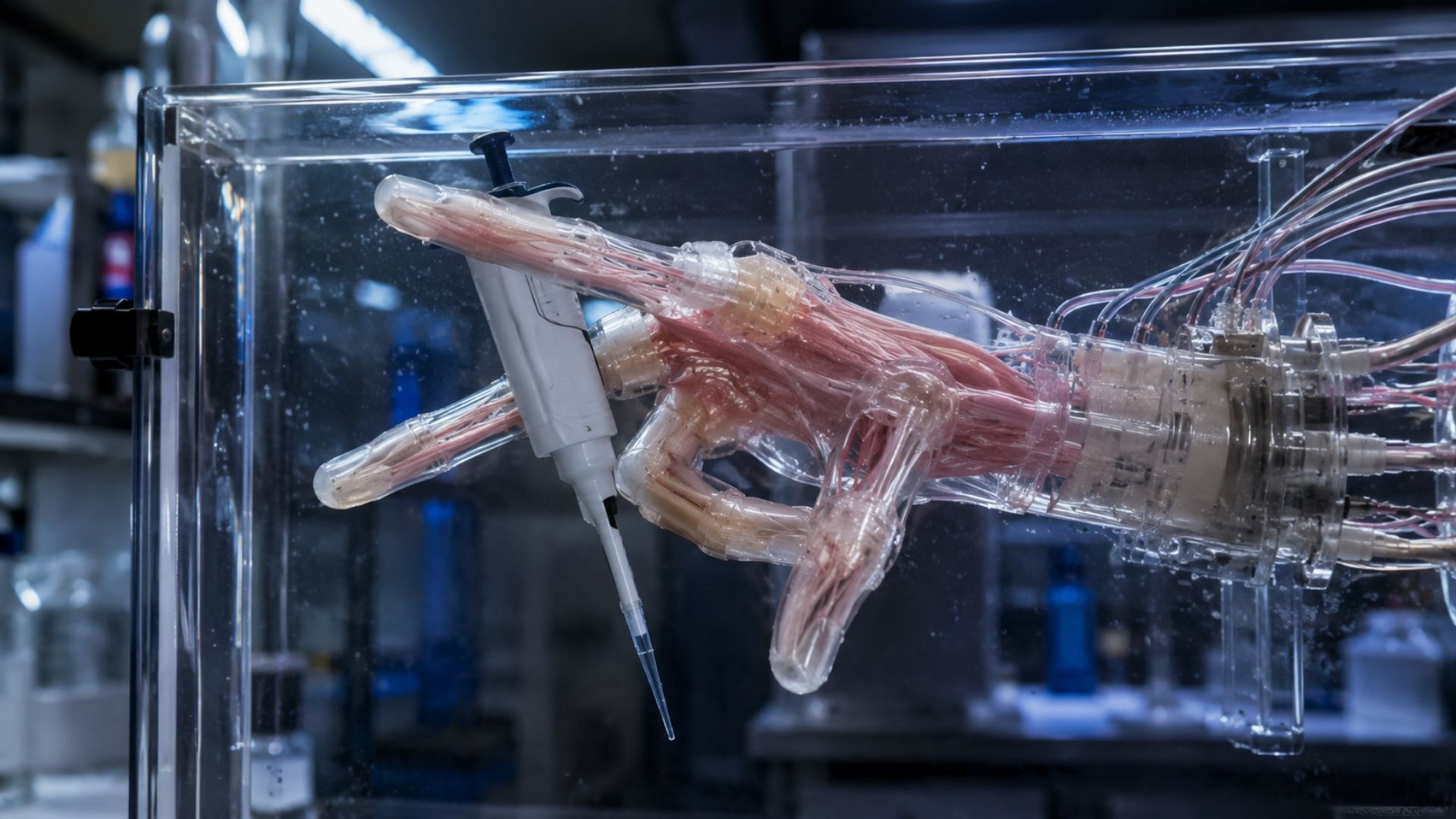
Tokyo Scientists Create First 18cm Biohybrid Hand Using Human Muscle, Capable of Scissor Gesture and Holding a Pipette

-
Brazil Faces Norway in World Cup at Stadium Linked to Jimmy Hoffa’s Mysterious Disappearance




AST SpaceMobile’s satellites are notable for the unusual size of their antennas, which reach 223 square meters, a dimension that allows capturing and sending signals with enough intensity to establish high-definition calls and support video streaming even with regular cell phones without special antennas.
Unlike Starlink, which requires a receiver terminal physically installed on site to function, AST SpaceMobile operates directly with the user’s cell phone chip, making access simpler and eliminating the need for additional equipment both for the consumer and for installation in remote locations.
Partnerships with operators and business model
AST SpaceMobile will not sell the service directly to the end consumer, but rather through agreements with traditional operators: in Brazil, the company has already closed partnerships with TIM, Claro, and Vivo, which will be able to integrate satellite connectivity as an additional benefit in the mobile plans they already offer.
The expectation of the partner operators is that the feature will be made available as a premium benefit or for an additional charge in the plans, meaning that the consumer will not need to contract a separate service, but only enable the functionality within the mobile plan they already have with their current operator.
In total, the company has agreements with more than 45 operators worldwide, including names like AT&T and Verizon in the United States and Rakuten in Japan, a model that allows scaling the technology globally without needing to build its own customer base from scratch in each market.
The license granted by Anatel may undergo future revisions, as regulatory changes in the United States, decisions by international bodies, or new technical studies by the Brazilian regulator itself may alter the company’s operating conditions in the country over the coming years.
Expansion, coverage, and impact on digital inclusion
With seven BlueBird satellites already in orbit and plans to accelerate expansion by the end of 2026, AST SpaceMobile projects to significantly expand its global coverage, with a special focus on regions in Latin America, Africa, and Asia, where the absence of terrestrial infrastructure limits access to mobile internet.
In Brazil, the expected impact is significant: the country has continental dimensions and millions of people living in rural, quilombola, indigenous, and riverside areas where cell signal is non-existent or precarious, making satellite connectivity a strategic solution to reduce historical digital inequalities.
Sectors such as agribusiness, rural health, and distance education are the most benefited by the prospect of continuous connectivity in remote regions, as the lack of signal today prevents the use of digital tools that would increase agricultural productivity, access to medical consultations, and educational continuity.
The arrival of D2D technology in Brazil also represents competitive pressure on traditional operators, who will need to offer more complete and uninterrupted experiences to justify their plans to a user who will have guaranteed access to the network even in the most remote points of the national territory.
AST SpaceMobile was founded in 2017 by entrepreneur Abel Avellan and is headquartered in Texas, United States, developing its technology with the argument that global satellite connectivity should work with the same cell phone people already have, without requiring investment in new equipment.
Anatel’s authorization marks a concrete step for Brazil to advance in the digital inclusion agenda, but the real impact will depend on the speed of satellite constellation expansion, the prices that partner operators will practice, and the quality of service delivered under real usage conditions in the field.