






 Portuguese
  Spanish


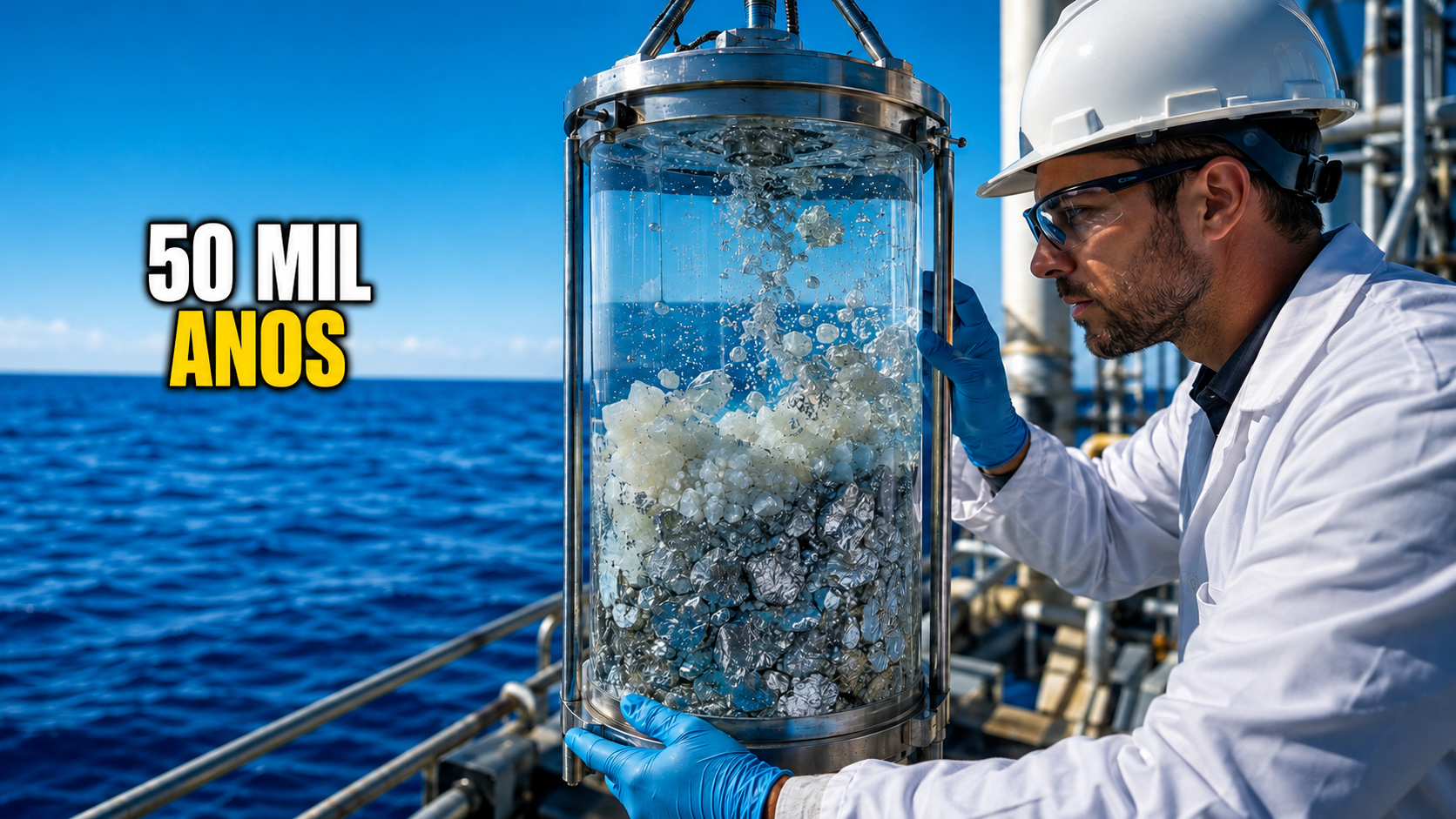

With support from the United States Department of Energy, PNNL researchers develop methods to extract critical minerals from seawater, integrate the technology into desalination plants, and utilize by-products, although the low concentration of lithium and nickel still poses engineering and cost obstacles
Researchers in the United States are developing seawater mining technologies after estimating that only 0.1% of the oceans contain enough magnesium, lithium, and other critical minerals to meet human needs for 50,000 years or more.
Oceans concentrate essential minerals for electronics and clean energy
Scientists from the Pacific Northwest National Laboratory, the PNNL, assess that the oceans hold one of the largest yet unexplored reserves of critical minerals on the planet.
Among the materials found are lithium, magnesium, manganese, cobalt, and rare earth elements. These resources are used in the production of electronics and in technologies associated with clean energy.
-
A study that ran 800,000 years of simulations raised a red flag: the gigantic ice sheet of West Antarctica could collapse with just an additional 0.25°C of ocean warming, and the melting would raise sea levels by up to 4 meters, reshaping the planet’s coastline.

-
10,800 cars on a single ship: China has stopped relying on South Korea and Japan and has started building its own 230-meter megaships to transport the production that has made it the world’s largest automobile exporter.

-
The same Namibian desert that swallows ships hides one of the greatest fortunes on the planet: the region is one of the world’s largest diamond treasures, and the country extracts more than a million carats from the seabed.
-
Each kit sold pays for a donation: students from a public school created the collective ‘Garotas de Vermelho’ to combat menstrual poverty, providing support and sanitary pads to more than 30 schools in Rio Grande do Sul, and ended up presenting the project at an innovation event in Madrid.




The research is supported by the Water Power Technologies Office of the United States Department of Energy. The team is working on developing methods capable of extracting these materials directly from seawater.
“Only 0.1% of seawater contains enough critical minerals, such as magnesium and lithium, which, if we can fully extract, will be sufficient to meet humanity’s needs for the next 50,000 years or more,” said Jessica Cross, a chemical oceanographer at PNNL.
The use of the ocean as a mineral source has occurred before. During World War II, the United States produced much of its magnesium from the sea. The country began importing the resource in the 1990s.
Low concentration hinders seawater mining
According to Chinmayee Subban, a chemist at the laboratory, the extremely low concentration of minerals represents the main obstacle. Although magnesium is relatively abundant, materials like lithium and nickel appear in much smaller quantities.
An Olympic swimming pool with approximately 2.3 million liters of seawater contains about 2,980 kilograms of magnesium. In the same volume, there is only 0.42 kilogram of lithium and approximately 0.00095 kilogram of nickel.
These proportions require engineers to process large volumes of water to recover small amounts of certain elements. On the other hand, the relatively standardized chemical composition of the oceans can facilitate the expansion of technologies.
“The biggest advantage of seawater is that, on average, it has a reasonably standardized chemical composition worldwide,” explained Subban.
According to the researcher, this characteristic allows for the development of technology for a specific location and then quickly scaling it for deployment in different regions.
Reactor recovers high-purity magnesium hydroxide
To tackle the challenge, the team developed a parallel flow reactor. The equipment keeps seawater in continuous contact with sodium hydroxide.
At the point where the liquids meet, high-purity magnesium hydroxide is formed, which can be collected. The method eliminates some steps of chemical processing.
The process ends with magnesium hydroxide, a material widely used by North American industries and currently imported in large quantities by the country.
Being modular, the system could operate alongside existing desalination plants. An analysis considered its possible integration with the Carlsbad unit in California.
If all the material were recovered, the combined facility could produce 524 thousand kilograms of magnesium hydroxide daily. The amount is equivalent to 1.16 million pounds and exceeds the current daily consumption of the United States by more than three times.
Byproducts can recover nickel and favor algae cultivation
The researchers are also investigating ways to utilize the byproducts of mineral recovery. After the removal of magnesium, the concentrated brine could undergo bipolar membrane electrodialysis, a process identified by the acronym BPMED.
The technique produces the chemical acids and bases necessary for subsequent steps. In laboratory tests, the acid derived from this process was 37% more effective in leaching nickel from olivine than conventional acids.
Other byproducts could be employed in marine cultivation. According to Scott Edmundson, a botanical researcher at the PNNL Marine Research Laboratory in Sequim, some critical materials appear in algae at concentrations a million times higher than in the surrounding water.
Previous studies have also indicated that slightly acidic seawater from BPMED can accelerate algae growth. Future systems could combine mineral recovery with the production of chemicals, fuels, fertilizers, and biomass.
Technology, however, still faces obstacles related to engineering and costs. Researchers assess that the approach could contribute to establishing a more sustainable domestic supply of critical minerals.


