Portuguese
  Spanish


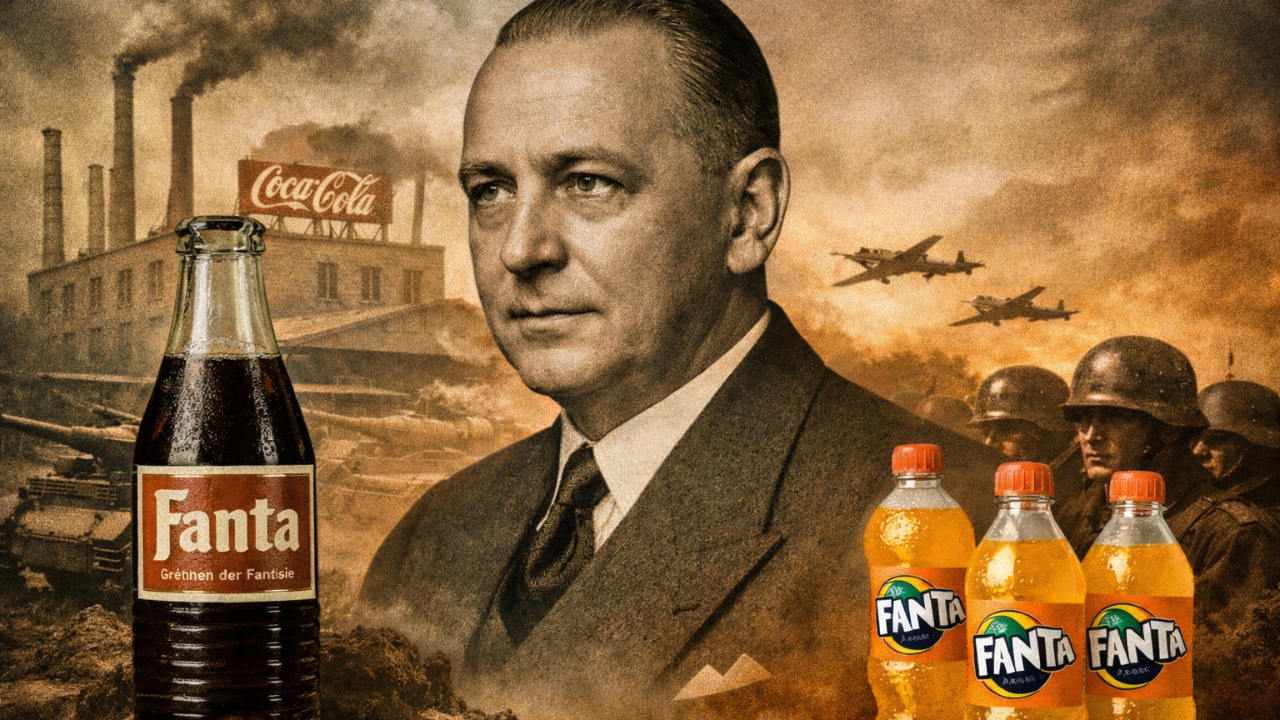


The Corporate History of Fanta Began in Nazi Germany, When Coca-Cola Sought to Survive the War Embargoes.
The connection between Fanta and Nazism reveals a little-known chapter of global corporate history.
Created in Germany during the Second World War, the soft drink emerged as an emergency solution from Coca-Cola Germany to keep its factories active in a country isolated by economic embargoes.
The product was developed in 1942, within the Third Reich, by local executives of the company, as a direct response to the restrictions imposed by the conflict and the break with the United States, the company’s headquarters.
-
YouTuber Discovers Surreal Collection in 400-Year-Old Italian Fortress Near Florence: 419 Anvils, Giant Walruses, Ancient Church, and WWII Tunnels

-
Creative Uses for Toilet Paper Rolls That Will Change Your Perspective
-
Crab Trapped in Plastic Bottle for 62 Days Near Okinawa Highlights Little-Known Impact of Marine Pollution on Small Animals
-
Esperanza’s Bamboo Barrier in Oaxaca Redirects River and Reduces Erosion by 85% in Five Years



The initiative was not ideologically driven but exposes how the military industry and war forced deep adaptations in the business world.
Fanta, Nazism, and War: The Origin of a Drink in Extreme Times
When the United States officially entered the Second World War after the Japanese attack on Pearl Harbor in December 1941, commercial relations with Germany were cut off. Coca-Cola Germany, which had been dependent on syrup imported from the American headquarters, saw its operation threatened with collapse.
According to researcher and writer Mark Pendergrast, author of the book For God, Country & Coca-Cola, the then president of the German subsidiary, Max Keith, found himself in a real “catch-22”. At the time, Coca-Cola produced only one type of soft drink and did not share the syrup formula with any international subsidiary.
Coca-Cola Germany: Isolation, Blockade, and Adaptation
In addition to the trade embargo, there was a physical blockade.
As British journalist Tristan Donovan, author of Fizz: How Soda Shook Up the World, explains, the British Navy blocked Germany’s access to strategic supplies.
As a result, Coca-Cola Germany began to operate as a nearly independent entity, with limited communication with the headquarters in Atlanta.
Without access to the original syrup and with stocks quickly running out, producing Coca-Cola became unviable.
Still, shutting down operations would mean mass layoffs and the end of the brand’s presence in the country in the midst of war.
Innovation Forced by the Military Industry
Faced with the imminent collapse, Keith opted for a creative solution.
He gathered company chemists and proposed the development of a new drink, produced exclusively with ingredients available in a wartime economy.
The result was a soft drink made from leftovers from the food industry: apple pulp and fibers, fruit peels, beet sugar, and whey.
It was a simple, cheap, and viable product amid the restrictions imposed by the military industry and rationing.
Why the Name Fanta Emerged in Nazi Germany
To name the new drink, Keith launched an internal contest.
The chosen name was Fanta, derived from the German word fantasie (fantasy).
Thus, in 1942, the soft drink that would become a global icon decades later was officially born.
Food engineer Tayla Danieli Lopes Dias summarizes the context:
“The creation of Fanta did not arise from a planned expansion strategy, but from a necessity imposed by the war.”
According to her, the intention was merely to keep the company operating until the end of the conflict.
Fanta, Nazism: Local Success and Alternative Use
Despite the improvised recipe, Fanta quickly gained popularity.
In 1943, around three million cases were sold in Germany.
Thus, in addition to being a beverage, the product began to be used as a sweetener in homemade recipes, due to the scarcity of sugar and other inputs.
Post-War and Internal Recognition in Corporate History
With the end of the Second World War in 1945, the production of Fanta in Germany was halted.
Still, Max Keith was recognized by the American headquarters as an exemplary executive for keeping the operation active under extreme conditions.
“The company began to see Keith, who ran Coca-Cola in Nazi Germany, as a hero,” Pendergrast states.
Despite this, the researcher emphasizes that Keith was not a member of the Nazi Party and acted out of business pragmatism, not ideological alignment.
From Germany to Italy: The Reinvention of Fanta
Then in 1955, The Coca-Cola Company decided to repurpose the name Fanta to launch a new soft drink in Italy — this time with an orange flavor.
The choice was strategic, as citrus beverages were popular in post-war Europe.
Donovan highlights:
“Fanta was Coca-Cola’s first foray into drinks that were not Coca-Cola.”
Thus, the brand ceased to be just an improvisation of Coca-Cola Germany and became officially part of the company’s global portfolio.
A Historical Shadow That Still Generates Debate
Although the company claims that “the rumors that Fanta was invented by the Nazis are completely false,” experts recognize that the soft drink was born within Nazi Germany, which inevitably raises questions.
For Tayla Dias, this past represents a reputational risk.
From a market perspective, however, the short, catchy, and easy-to-pronounce name helped to solidify the brand worldwide.
Fanta Today: Global Success Beyond the Past
Currently, Fanta is present in dozens of countries, including Brazil, where it occupies a prominent position in the soft drink market.
Today, the product, now associated with a diversity of flavors and young audiences, retains only the name as a link to its origins in the Second World War.