Portuguese
  Spanish


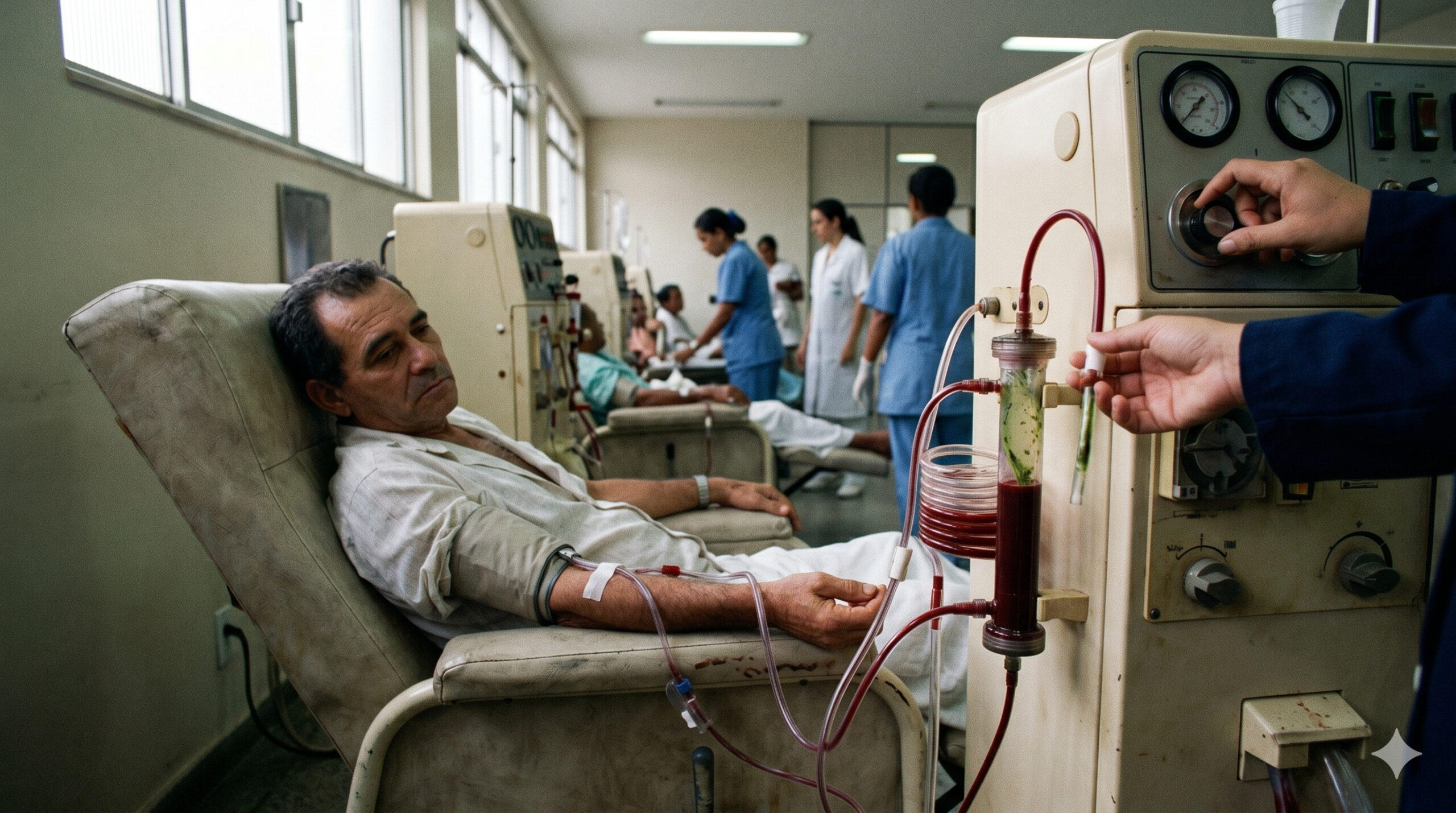

Hemodialysis tragedy in Caruaru killed 60 people after water contaminated with microcystin reached kidney patients.
In February 1996, in Caruaru, Pernambuco, a routine procedure at the Institute of Kidney Diseases ended in one of the biggest health tragedies ever recorded in Brazil. Patients undergoing hemodialysis began to show severe symptoms shortly after treatment, and the case gained international dimension after being analyzed in studies published in The Lancet, on July 4, 1998, and in technical documents from the National Health Foundation, linked to the Ministry of Health, published in May 2003.
The number of victims exposed a critical flaw in a point that should be rigorously controlled: the water used in the hemodialysis process. According to Funasa, 130 chronic kidney patients presented a condition compatible with severe hepatotoxicosis, 60 died up to ten months after the onset of symptoms, and analyses confirmed microcystins in the blood and liver of intoxicated patients, as well as microcystins and cylindrospermopsin in the clinic’s water purification system.
The investigation indicated that the contamination was linked to cyanobacteria present in the reservoir that supplied the city, organisms capable of releasing dangerous toxins in contaminated waters. The episode became known worldwide as the first confirmed case of human deaths caused by cyanotoxins in a hemodialysis setting, turning Caruaru into an extreme alert about the invisible risk that can arise when hospital water fails even before reaching the patient.
-
How to Prevent Brown Recluse Spider Bites: Common Hiding Spots and Free Tips to Reduce Risks

-
Natto: The Unusual Japanese Superfood Gaining Popularity on Social Media and Driving Record Exports
-
Brazilian Mayor Goes Undercover as Homeless for 24 Hours to Assess Public Services

-
15-Year-Old Entrepreneur Malu Lira Publishes 20 Children’s Books on Financial Education, Earns $500,000, and Expands Her Project to the Amazon Rainforest




How hemodialysis works and why water is a critical factor in the medical procedure
Hemodialysis is an essential treatment for patients with kidney failure. In this process, blood is filtered by a machine that removes toxins and excess fluids that the kidneys cannot eliminate.
For this to work, a solution called dialysate is used, which comes into indirect contact with the blood through a semipermeable membrane. This solution is mostly composed of purified water.
This means that any contamination in the water can cross barriers and reach the patient’s body. Unlike oral ingestion, where the digestive system can reduce impacts, in hemodialysis, exposure occurs almost directly.
Microcystin contamination turned treated water into a toxic agent within the clinic
The investigation revealed that the water used at IDR was contaminated with microcystin, a toxin produced by cyanobacteria, also known as blue-green algae.
These bacteria proliferate in aquatic environments with a high nutrient load, such as eutrophicated reservoirs. The water source was associated with the Tabocas dam, which presented favorable conditions for the growth of these cyanobacteria.


Microcystin is highly toxic to the liver. When ingested in small quantities, it can already cause damage. When it enters the bloodstream directly, as in hemodialysis, its effects become much more severe.
Treatment system failure allowed toxin to reach patients directly
The clinic’s water purification system failed to adequately remove microcystin. At the time, many systems were not designed to filter this specific type of toxin.
Furthermore, there were operational failures and a lack of effective monitoring. The combination of these factors allowed contaminated water to be used in hemodialysis procedures.
The result was direct and continuous exposure of patients to the toxin, in an environment where the body was already weakened by kidney diseases.
Symptoms appeared rapidly and progressed to liver failure in several patients
The first signs appeared shortly after hemodialysis sessions. Patients began to experience nausea, vomiting, abdominal pain, and intense malaise.
In a few days, the condition evolved into severe liver damage. Many patients developed acute liver failure, a condition that can lead to death in the short term.
The rapid evolution made the initial response difficult. As symptoms appeared in several patients at the same time, identifying the cause took some time, increasing the number of victims.
National and international investigations confirmed the presence of the toxin in the water system
The case mobilized specialists in Brazil and abroad. Water and patient tissue samples were analyzed to identify the cause of the intoxication.
Studies published later confirmed the presence of microcystin in patients and in the water used at the clinic. The publication in The Lancet journal consolidated the case as a global reference for cyanotoxin poisoning in a clinical setting.
This episode began to be cited in research on water safety, hemodialysis treatment, and risks associated with environmental toxins.
Tragedy exposed fragility in water safety protocols in healthcare units
Before the Caruaru case, concern about cyanotoxins in hemodialysis systems was limited. The tragedy showed that water quality needs to be treated as a critical safety factor.
After the episode, stricter norms began to be adopted. More advanced filtration systems, constant monitoring, and specific standards for toxin removal became part of the requirements.

The case also reinforced the need for integration between sanitary surveillance, hospital management, and environmental control.
Cyanobacteria and eutrophication continue to be a real risk in Brazilian reservoirs
The phenomenon that originated the toxin has not disappeared. The proliferation of cyanobacteria still occurs in various reservoirs, especially in regions with nutrient pollution.
This process, known as eutrophication, can be intensified by factors such as untreated sewage, agricultural fertilizers, and high temperatures.
The presence of cyanotoxins in water is currently monitored, but the risk remains, especially in systems that do not have adequate treatment.
Caruaru case became a global reference in studies on microcystin and public health
The Caruaru tragedy began to be studied in universities and health institutions around the world. The case is cited as an extreme example of failure in water quality control.

Subsequent research deepened the understanding of the effects of microcystin on the human body, especially in direct exposures such as hemodialysis.
Furthermore, the episode influenced public policies and international guidelines on water safety in hospital environments.
Impact led to regulatory changes and greater control over hemodialysis systems
After 1996, health authorities began to demand stricter standards for water treatment in dialysis clinics.
This includes multiple filtration stages, activated carbon use, reverse osmosis, and continuous monitoring of water quality.
Supervision was also expanded. Clinics began to be subjected to more frequent inspections and more detailed protocols.
Tragedy revealed that invisible failures can cause devastating effects in medical systems
The Caruaru case shows that invisible risks can have extreme consequences. Water, an apparently simple element, became a vector for a lethal toxin.
The combination of environmental factors, technical failures, and lack of monitoring created a scenario where patients were exposed without any protection.
This type of risk is difficult to detect without robust control systems, which reinforces the importance of constant vigilance.