





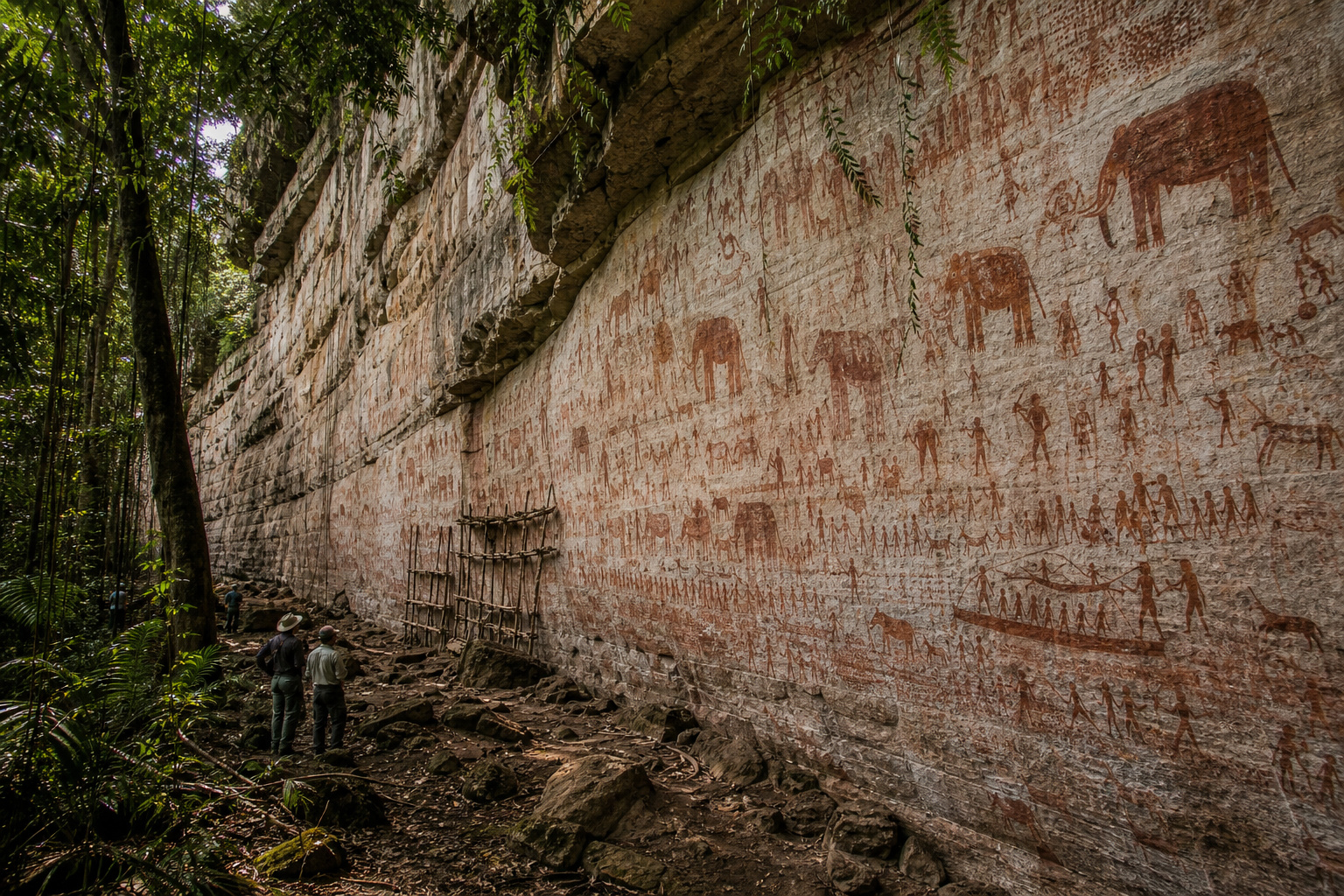

Discovery in Serranía de la Lindosa reveals records of megafauna, human habits, and climate changes that occurred over 12,000 years ago
Archaeologists have identified an archaeological discovery of great historical relevance in the Colombian Amazon. The finding revealed one of the largest collections of rock art ever documented in the world, with thousands of paintings on rock faces of the Serranía de la Lindosa.
In this context, researchers analyzed a collection that extends for about 12 kilometers and gathers records preserved for millennia. The dimension, visual richness, and condition of the paintings led specialists to compare the site to a “Sistine Chapel of Antiquity”.
According to researchers from the University of Exeter, involved in the LASTJOURNEY project, human groups began producing these paintings approximately 12,500 years ago. This period marked intense climatic transformations in the region.
-
SpaceX launch turned Falcon 9 into a giant jellyfish in the night sky, with a colorful plume illuminated by the Sun at high altitude, confusing observers and showing how a routine flight can become a rare spectacle of atmospheric physics over Earth.

-
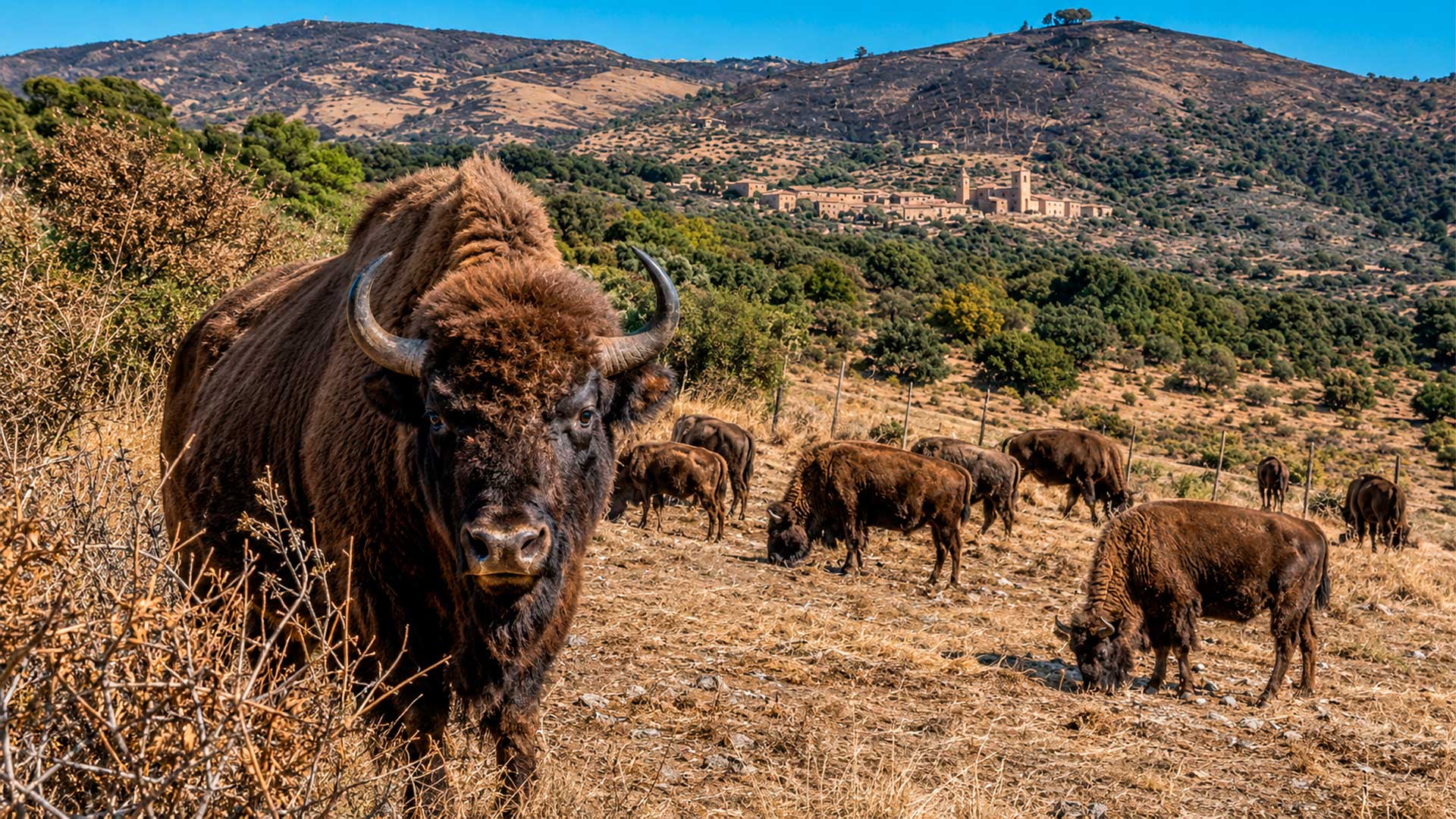
Spain places 9 bison in a fenced area of 400 hectares to test a new barrier against fire, but scientists warn that, although they control the underbrush, there is no evidence that the animals can reduce large fires.

-
YOU LOOK AT SUGAR EVERY DAY, BUT THERE IS A BAN ON IT THAT ALMOST NO ONE KNOWS; UNDERSTAND WHY MAKING IT AT HOME IS NOT ALLOWED IN BRAZIL

-
Arrival of the São Francisco River waters in Rio Grande do Norte marks a historic chapter, boosts development, and symbolizes social justice for millions of Northeasterners.



Archaeological Discovery Reveals Ancient Occupation of the Amazon
The discovery occurred in a remote area of Colombia, where rock formations spread for almost 13 kilometers. In this scenario, dense vegetation protected the drawings for millennia and helped keep much of the records intact over time.
In turn, British and Colombian specialists state that the archaeological site changes the way ancient Amazonia is viewed. On the contrary, the region already housed human societies with social organization, technical mastery, and a strong relationship with the surrounding environment.


Rock Paintings Record Extinct Animals and Daily Life
The paintings function as a visual archive of extinct megafauna and the first human populations of South America. Among the most relevant records are animals that disappeared thousands of years ago and scenes related to routine, food, and collective life.
Among the main elements identified are mastodons, ancient relatives of elephants, and giant sloths in proportions indicating large size. Also appearing are human figures in motion, possible dances, and scenes of fishing and gathering, associated with adaptation to the changing environment.

Dating Confirms Ice Age Records
According to the LASTJOURNEY project, the dating of sediments indicates the beginning of the paintings approximately 12,500 years ago. This period coincides with a phase of global climatic transition, when the Amazon region was still undergoing significant environmental changes.
Consequently, the records reveal a gradual change in human habits. The scenes suggest a shift from hunting large mammals to practices related to fishing and fruit gathering, accompanying the warming climate and the transformation of local fauna.
Advanced Techniques Indicate Organization and Planning
The studies also indicate that the ancient artists represented animal movements and behaviors with precision. This wealth of detail shows remarkable technical mastery, especially given the antiquity of the paintings and the environmental conditions.
Still, many drawings appear in elevated areas of the rock faces. Therefore, researchers indicate that ancient groups may have used structures to reach the highest points, demonstrating planning, cooperation, and social organization.
Discovery Reinforces Importance of Amazon Preservation
The identification of this archaeological megacomplex expands the understanding of human presence in the Amazon before European colonization. The finding shows that the forest also holds historical records of ancient societies, capable of producing art, organizing collective practices, and recording environmental changes.
In this sense, the discovery reinforces the need to preserve not only Amazonian biodiversity, but also its archaeological and cultural heritage. After all, each section of this painted wall represents a part of the history of the populations that lived in the region thousands of years ago.
Given this, one question remains inevitable: how many other records of human history might still be hidden beneath the Amazon rainforest?


