






 Portuguese
  Spanish
  7 min of reading
  0 comments


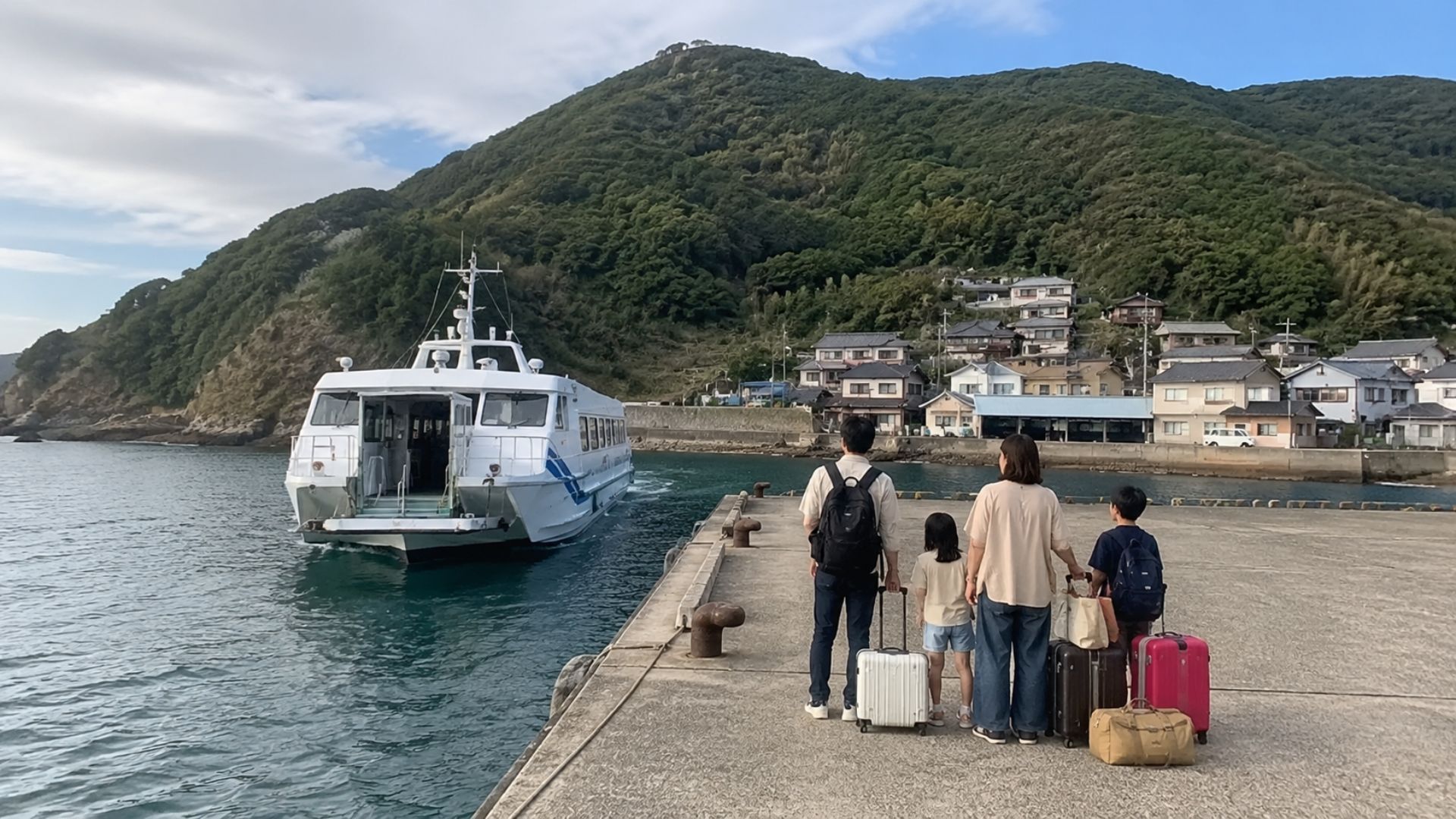
Mishima program draws attention for combining monthly assistance, moving support, and affordable housing on remote islands of Japan, but the benefits follow specific rules, require legal residence in the country, and depend on commitment to the local economic life.
Mishima, a Japanese village formed by remote islands in the south of the country, maintains a financial incentive program to attract new residents willing to settle in a community marked by isolation, low population density, and the need to preserve local activities.
In addition to monthly assistance for up to three years, the initiative provides support for moving costs, initial payment for installation, and additional support for families with children, in an attempt to encourage the permanence of people capable of contributing to the routine of the islands.
In Kagoshima Prefecture, the municipality comprises three inhabited islands: Takeshima, Iojima, and Kuroshima, where access mainly depends on maritime transport and daily life follows a dynamic far from the major Japanese centers.
-
Survivor of 1966 SS Daniel J. Morrell Shipwreck in Lake Huron Recounts 38-Hour Ordeal in Extreme Cold

-
The Greatest Hoax in World Cup History? The Film That Denied Brazil’s 1958 Victory and Exposed How Fake Evidence Can Seem Convincing on TV
-
Fake South Korean Online Stores Offer Shopping Thrill Without Spending Money or Receiving Products
-
The War of Jenkins’ Ear: How a Severed Ear Sparked One of the 18th Century’s Most Unusual Conflicts


Instead of the infrastructure of metropolises like Tokyo, Osaka, and Yokohama, residents deal with ferry schedules, a smaller offering of services, and a more direct relationship with the community, factors that make adaptation a central part of the process.
The local administration conducts the program as a population settlement policy, aimed at people who intend to work independently in activities compatible with the village’s economy and the needs of the islands.
According to official rules, the support targets new residents interested in working in areas such as agriculture, fishing, forestry, or other occupations linked to the local reality, without treating the move as a temporary or merely touristic experience.
Monthly assistance in Mishima can last up to three years
Depending on the family composition, the monthly benefit changes in value and can reach 85,000 yen per month for single individuals, while couples may be entitled to up to 100,000 yen monthly during the support period.
When there are children living in the same residence, the village adds 20,000 yen for the first child and 10,000 yen for each additional child, creating a specific incentive for families that can help maintain community life.
Even so, the payment does not function as a permanent salary nor does it replace the need for personal income, as the maximum assistance period is three years and serves only as support for the installation phase.
During this period, each family needs to organize a sustainable way of staying, whether through self-employment, local activities, or businesses compatible with the island economy and the existing possibilities in Mishima.
In addition to the monthly aid, the municipality offers an initial payment for those who arrive in the village and begin the installation process, with different amounts according to the size of the family benefiting from the program.
Families consisting of one person can receive 300,000 yen, while households with two or more people may be entitled to 500,000 yen, an amount designed to reduce part of the initial relocation costs.
In specific situations of entering livestock farming, this support can be replaced by a calf, an alternative provided only for those who establish themselves as rural producers and take on activities linked to the economic functioning of the islands.
There is also assistance to cover part of the transportation of goods by the local ferry, an important step in an island community where furniture, equipment, and belongings depend on sea transport to reach the new address.
In this case, the support is limited to the transportation cost on the Mishima Ferry or 100,000 yen, whichever is less, a rule that seeks to reduce costs without turning the relocation into an unlimited benefit.
Who can receive the Mishima aid
Despite the international repercussion, the proposal is not open to anyone interested in living in Japan, because the official rules link the incentive to migration status, documentation, and administrative approval of the village.
Among the basic criteria, the head of the family must be up to 55 years old on the date of receiving the residency request and make a prior visit to the location on their own before advancing in the process.
This visit allows the candidate to know the real conditions of housing, transportation, work, and adaptation, especially because the routine in Mishima depends on the sea and does not offer the same structure as urban areas.
The nationality and residency criteria also delimit who can participate, restricting the policy to Japanese citizens, families with a Japanese household head or spouse, permanent residents in Japan, and couples with permanent visas.
Family members of these groups can also be included, provided they meet the conditions set by the local administration and have the legal capacity to live in the country under Japanese migration rules.
Thus, the program distances itself from viral publications that present Mishima as a simple opportunity for any foreigner to receive money and immediately move to a Japanese island.
In practice, the incentive exists, but it depends on legal authorization to live in the country, proper documentation, municipal analysis, and compatibility between the candidate’s life project and the community’s needs.
The application process involves submitting documents, administrative evaluation, and an interview, steps used by the village to verify if the move has concrete conditions to contribute to the local economy.
Among the required materials are the application form, the head of the family’s resume, family document, proof of income, and business or life plan, according to the rules published by the Mishima administration.
Affordable housing and routine limited by the sea
Another point that explains the interest in the initiative is the existence of public houses aimed at settling new residents, with lower values than those practiced in large Japanese cities.
The availability of these houses, however, depends on the village’s analysis, the existing units, and the compatibility between the candidate’s profile and the community’s needs on each of the inhabited islands.
Even with financial support and affordable housing, life in Mishima imposes limitations that need to be considered before the move, especially by those accustomed to the wide range of urban services.
On the islands, the routine is dictated by the ferry schedules, more restricted commerce, the distance from large hospitals, and a greater dependence on cooperation among residents to solve everyday demands.
At the same time, the isolation also adds to the region’s appeal, as the islands are surrounded by the sea and natural areas that contrast with the more well-known image of urban and densely populated Japan.
For people interested in starting anew away from major centers, this scenario helps explain the curiosity sparked by the program, although the financial benefit does not eliminate the challenges of adaptation.
The city hall treats migration as part of a community revitalization strategy, not as a short stay aimed only at personal experience or immediate interest in the offered values.
For this reason, the intention is to attract residents capable of strengthening the economy, maintaining essential services, creating bonds with the local population, and sustaining activities that depend on a permanent presence on the islands.
Population decline pressures Japanese villages
The case of Mishima is part of a challenge faced by rural, mountainous, and insular areas of Japan, where population aging and the departure of young people to urban centers have pressured small communities for decades.
With fewer families living in these territories, schools, service posts, local commerce, and food production activities face greater difficulties to function regularly.
Therefore, settlement programs try to attract people willing to work, stay, and take an active role in community life, especially in places where the loss of inhabitants directly affects the collective routine.
Mishima’s policy draws attention by combining monthly assistance, relocation support, initial payment, additional child allowance, and livestock-related incentives, elements that are uncommon in a single municipal initiative.
This combination creates an unusual image for readers outside Japan, but the program’s design makes it clear that the benefits are tied to specific rules and a requirement for staying.
Moving to the village requires more than just interest in the advertised values, because staying depends on adapting to maritime transport, the small economy, limited services, and close interaction with the community.
For some candidates, these conditions may represent precisely the appeal of a life more integrated into the territory; for others, the isolation may outweigh the financial support offered initially.
The program continues as a local attempt to tackle population decline without breaking away from the economic reality of the islands, using financial incentives as a starting point to attract new residents.
The continuation of life in Mishima, however, depends on each family’s ability to build income, routine, and connection with a territory where the sea defines an important part of daily life.





-

1 person reacted to this.