Portuguese
  Spanish


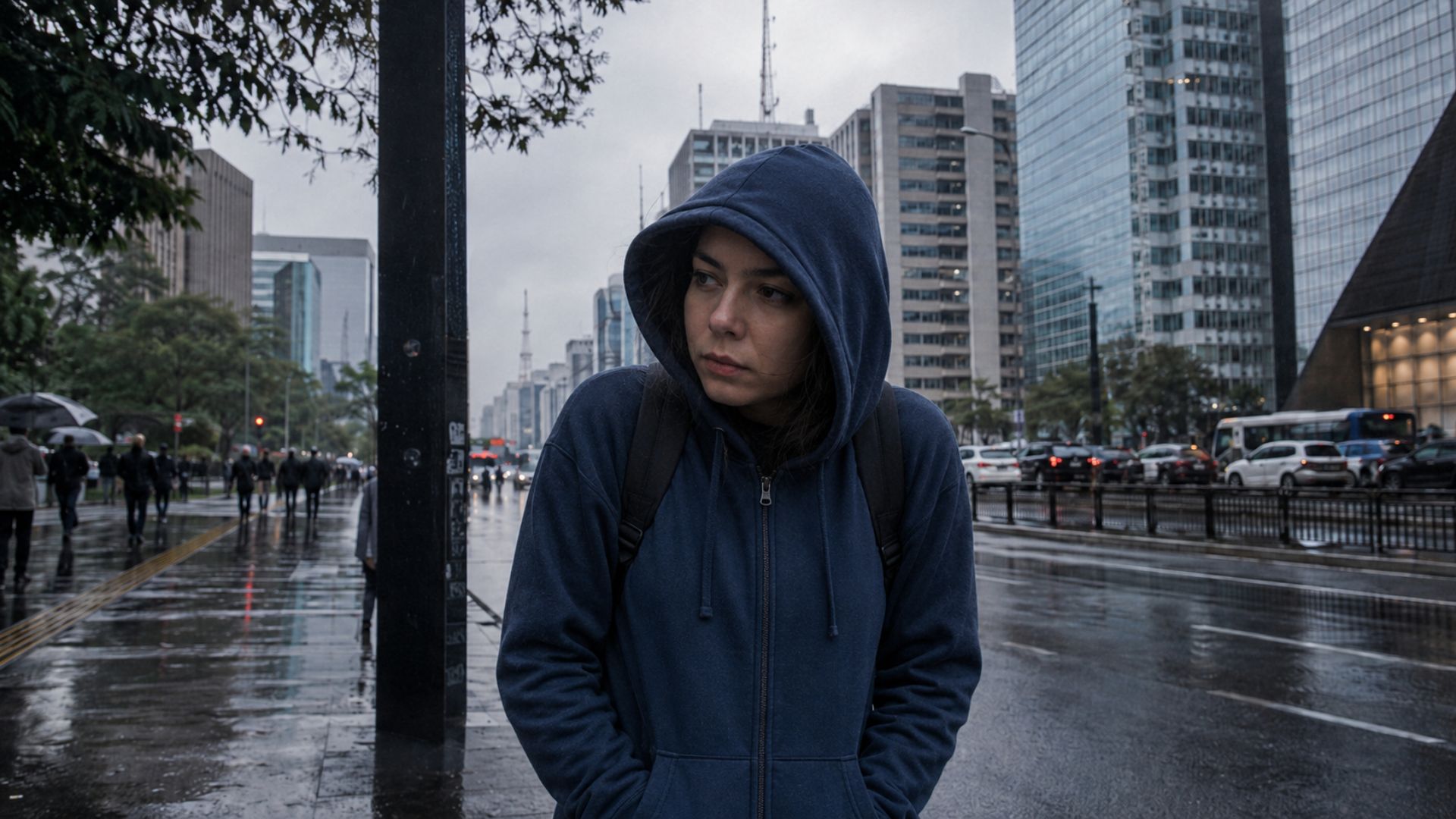

Rain, cold, and storms return to influence the weather in the South and Southeast, with emphasis on São Paulo, Paraná, and Santa Catarina. The combination of polar air, humidity, and overcast skies keeps temperatures low, with a risk of wind gusts and attention to new instabilities.
Rain and cold regain strength this Friday (22nd) in parts of the South and Southeast, with greater attention to areas of Paraná, Santa Catarina, and São Paulo.
The combination of atmospheric instabilities, humidity, and cold air keeps the weather overcast, favors isolated storms, and holds temperatures at low levels for capitals and inland regions.
According to Climatempo, the scenario is caused by the action of a new meteorological trough, associated with moisture flow and maritime infiltration.
-
Mystery of the Crooked Forest: Hundreds of Pine Trees in Poland Grow with Identical J-Shaped Curves

-
Chinese Buildings Use Mist System to Combat Extreme Heat, Cooling Surfaces by Up to 8°C; Water Consumption Limits Use in Drier Cities

-
German Shepherd Fails Guide Dog Test Due to Attachment to Plush Elephant, Viral Moment Captured at Train Station

-
50,000 Satellites with Giant Mirrors: Solar Light Sold via App Sparks Controversy Among Startup, FCC, Astronomers, and Environmentalists in the US




This set helps organize areas of instability, increases cloudiness, and reinforces conditions for rain in different parts of the country, especially between the South, part of the Southeast, and the North Region.
“The action of a new meteorological trough, combined with moisture flow and maritime infiltration, organizes the instabilities and reinforces the scenario of attention in various areas of the country,” informed Climatempo.
The company highlights that rain tends to occur more frequently throughout the day, with varying intensity depending on the region.
Storms in Paraná and Santa Catarina
In the South of Brazil, unstable weather gains strength mainly over Paraná and Santa Catarina, where there are conditions for rain showers, lightning, and wind gusts.
In some areas, the instability may be accompanied by storms, although the distribution of rain varies greatly between coastal, mountainous, and inland areas.
The National Institute of Meteorology also indicated, in a weekly bulletin, the presence of persistent rain in the coastal stretch between Santa Catarina and São Paulo during the week of May 18 to 25.
The agency also pointed out more moderate precipitation in part of the southern coast of Bahia, while areas of the Midwest, western Bahia, southern Tocantins, and parts of the northeastern interior maintain a drier pattern.
Besides the rain, the drop in temperature remains another relevant factor in the region.
The polar air that advanced through the south-central part of the country has lowered the thermal marks in recent days, especially in the higher areas of the South, where the minimums were low and reinforced the feeling of cold during the morning and at night.
Weather forecast in São Paulo
In São Paulo, Friday is expected to be marked by overcast skies, more frequent rain, and low temperatures.
Climatempo forecasts cloudy weather on the coast, in the eastern strip, in the metropolitan region of the São Paulo capital, in the Paraíba Valley, and in interior areas, with generally light to moderate rain throughout the day.
According to the company, there is a possibility of locally heavy rain, with lightning and wind gusts, in the north, northeast, and parts of the São Paulo interior.
The instability is not expected to occur uniformly throughout the state, but the increase in clouds reduces the presence of the sun and helps maintain a lower thermal sensation.
In the São Paulo capital, temperatures remain moderate until Saturday, May 23, with a maximum forecast of around 18°C.
From Sunday, May 24, the trend indicated by Meteoblue is a gradual rise, with highs close to 20°C, without a significant increase in heat in the following days.
Even with the slow recovery, the forecast does not indicate intense warming in the short term.
On certain days, thermometers should not exceed 23°C, while humidity and cloudiness may still favor rain between Saturday and Monday, May 25, especially during periods of greater instability.
Rain in the Southeast affects Minas, Rio, and Espírito Santo
The instability is not limited to São Paulo.
Climatempo points to an increase in rain in areas of Minas Gerais, Rio de Janeiro, and Espírito Santo, with the possibility of more frequent precipitation in sectors of the Southeast.
The trough’s activity and the presence of humidity favor the formation of heavy clouds in isolated spots.
Inmet reported that attention in the Southeast is especially focused on the Zona da Mata in Minas, the north of the state of Rio de Janeiro, and the south of Espírito Santo.
In these areas, strong and locally intense showers may occur, with the potential for punctual disruptions when the rain concentrates in a short interval.
Although the volume forecast for the Southeast is not comparable to the accumulations expected for areas of the North Region, the localized intensity is concerning.
Quick and strong showers can increase accumulations in a few hours, especially between night and early morning, a period when instabilities tend to organize more easily.
Storm alert in the North Region
While the cold draws attention in the south-central region, the North Region remains under alert for storms and high volumes of rain.
According to Climatempo, areas in the North remain subject to heavy rainfall, with the risk of significant accumulations in some states and the maintenance of the instability pattern.
Inmet also highlighted the possibility of heavy rain in Amazonas, Pará, Amapá, and Roraima during the week.
In isolated areas, accumulations may exceed 200 millimeters during the period, especially in areas of the far west of Amazonas, Roraima, northern Amapá, and the border strip between Amazonas and Pará.
In Acre and Rondônia, the forecast indicates more modest volumes compared to other areas of the Northern Region.
Even so, the arrival of cold air of polar origin to part of the region contributed to a drop in temperature and a feeling of cold, a phenomenon that had already been observed in previous episodes this month.
Capitals record lowest maximum of 2026
The polar air mass and excess clouds lowered temperatures in several Brazilian capitals, mainly in the South, Southeast, and part of the Midwest.
Climatempo reported that on May 19, São Paulo, Cuiabá, and Rio Branco recorded the lowest maximum temperatures of 2026 up to that point.
Among the capitals, Curitiba marked 16.4°C, while Porto Alegre reached 16.7°C and Campo Grande recorded 17.8°C.
São Paulo had a maximum of 18.3°C, Cuiabá marked 19.4°C, and Rio Branco reached 20.2°C, values that represented an annual record of the lowest maximum in these last three capitals.
The drop in maximums was favored by the combination of cold air, overcast skies, and little or no sunshine during part of the day.
When cloudiness persists, solar radiation reaches the surface with less intensity, which limits warming and keeps the afternoon feeling cooler.
In São Paulo, this pattern repeats in the following days, with maximums still low for the city’s standards.
The sequence of overcast weather, occasional rain, and humid wind keeps the capital under a typical condition of a colder autumn, even without an indication of a widespread extreme drop in temperatures.
Cold should gradually lose strength
In the coming days, the trend is for a gradual weakening of the cold in part of the center-south, but without an immediate return of strong heat in São Paulo.
Cloudiness, maritime infiltration, and areas of instability should still influence the thermal sensation, especially in regions close to the coast and in higher areas.
In the South, rain tends to oscillate as instabilities advance, with attention to isolated storms in Paraná and Santa Catarina.
In the Southeast, the combination of humidity and atmospheric circulation maintains conditions for rain in areas of São Paulo, Minas Gerais, Rio de Janeiro, and Espírito Santo, although the intensity varies greatly.
The recommendation for the population is to follow the meteorological warnings from official agencies and forecasting companies, especially in areas prone to storms, wind gusts, and heavy rain.
Rapid weather changes can affect travel, outdoor activities, and areas with a history of flooding.