






 Portuguese
  Spanish


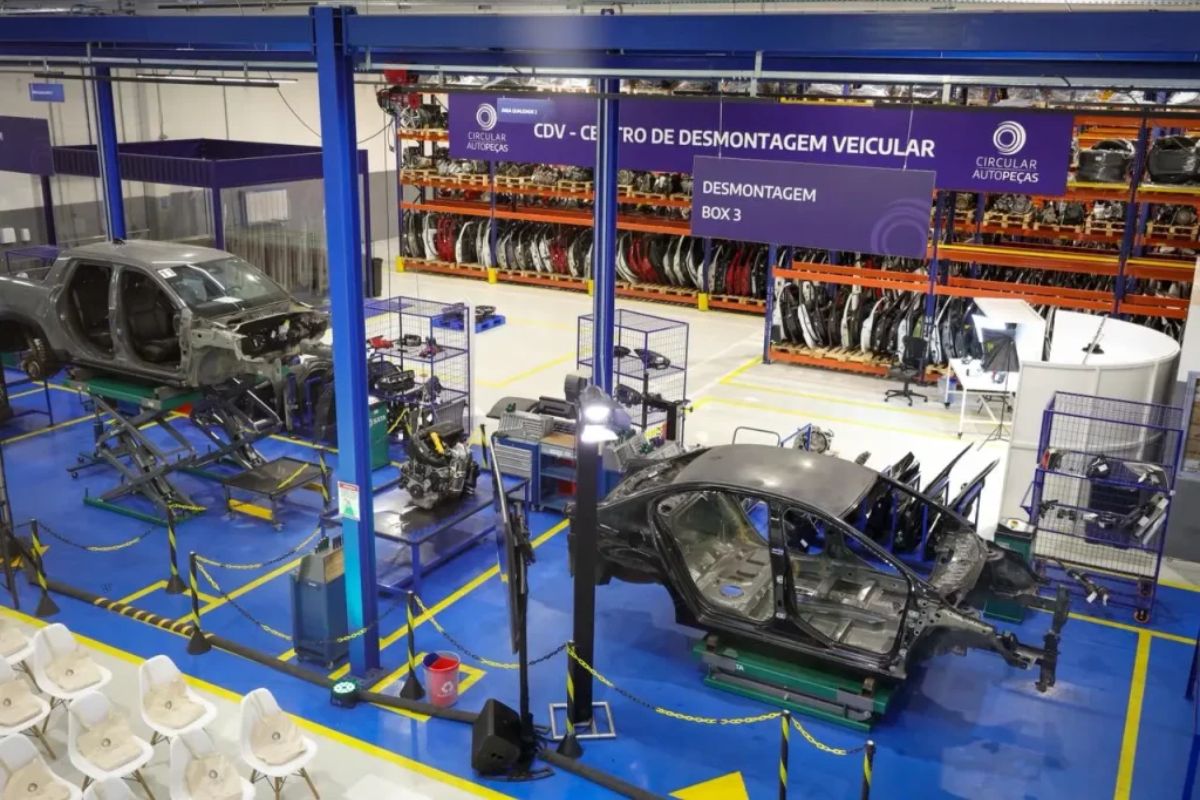


Detrans Auctions Reveal That Stellantis, Owner of Fiat and Jeep, Is Buying Vehicles Classified as Junk to Dismantle and Resell Parts in Brazil.
The Stellantis, owner of Fiat and Jeep, surprised the automotive sector by entering a market little known to the general public: the vehicles classified as junk. The giant, which also controls Peugeot, Citroën, and Ram, has started to compete at auctions for cars and pickups that can no longer legally circulate, dismantling them for resale of parts in the used market.
This movement changes the dynamics of a sector that has always been dominated by small dismantlers and local workshops, which now face a heavyweight competitor. At auctions held in Minas Gerais, like the one from Detran in João Monlevade, vehicles valued at up to R$ 30,000 are auctioned for initial prices of R$ 2,000 to R$ 3,000, only to be dismantled.
How the Junk Market Works
At Detran auctions, cars, motorcycles, trucks, and pickups are classified as “junk” for bureaucratic and legal reasons. This can happen due to alterations in the engine or chassis, documentation irregularities, or simply because they came from another state.
-
Half of Brazilians Prefer Lower Taxes with Private Health and Education, While 44% Opt for Higher Taxes for State-Provided Services, Datafolha Survey Reveals

-
Brazil’s Most Expensive Toll Rises to R$ 40.60 on Route from São Paulo to the Coast, Nearly Matching Bus Fare to Santos

-
As Brazil Expands Social Welfare, Survey Reveals 40% Blame Poverty on Laziness, While 58% Cite Lack of Opportunities

-
China Tightens Control on Antimony, Driving Prices from $22,000 to Nearly $40,000 per Ton as U.S. Rushes to Bolster Strategic Reserves




The law prohibits these vehicles from returning to the streets. Only companies accredited by Detran and registered under the specific CNAE for automotive dismantling can participate. It is in this space that Stellantis, owner of Fiat and Jeep, has begun to operate, acquiring entire lots of cars to supply the spare parts market.
The Impact on Small Dismantlers
Previously, this market was restricted to local entrepreneurs, who made dismantling a source of regional income. Now, the presence of a multinational like Stellantis raises concerns about the survival of these smaller businesses.
With capital, logistics, and industrial structure, the company can dismantle not only the vehicles acquired at auctions but also new cars used in internal factory tests. Each item, from tires to engines, headlights, and accessories, becomes an additional profit source for the company.
Why Stellantis Decided to Enter This Sector
For Stellantis, owner of Fiat and Jeep, this strategy is part of a global movement to enhance the circular economy. Instead of discarding cars deemed unusable, the company transforms what would be “waste” into a source of revenue.
Moreover, the resale of used or reconditioned parts meets the increasing demand for cheaper alternatives in a country where vehicle maintenance costs have risen in recent years. For many consumers, junk parts represent a more affordable solution than buying new components.
The Future of the Used Parts Sector
With the entry of a giant like Stellantis, the market for used automotive parts may undergo a restructuring. Small dismantlers fear losing ground, while experts note that the end consumer may benefit from a greater supply of parts with a guarantee of provenance.
On the other hand, the concentration of this sector in large companies could reduce the autonomy of local businesses and affect thousands of workers who depend on this activity. The debate now revolves around how to balance competition between multinationals and small entrepreneurs.
The decision by Stellantis, owner of Fiat and Jeep, to bid on vehicles classified as junk at official auctions shows how even the “waste” of the automotive market can turn into a million-dollar revenue source. This movement brings new challenges for regional dismantlers and reinforces the influence of manufacturers in areas previously dominated by family businesses.
And you, what do you think about this? Does Stellantis’ entry into the junk market strengthen the consumer or threaten small businesses? Share your opinion in the comments — your perspective can enrich this debate.


Concordo, a economia circular é de grande importância para o meio ambiente.
A empresa Renova Ecopecas,uma das empresas Porto Seguro,a anos faz esse mesmo negócio, desmontando veículos e motos, revendendo peças e acessórios .
Deve com certeza diminuir o clandestino, que compra ou contratar o roubo de veículos.