






 Portuguese
  Spanish
  5 min of reading
  0 comments


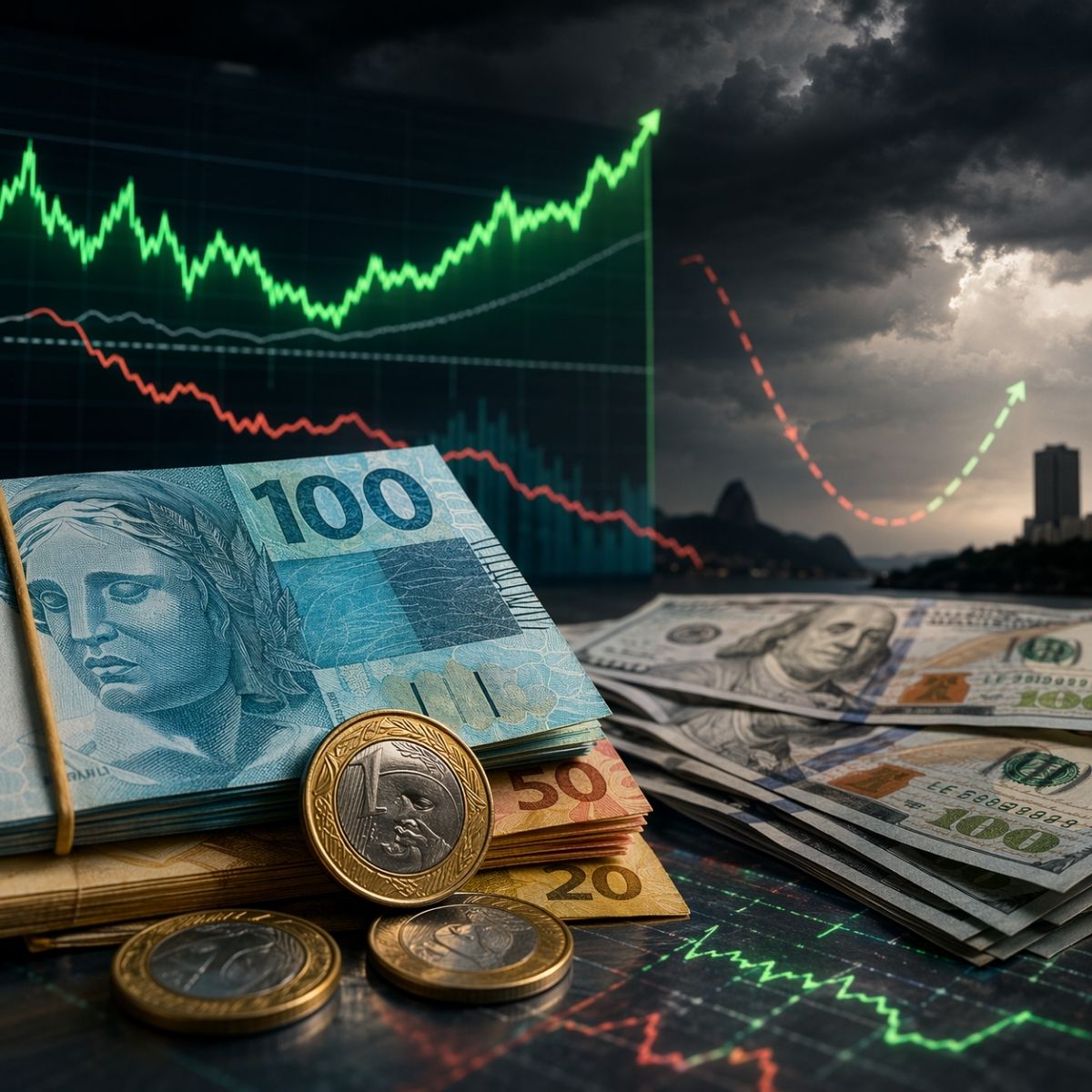
The real leads the global ranking of currency appreciation in 2026 with a rise of 10.4% against the dollar according to Elos Ayta Consulting, driven by high Selic rates and rising oil prices, but specialist Leonardo Santana warns that spending above expectations in an election year could reverse the currency’s trajectory.
The real is the currency that appreciated the most in the world in 2026, accumulating a rise of 10.4% against the US dollar over the year, according to a survey by Elos Ayta Consulting that compared the performance of 27 international currencies. The dollar closed at R$ 4.974 on Monday (20), the lowest level since March 25, when it reached R$ 4.973, consolidating a sequence of appreciation of the Brazilian currency that surprised the market and attracted R$ 67.3 billion in foreign investment in the São Paulo Stock Exchange up to April 16. The Norwegian krone ranks second in the ranking with an appreciation of 8.3%, followed by the Australian dollar with 7.9% and the Argentine peso with 7.3%.
Two main factors explain why the Brazilian currency leads the global ranking. The first is the real interest rate differential: the Central Bank maintained the Selic at 15% per year between June 2025 and March 2026, and even after the cut to 14.75%, Brazilian interest rates remain among the highest in the world, attracting foreign capital in search of profitability. The second factor is the appreciation of oil and agricultural and mineral commodities, which increases the cost of Brazilian exports and expands the inflow of dollars into the country, a movement similar to what occurred after the start of the war in Ukraine.
Why the interest rate differential made the real the strongest currency in the world

The restrictive monetary policy adopted by the Central Bank is the main engine of the appreciation of the Brazilian currency. Leonardo Santana, investment specialist at the analysis house Top Gain, explains that even with the prospect of new cuts, Brazil operates with one of the highest real interest rates in the world, the difference between the Selic rate and inflation that acts as a magnet for international investors. When the real interest rate is high, investing in Brazilian bonds yields more than in assets from developed economies, and this capital flow strengthens the national currency.
-
Brazilian Joins Homeownership Consortium, Faces Decade of Dual Payments Totaling $141,000, Surpassing Traditional Mortgage

-
Land Rover to Halt Production in July, Putting 371 Jobs at Risk, as Chinese Automaker Negotiates to Convert Factory to 100,000 Vehicles Annually by 2027

-
Mexican Pest Threatens U.S. Cattle Herds at Historic Lows, Potentially Boosting Brazilian Beef Exports as Burger Prices Soar

-
Brazilian Freight Bill Progresses in Congress with $5,000 Minimum Wage, 70% Advance Payment, and Fines Up to $1 Million, as Agriculture and Industry Warn of Rising Costs and Legal Uncertainty


The president of the Central Bank, Gabriel Galípolo, stated that the “conservative” decisions to maintain the Selic at 15% created a safety margin for the cycle of cuts, positioning Brazil favorably in the global scenario. The cut to 14.75% per year signaled that the flexibility will be less than the market expected, which maintained the attractiveness of the Brazilian currency even with the start of interest rate reductions. Financial agents project inflation of 4.80% for 2026, above the ceiling of the target of 4.50%, which reinforces the expectation that the Central Bank will not have room for aggressive cuts, sustaining the differential that benefits the real.
How the rise in oil prices reinforced the appreciation of the Brazilian currency
The increase in the price of oil and other commodities exported by Brazil created a second pillar of support for the currency. When the price of oil rises in the international market, Brazilian export revenues increase, expanding the volume of dollars entering the country and putting downward pressure on the exchange rate of the American currency. This mechanism had already worked in 2022, when the war in Ukraine caused a surge in commodities and the real recorded significant appreciation during the same period.
In addition to the direct exchange rate impact, the rise in oil prices benefits public accounts. The government’s revenue from royalties is expected to be boosted by rising prices, creating room for economic stimulus measures. The IMF raised its projection for Brazilian GDP growth to 1.9% in 2026, while the conflict in the Middle East reduced expectations for global economic expansion, a scenario that makes Brazil relatively more attractive to investors seeking returns in emerging markets with solid fundamentals.
What could make the Brazilian currency lose its ranking lead
The warning comes from the market itself. Santana states that the favorable scenario for the currency could reverse if the government increases spending beyond what is planned, especially since it is an election year, when the temptation to raise public spending to win votes tends to grow. If fiscal concerns return to investors’ radar, the flow of foreign capital that supports the appreciation of the real could reverse, causing a capital outflow and depreciation of the Brazilian currency.
The fiscal risk is the ghost that haunts any positive cycle of the Brazilian exchange rate. In 2024, the real lost value precisely when the market interpreted that the government would not meet fiscal targets, and it took only signs of deterioration in public accounts for investors to withdraw resources from the country, nullifying the protective effect of the high Selic. If the pattern repeats in 2026, the currency that currently leads the world ranking of appreciation could quickly give back accumulated gains, turning the exchange rate of R$ 4.97 into a brief memory of a moment that could have lasted longer.
What the ranking of 27 currencies reveals about the global scenario
The position of the real at the top of the list does not only concern Brazil. At the other end of the ranking, the Turkish lira lost 4.2% against the dollar, the Indian rupee fell 3.4%, and the Indonesian rupiah dropped 2.5%, while currencies from developed economies such as the euro, the British pound, and the Saudi riyal remained stable with zero variation. The DXY, an indicator that measures the strength of the dollar against a basket of six currencies from developed markets, fell 0.3%, confirming that the American currency is losing ground in a widespread manner.
This weakness of the dollar benefits commodity exporters like Brazil, but it depends on factors that can change rapidly. If the United States raises interest rates or if the conflict in the Middle East de-escalates, reducing oil prices, the dynamics that favor the Brazilian currency could change in a matter of weeks. For now, the real is taking advantage of a rare combination of high Selic, appreciated commodities, and a weakened global dollar, a scenario that no analyst guarantees will hold until the end of the year.
And you, do you think the dollar will continue to fall or will the fiscal risk in an election year cause the Brazilian currency to give back its gains? Leave your opinion in the comments.





Be the first to react!