Portuguese
  Spanish


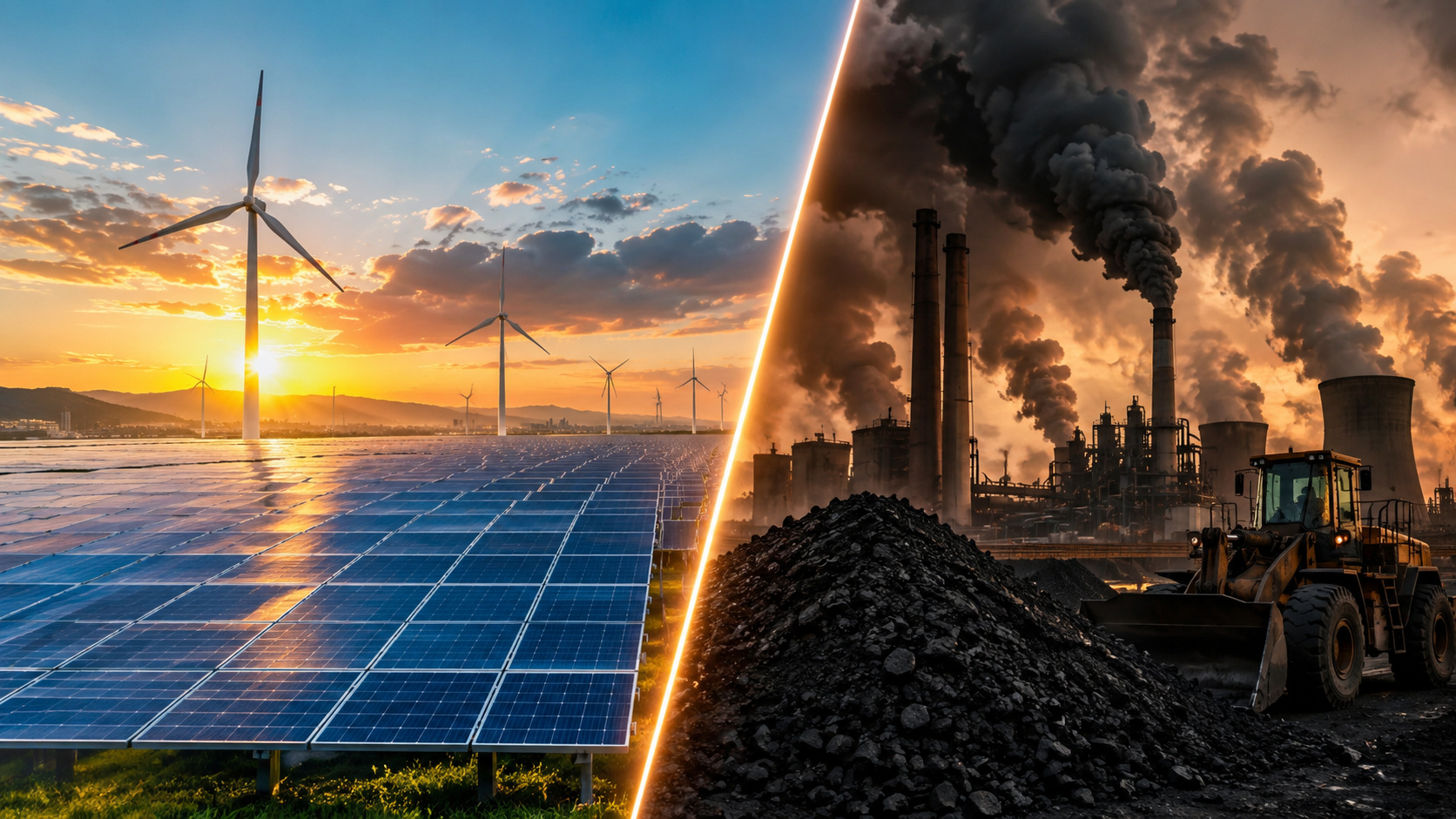

China accelerates coal plants despite advances in renewable energy. Understand how electricity demand redefined the transition and energy security
After investing more than a decade in renewable energy, China has once again expanded the use of coal in just one year, revealing how the explosion of electricity demand and industry changed the course of the world’s largest energy transition.
Official data from China’s National Bureau of Statistics shows that, between January and May 2026, electricity generation from coal and gas increased by 3.4% compared to the previous year, reaching 2.53 trillion kWh.
According to the Xataka Brasil portal on July 14, 2026, this sudden shift is due to severe climatic factors, global logistical tensions, and the activation of new coal plants, triggered to ensure national energy security in the face of industrial consumption.
-
Google bets on CO₂ battery capable of storing energy for hours, announces 200 MWh project in Ireland, and expands global partnership to deliver clean electricity 24 hours a day to three continents

-
Goodbye air conditioning? China’s new bet to cool entire cities without relying on millions of devices running at the same time
-
Brazil saved US$ 32.4 billion in 2025 by switching from fossil to renewable energy and only ranked behind China and the United States on the IRENA global podium.

-
Fired during apartheid and with a little borrowed money, an electrician started with a borrowed truck and transformed electrical services into a group connected to energy, real estate, and infrastructure in South Africa.



The impact of industrial growth on China’s energy transition
Although Beijing leads the expansion of clean sources and has surpassed the target of 1,200 GW of wind and solar capacity years ahead of schedule, the limits of the transmission grid and climate intermittency have exposed the dependence on thermal sources. Consultancies such as S&P Global Energy and Wood Mackenzie estimate that thermoelectric generation grew between 1.5% and 2% in the period. This temporary setback raises an international alert, as the country is the world’s largest emitter of carbon dioxide and its decisions directly impact the fulfillment of the Paris Agreement.


The recent advance in fossil fuel consumption in China sparks practical debates about the challenges of a clean matrix. Historically, massive investments in renewable energy have been reducing dependence on fossil fuels, which accounted for 51.4% of the electricity matrix in 2025 according to the think tank Agora Energiewende. This decline was facilitated by a slowdown in the rate of electricity demand growth, which fell from 7% in 2024 to 5% in 2025.
However, the rapid resumption of intensive use of thermoelectric plants in 2026 broke this downward trend. Estimates from consultancy Kpler show that coal consumption by the electric sector increased by about 3%, reaching the significant mark of 2.7 billion tons. This behavior shows that, despite the strong alignment with the global green agenda, the Chinese government’s priority remains focused on avoiding blackouts that could paralyze its industries and regional logistics chain.
Climate, pipeline crises, and the search for energy security
The explanation for the emergency activation of thermal plants involves a combination of extreme climatic factors and instabilities in international geopolitics. Three main events simultaneously pressured the national electric system:
- Droughts caused by El Niño: The phenomenon drastically reduced rainfall in the southwest of the country, emptying reservoirs of large hydroelectric plants and limiting their operation.
- Compromised gas logistics: Tensions in the Strait of Hormuz made access to liquefied natural gas (LNG) more expensive and difficult, forcing the use of internal alternatives.
- Weak winds in Asia: According to CREA data, the country faced the worst wind generation performance in a decade, limiting the delivery of new installed parks.
To avoid collapses in industrial provinces, China activated its solid fuel reserve and leveraged pre-existing commercial agreements with Russia. Thus, the country ensured its energy security at a time when clean electricity generation could not keep up with the speed of local industry expansion.

Why does the expansion of coal plants challenge global goals?
The behavior of the Chinese energy sector has profound repercussions on the environmental scene. According to the organization Carbon Brief, India and China alone account for more than 90% of the increase in global pollutant emissions recorded between the years 2015 and 2024.
This recent upward fluctuation in the use of fossil fuels threatens the fulfillment of Beijing’s promise to peak its carbon dioxide emissions before 2030. If the new thermal plants continue to burn coal at full capacity, the slowdown of global warming will be hindered, requiring even more severe emission cuts from other nations to compensate for the tons released by the Asian industry.
Institutional Advantages and Barriers for Renewable Energy
In addition to climate anomalies, structural barriers explain the resurgence of traditional fuels. According to analyses by specialist Qi Qin, who works at the Center for Research on Energy and Clean Air (CREA), the accelerated construction of new thermal plants from 2024 created unfavorable internal competition for alternative sources.
The analyst explains that these new plants operate under rigid medium and long-term commercial agreements, which guarantee minimum electricity purchase quotas by the government. This business model creates a market barrier:
- Priority of network injection: Thermal plants operate continuously to meet the minimum supply contracts stipulated by law.
- Clean energy discard: Wind and solar farms end up having their generation wasted when the transmission network becomes overloaded, as they do not have the same political guarantees as thermal plants.
- Tax overload: The increase in special taxes on new clean matrix installations discouraged the private market from maintaining the strong investment pace seen in 2025.

Paths to Balance the Chinese Electric Matrix in the Future
The recorded increase in consumption does not represent a definitive abandonment of the country’s ecological policies, but rather a contingency plan for simultaneous crises. The green infrastructure installed in Chinese territory is still the largest and most robust on the planet, having surpassed the installed capacity of fossil sources as early as mid-2023. The temporary return to coal serves as a practical alert that the replacement of fossil fuels is a long-term adaptation process.
To maintain leadership in decarbonization without compromising its industrial production, the country’s regulatory efforts now need to go beyond the simple installation of photovoltaic panels and wind turbines. The true challenge towards emission neutrality will consist of modernizing the distribution network, investing in large-scale battery storage systems, and flexibilizing the rules of the electricity market, reducing the contractual advantages that conventional thermal plants still possess.