Portuguese
  Spanish


Brazil saved US$ 32.4 billion in 2025 by replacing fossil fuels with renewable sources, ranking third in the IRENA global ranking, only behind China and the United States, a number so large it needs to be broken down to make sense, as it explains much of why the Brazilian energy matrix continues to be pointed out as a global reference.
The report was released on July 3 by IRENA, the International Renewable Energy Agency, based in Abu Dhabi, and appeared on the Brazilian sector’s radar last week when Canal Solar dissected the country-by-country comparison. According to the agency, the entire world saved US$ 480 billion in 2025 by avoiding burning coal, natural gas, and petroleum derivatives to generate electricity. Of this total, almost a third was in China, US$ 177 billion, a value that only makes sense for a country with the scale of renewable installations that the Chinese have.
The United States comes second, with US$ 35 billion saved, driven by the wave of solar and wind that came into operation in the Midwest and Texas since the Inflation Reduction Act. Brazil, with its US$ 32.4 billion, is practically on par with them, something that, considering the size of the American economy compared to ours, is quite impressive. India and Germany are tied for fourth, with US$ 18 billion each. Japan closes the top-6 with US$ 15 billion.
What IRENA is actually measuring
The agency’s methodology is straightforward. It takes the volume of electricity generated by solar, wind, hydroelectric, biomass, and nuclear in each country, calculates how much of the corresponding fossil fuel was replaced, and multiplies that by the international price of that fuel during the year. If one megawatt-hour of solar removes one megawatt-hour of natural gas from the system, the savings are the cost difference between the two.
-
A company from SC that moves R$ 125 billion in agribusiness is integrated into an international group, maintains its headquarters and jobs in Chapecó, and is preparing to expand software for cooperatives, grain companies, and industries while targeting new markets without leaving the western region of Santa Catarina.

-
Portugal “hides” gold reserves of 382 tons valued at 47 billion euros in an armored building, and the story involves gold from colonial Brazil, Nazi Germany, and a fortune that once amounted to 866 tons.

-
Truck drivers avoid deliveries to supermarkets due to waits that can hinder trips, increase costs, and leave vehicles idle, while the law limits loading and unloading to five hours and provides for payment for the excess time.

-
Oil feels the weight of the war between the United States and Iran on the same day that Tehran buries its assassinated supreme leader and the world watches to see who will control the Strait of Hormuz, a strategic route for global oil.




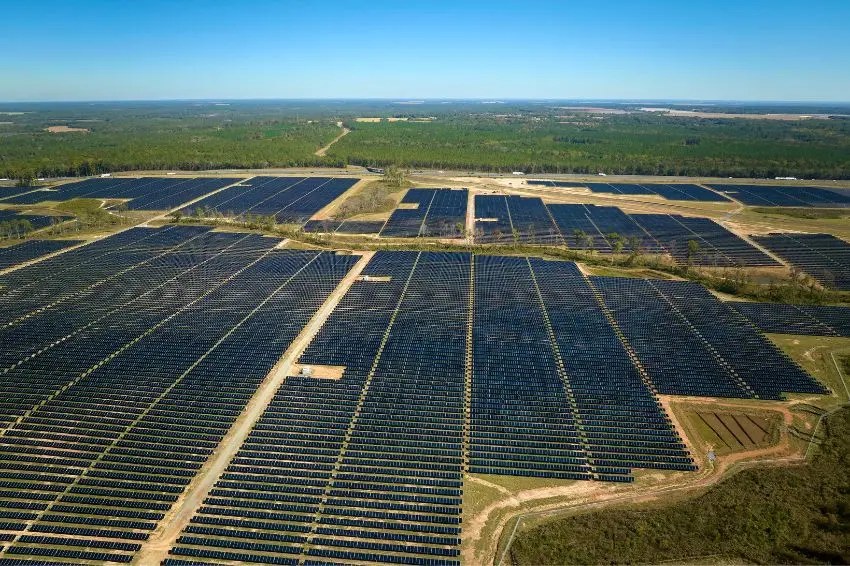
As Brazil has an electric matrix that still relies heavily on hydroelectric, around 55% of consumption in 2025, the country enters IRENA’s account with a high baseline of avoided fossils just because of the weight of the large plants in the North and Southeast. But the leap last year was the advance of centralized solar, which has already reached 22.51 gigawatts of installed capacity, and distributed solar, which surpassed 49.74 gigawatts, the panels on the roofs of homes, businesses, and Brazilian agribusiness.
Why distributed solar became the silent engine
I confess that the nearly 50 gigawatts of distributed solar always impress me. It is more installed capacity than Angra 1 and 2 combined, more than Mexico’s nuclear park, more than many European countries have in any renewable source. And the growth happens in a dispersed manner, not five large plants, but millions of installations spread across the country, each deciding on its own to switch the electricity bill for a rooftop panel.
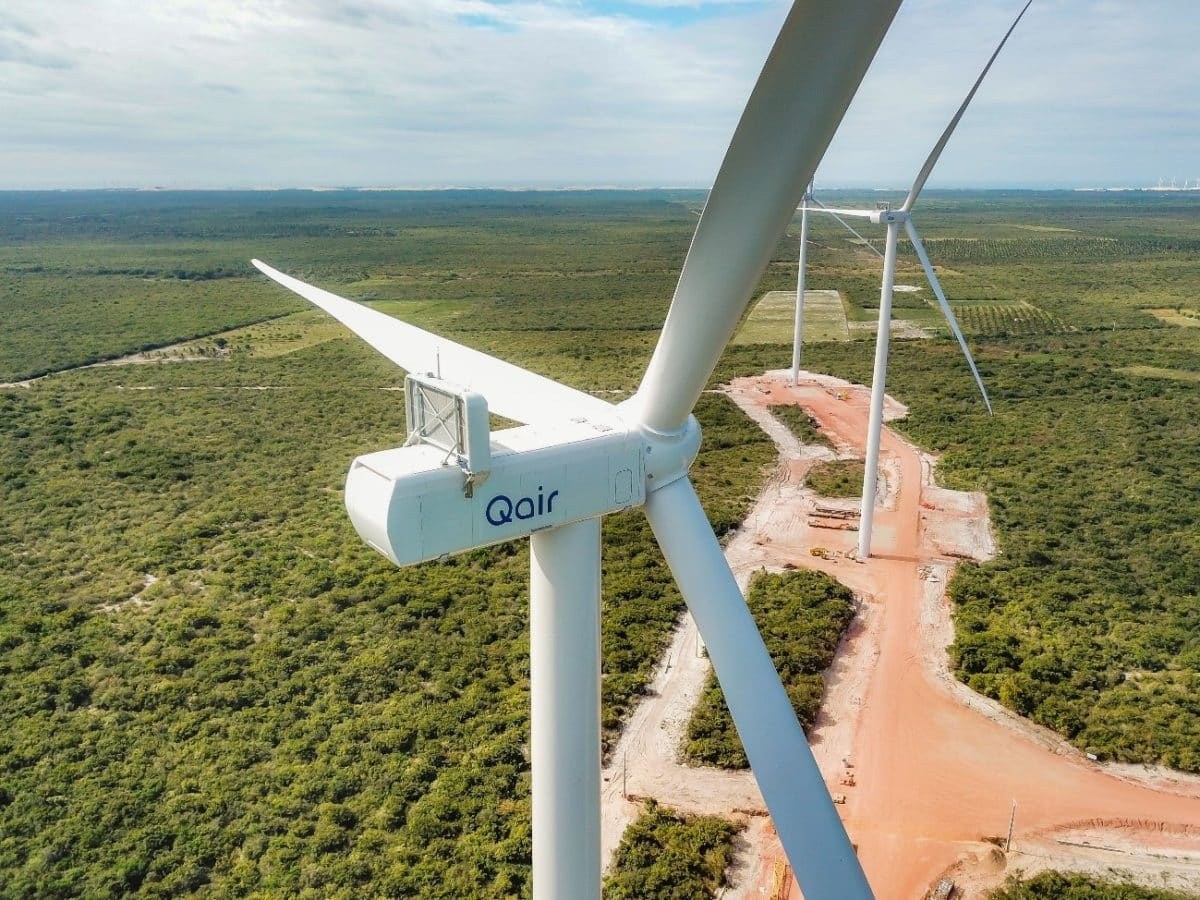
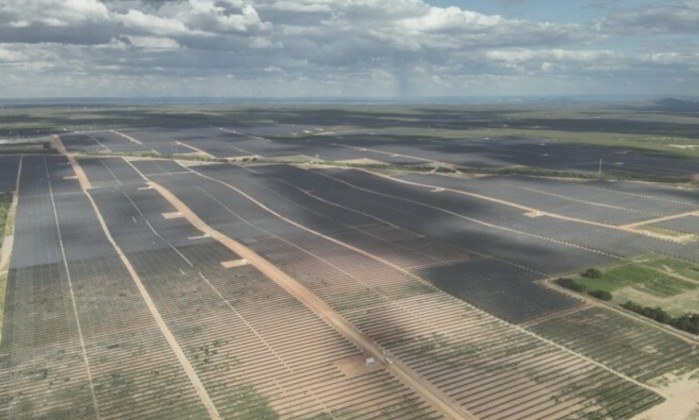
The Northeast continues to be the heart of Brazilian wind energy. The parks installed in Rio Grande do Norte, Bahia, Piauí, and Ceará already account for practically all of the country’s wind generation, and several of the largest centralized solar farms are also located in this region. It is a geographic advantage that combines very high radiation, constant winds, and large areas with low acquisition costs, something that very few large countries in the world have.
The reading of Francesco La Camera and what it says
IRENA’s Director-General, Francesco La Camera, took advantage of the report’s release to reinforce a point that has become commonplace in the global energy debate: renewables are not just a climate tool, they have become a tool for energy security. After the war in Ukraine, the European gas price shock, and the recurring instability in the Gulf, countries that depend on fuel imports have become much more vulnerable to geopolitical jolts.
Brazil escapes this nightmare precisely because the matrix is domestic. We don’t import wind from Kazakhstan or sun from Saudi Arabia. Each solar panel installed on the roof of a bakery in the interior of Goiás is energy that leaves the import balance and goes to the security balance. And that’s why, when the international price of a barrel of oil skyrockets, Brazil suffers less than Europe and Japan.
What the US$ 32.4 billion hides
A large part of the savings calculated by IRENA comes from hydroelectric, which is somewhat obvious but not always remembered. Our matrix is not clean because of yesterday’s solar, it is clean because, 60 years ago, a generation of Brazilian engineers built Itaipu, Tucuruí, Sobradinho, and more than three dozen large plants that continue to produce today. Without this heritage, Brazil would be burning gas like Europe and would save a fraction of what it does.
The report also does not make clear how much of the calculation considers hydroelectric versus fossils in a country like ours, where a large part of the system is already clean by default. It is a methodological limitation that the sector’s own technicians recognize, the number is indicative, not accounting. Still, the main message stands: Brazil became one of the largest fossil replacers on the planet in 2025, and this has measurable economic value in tens of billions of dollars per year.
What remains for 2026 and beyond
I imagine the number for 2026, with the capacity reserve auction calendar of EPE and ONS already underway and the distributed solar park continuing to grow at the pace of the last five years. If the projections hold, Brazil should break the mark of 40 gigawatts in centralized and distributed solar combined per year at some point before 2028, which would place the country on an even higher podium in the IRENA ranking.
We know there are still challenges ahead, energy storage, cuts in renewable generation during low demand hours, integration of transmission networks. But the data of US$ 32.4 billion says something important: the economic decision to invest in solar and wind in Brazil is already paying off. It’s not just environmental, it’s money that stays in the country.
Is US$ 32.4 billion a reason to celebrate or to push even harder on the accelerator of Brazilian renewables?