






 Portuguese
  Spanish


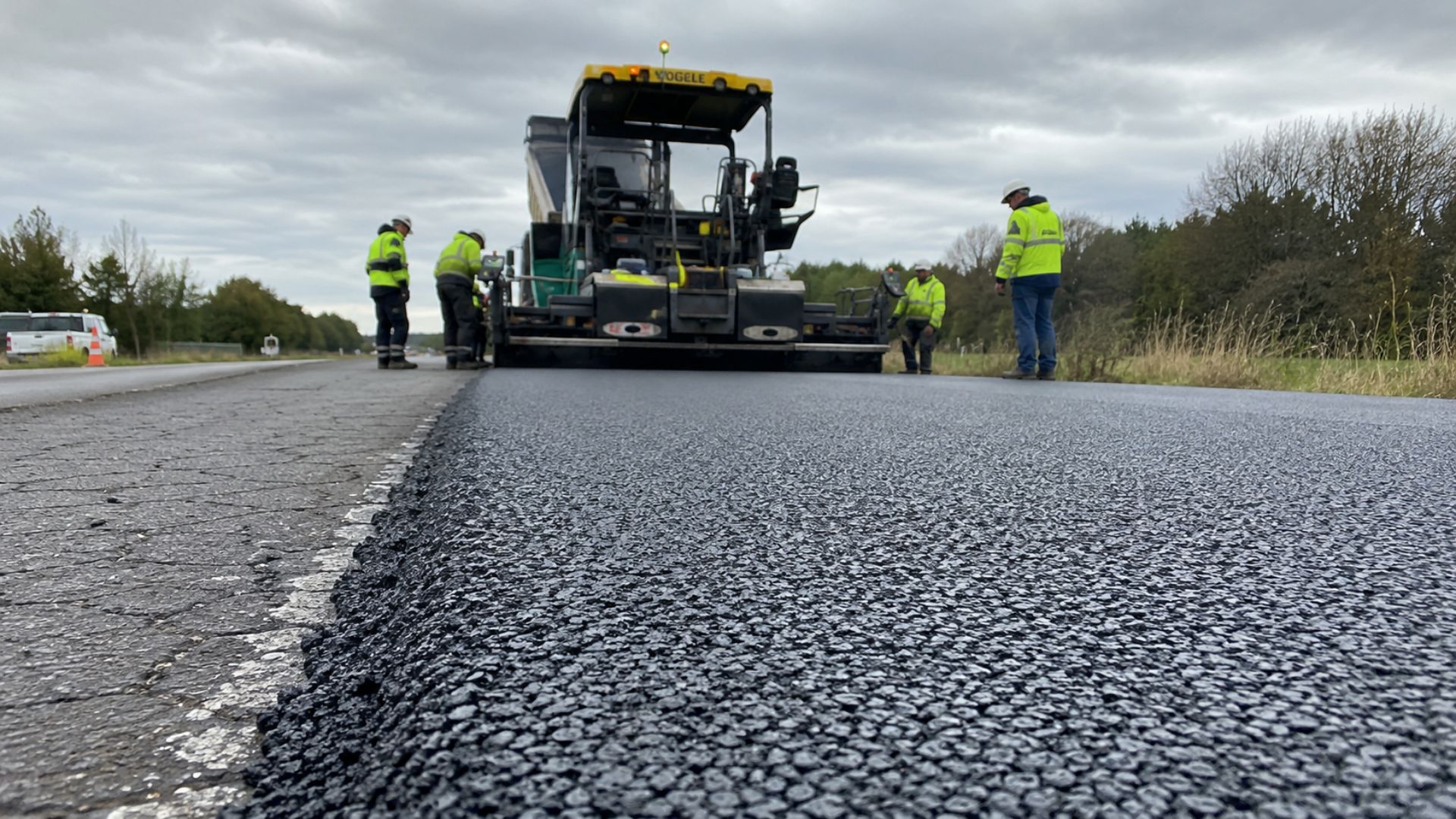


Tests with graphene in real pavements indicate a discreet but relevant advance in the search for more durable roads, less prone to cracking and with lower environmental impact over the years, without changing the traditional appearance of streets and highways.
Roads with asphalt reinforced by graphene, polymers, and hard-to-recycle plastic waste are being tested in the United Kingdom and have already been applied in projects in Italy, in an attempt to extend pavement durability and reduce emissions related to road maintenance.
Known as Gipave, the technology was developed by the Italian company Iterchimica and works as an additive incorporated into the asphalt mixture, without altering the traditional appearance of the tracks or requiring a complete change in the resurfacing model currently used.
Instead of replacing conventional asphalt used on streets, avenues, and highways, the material reinforces the structure of the layer applied in the works, modifying the bituminous binder that surrounds the mineral aggregates and increasing the surface resistance.
-
Australia deploys poisoned sausages and uses traps, shooting, and fences in a battle against invasive cats that kill over 1.5 billion native animals annually, threatening more than 200 species.

-
NASA Rover Captures “Tired Face” on Mars, Highlighting Human Brain’s Tendency to See Faces in Rock Formations

-
Ancient Stone City in the Desert, Once Home to 30,000, Puzzles Scientists with Nabateans’ Water Mastery 2,000 Years Ago

-
Ancient Creature Thought Extinct Since Dinosaur Era Reappears, Baffling Scientists




In practice, this alteration helps the pavement withstand deformations, cracks, and wear caused by constant traffic, especially in sections subjected to the daily passage of cars, buses, and heavy trucks.
According to Holcim UK, analyses from an initial experimental section indicated that the material can increase the pavement’s lifespan by about 165% compared to conventional resurfacing methods.
The same evaluation estimated a carbon saving of 40% over 20 years, considering the reduction of interventions, the lower need for maintenance, and the accumulated impact over the road’s life cycle.
Tests with graphene asphalt on real roads in the United Kingdom
Among the most cited projects is the application made on North Street, in the village of Middle Barton, Oxfordshire, where a 725-meter section was used to compare the behavior of Gipave with that of a conventional solution.
Part of the road received the graphene-reinforced asphalt, while an adjacent section was resurfaced with high-performance conventional asphalt, allowing differences in behavior to be observed under real circulation and wear conditions.
This type of comparison has technical weight because the performance of a pavement depends on variables that do not fully appear in the laboratory, even when tests indicate significant gains in resistance and durability.
The weight of trucks, braking, accelerations, accumulated water, temperature fluctuations, and base quality directly interfere with the emergence of wheel tracks, cracks, and gradual loss of surface regularity.
Before the experience in Middle Barton, Oxfordshire had already received other applications of the same material, which helped create an initial observation base on the use of the additive on British roads.
In Curbridge, in the year 2019, the first use of Gipave in the United Kingdom occurred, with an experimental section prepared to evaluate the behavior of the reinforced asphalt compared to traditional mixtures.
Later, in 2022, Marsh Lane, in Oxford, was also used in a similar trial, maintaining the strategy of observing the technology on real roads and not just in controlled simulations.
The sequence of tests shows that the technology is still undergoing a prolonged monitoring stage, as road authorities and industry companies need to observe the pavement’s evolution over several years.
Although the initial results are promising, broader adoption in urban and road networks depends on consistent data on performance, cost, maintenance, and material response under different usage conditions.
How graphene reinforces the asphalt mixture
Recognized for its high mechanical strength, graphene does not transform the street into a rigid structure, visibly different or separate from the standard already used in paving works.
Its function is concentrated on reinforcing the bitumen film that surrounds the stones of the asphalt mixture, improving the surface’s response when it receives repeated loads over time.
Besides graphene, Gipave incorporates polymers and plastics that normally have low utilization in conventional recycling chains, increasing the environmental interest around the technology.
This combination seeks to unite technical performance and waste reuse, a relevant issue in infrastructure works that consume large volumes of mineral materials, petroleum derivatives, and energy during execution.
According to Holcim UK, asphalt containing Gipave can also be recycled, a feature that reinforces the logic of circular economy applied to paving and the management of waste from road works.
The reuse of milled material is already part of modern strategies to reduce the extraction of new inputs, the transport of loads, and the disposal of waste generated during interventions on public roads.
Even so, the technology does not eliminate other factors that influence the lifespan of roads, as the pavement depends on a set of structural, environmental, and operational conditions.
Inadequate drainage, poorly executed base, excess axle load, and maintenance failures can still compromise the pavement, even when the asphalt layer receives superior performance materials.
Applications of Gipave also advance in Italy
The connection with Italy goes beyond the development of the additive by Iterchimica, as Gipave was also used in road interventions and high-traffic structures in the country.
Among the reported applications are sections of the A4 highway, airport areas, high-performance tracks, and places like the San Giorgio bridge in Genoa, rebuilt after the collapse of the old Morandi bridge.
On the A4 highway, between Brescia and Padova, a 5.5-kilometer stretch received the material in an intervention aimed at evaluating durability, maintenance reduction, and environmental impact.
As it is a high-traffic route, the test offers a relevant scenario to verify how the reinforced asphalt behaves under more demanding conditions than local roads.
Also in the United Kingdom, the technology advanced to the national strategic network with a test initiated in 2024 by National Highways on the A12, between Hatfield Peverel and Witham.
The mixture applied in this section included Gipave and 40% reclaimed asphalt, a percentage highlighted by AtkinsRéalis as the largest ever used in the country in a mixture with a polymeric modifier reinforced by graphene.
The A12 test will be monitored for several years, precisely because pavement evaluation depends on accumulated behavior under real traffic and variations observed over the seasons.
For governments, this monitoring is crucial: a more expensive technology at installation is only justified when it demonstrates the ability to reduce repairs, interruptions, material consumption, and emissions over time.
Initial cost and gain in the life cycle of roads
Higher performance road materials tend to have a higher initial cost than conventional solutions, making it essential to compare the initial investment with the gains obtained throughout the entire useful life of the road.
In the case of Gipave, the estimate published in a specialized report indicated a value about 10% to 15% higher than traditional materials, although still without a standardized price as it is a technology in the testing phase.
Economic analysis, therefore, is not limited to the project budget at the time of resurfacing, as it includes the frequency of maintenance, the consumption of new inputs, the transportation of materials, and the energy used in production.
This account also weighs the impact of traffic blockages on drivers, residents, and businesses, especially in urban corridors or highways that depend on frequent works to maintain adequate circulation conditions.
In cities facing recurring potholes, a more resistant pavement can reduce some emergency interventions, although it does not eliminate the need for planned maintenance and permanent technical control.
The expected effect is to decrease the rate of degradation in critical sections, especially where there is heavy traffic, constant braking, recurring failures due to material fatigue, or a history of successive repairs.
The main difference compared to other “futuristic road” ideas lies in the discretion of the application, as graphene asphalt does not rely on plates over the track, visible sensors, or energy generation.
Within the mixture, the innovation focuses on gains in durability, resistance, and lower environmental impact, maintaining paving techniques similar to those used in traditional resurfacing works.
The results released so far indicate potential, but do not equate to a universal guarantee for any road, as performance varies according to design, applied thickness, traffic, climate, base, and quality of execution.
For public infrastructure, the interest lies in transforming a test technology into a viable, repeatable, and financially justifiable solution, supported by accumulated data, large-scale production, and proof of maintenance reduction.





Will the cost of this new graphene roads favor some developing countries? Also are the raw materials commonly gotten all over the world?