






 Portuguese
  Spanish


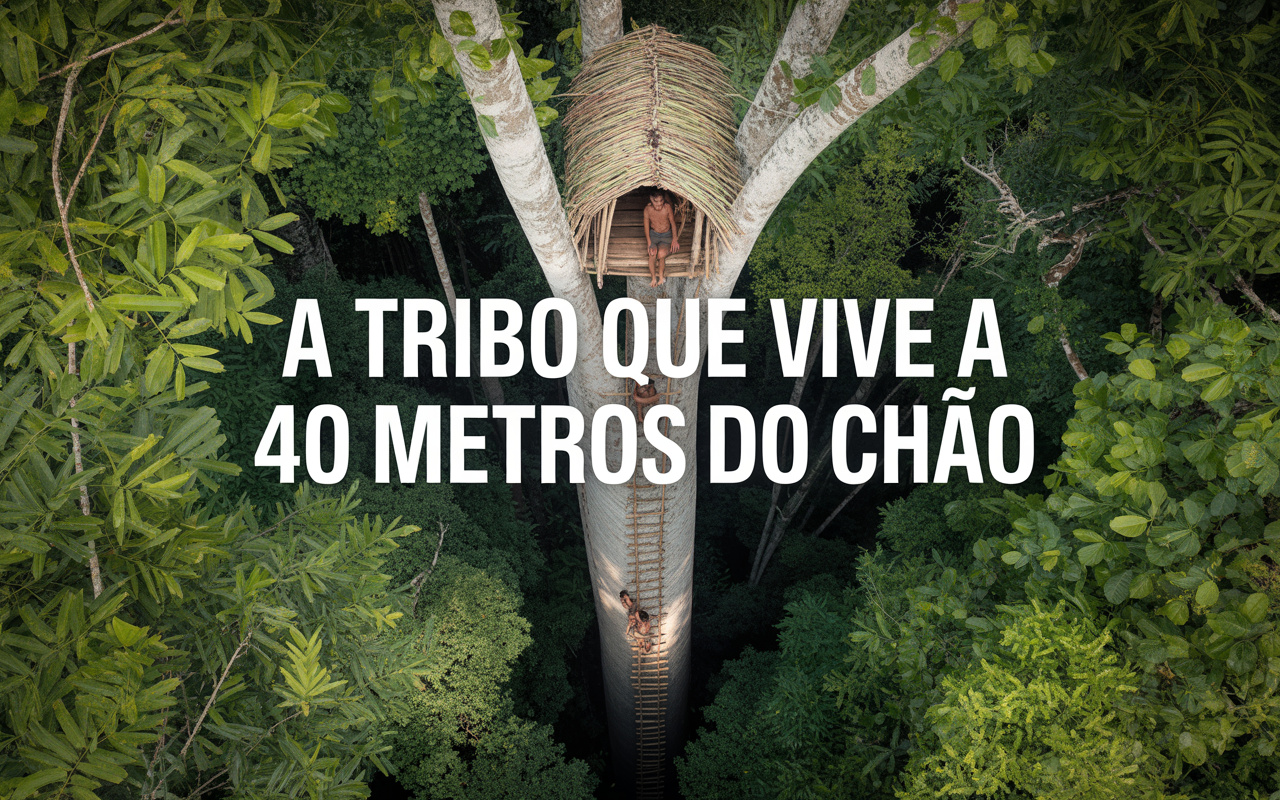


In Papua, an Indonesian Tribe Lives in Houses More Than 40 Meters High, Raised on Top of Giant Trees, Preserving One of the Rarest Traditions on the Planet.
In the far east of Indonesia, in a remote region covered by dense tropical rainforest and crisscrossed by narrow rivers, lives one of the most isolated and unique peoples on the planet: the Korowai, globally known for a tradition that defies modern architectural logic. Their houses are not built on the ground, nor on stilts, but on top of giant trees, often at a height of 40 meters, according to field studies documented by organizations such as Papua Heritage Foundation and accounts from European anthropologists who visited the area since the 1970s.
The choice to live so high is not a cultural whim. It is a millennia-old adaptation to the characteristics of the territory, natural threats, and the community’s own worldview. In a forest where the soil is moist, unstable, and often flooded, climbing to the tree canopies is a survival strategy as ancient as the Korowai identity itself.
The Ancestral Engineering That Raises Houses Dozens of Meters High
The Korowai houses are built on giant trees known locally as banyans or other species with robust trunks. To reach heights exceeding 30 or even 45 meters, as documented by Dutch researchers from Stichting Papua Erfgoed, the village men use only simple tools, local vines, and wood gathered from the surroundings.
-
Bruno Guimarães, 28, Misses Crucial Penalty Against Norway in World Cup After Replacing Vinicius Jr.

-
Inspired by a school lesson on Africa’s water crisis, a young boy raised money through chores to fund a well that transformed a Ugandan community.

-
Brazilian Construction Worker Moves to France, Earns Up to €2,500 Monthly with Home Renovations, Gains Social Media Attention

-
US Navy Sinks USS Oriskany with 230 kg of C-4, Creating World’s Largest Artificial Reef in 37 Minutes




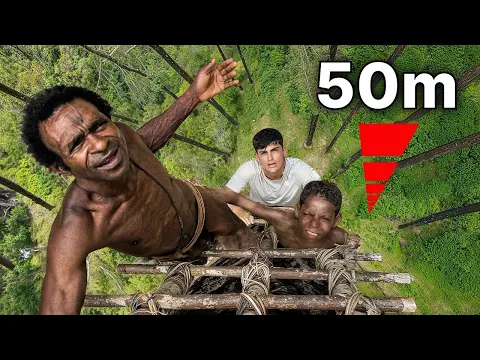

First, they choose a mother tree. Then, they build auxiliary platforms at different levels, which serve as natural scaffolding. The beams are tied together with extremely strong plant fibers, and the floor is made from woven palm boards. Each piece is manually carried to the top. The process can take days but results in an elevated, ventilated structure that is inaccessible to terrestrial predators.
The height serves not only for physical protection. For the Korowai, being far from the ground is also a way to distance themselves from spirits and influences considered dangerous. Thus, each elevated house carries both a practical and a spiritual function.
Why They Live So High: Survival, Safety, and Tradition
The Papua forest is the stage for heavy rains, seasonal floods, and a significant presence of insects and predators. Building high reduces the presence of disease-carrying mosquitoes and allows for better air circulation, improving thermal comfort.
Moreover, for centuries, different rival clans have competed for territory in the region. Being dozens of meters above ground gives the Korowai the advantage of observing unexpected approaches, in addition to making attacks more difficult.
Reports from anthropologists at Cenderawasih University, who have studied the region in recent decades, indicate that taller houses were a sign of prestige. The height demonstrated technical skill, courage, and the family’s strength, becoming a central element of cultural identity.
A Lifetime Suspended Between Branches and Sky
The Korowai build their houses in areas where small family groups live. Each house accommodates five to ten people and functions as a domestic and social unit. They go up and down daily via ladders made from hollowed-out tree trunks, placing their feet on manually made cuts.
For visitors, it is a risky crossing; for them, it is as common as walking on the ground.
Their diet is based on sago — a starch extracted from a local palm tree —, forest fruits, and protein obtained through hunting. As they live a semi-nomadic lifestyle, they move when the surrounding soil becomes depleted or when it is time to start anew in another giant tree. The elevated house, therefore, is not a permanent structure but part of a life cycle integrated with the forest.
Contact with the Outside World: Recent, Fragile, and Limited
Until the 1970s, the Korowai were considered a people without confirmed registration by Western anthropology. The first documented contact occurred at the end of that decade, when Dutch research teams and local missionaries reached the most isolated areas of Papua.
Even today, many communities live far from health posts, schools, and roads. Some Korowai still remain virtually uncontacted, while other groups have begun to interact sporadically with visitors and researchers.
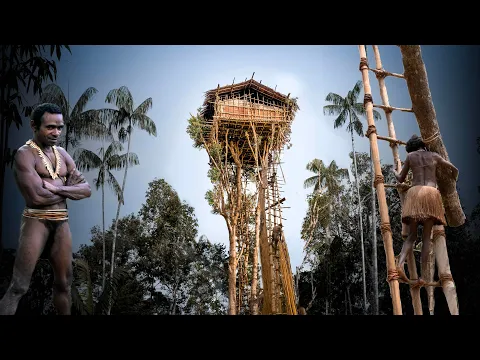
Despite this proximity, building in the trees remains a strong symbol of identity. Even communities that have adopted ground houses, especially in areas closer to villages, keep elevated houses as a ritual, tourist, or cultural preservation element.
An Architecture That Reveals More Than Technique
The houses that touch the tree canopies are not just an architectural curiosity. They represent the way a people interprets space, territory, and existence itself.
For the Korowai, living far from the ground means being in tune with the wind, the movement of leaves, and the sensation of natural protection. It is seeing the world from above, as if the forest were a large shared home, where each tree could become a shelter.
This elevated architecture is a testament to human adaptation to one of the toughest environments on the planet, where technology does not come from steel or concrete, but from a sensitive reading of nature.
In an increasingly standardized world, the choice of the Korowai reveals that cultural diversity remains alive, challenging expectations and reminding us that there are countless ways to build, live, and relate to the territory — some so high that they almost touch the sky.





