Portuguese
  Spanish


The Journey of 20,000 km of a Bridge: What Led the Guldbron from China to Sweden Aboard the Zhen Hua 33
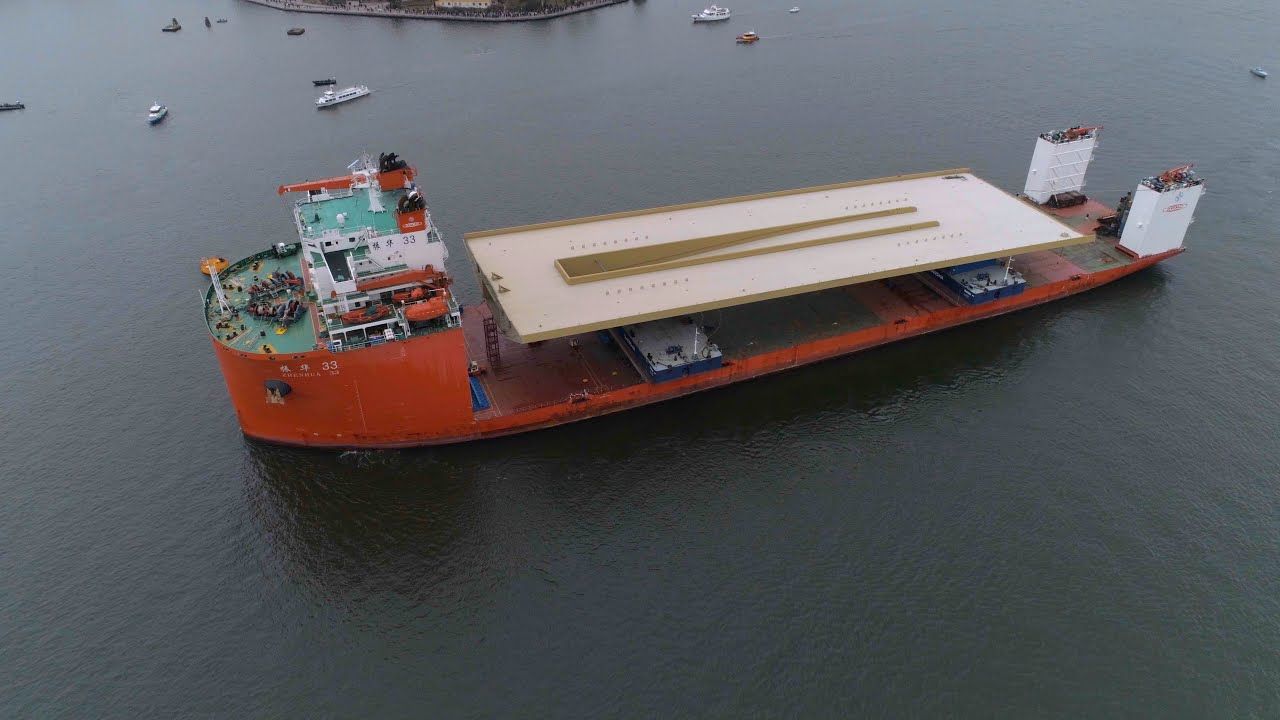
Few people imagine, but one of the largest logistical feats of recent years involved a Chinese ship, a floating colossus of heavy cargo, crossing half the planet with nothing less than a golden bridge segment on its hull. It was the Guldbron, a metallic structure over 140 meters long and almost 4,000 tons that crossed the oceans on the semi-submersible ship Zhen Hua 33, coming straight from Asia to Scandinavia.
A Golden Bridge Traveling Across the Sea
The story began in 2018, when the government of the city of Stockholm, the capital of Sweden, commissioned a new bridge to connect strategic points of the urban center. The project, named Guldbron (“Golden Bridge”), was entirely produced in China by the company CCCC Third Harbor Engineering Co. The goal: to build everything in an Asian shipyard more swiftly and then send the finished piece to Europe.
The problem? Transportation.
-
Brazilian Airport to Receive $2.8 Million Investment, Completion Expected Within a Year

-
UN Warns of AI’s Environmental Impact and Calls for Greater Corporate Transparency

-
Former Atacadão Employee Turns Online Cake-Baking Lessons into a Confectionery Brand with Factory, Store, Delivery, and Nearly $400,000 in Revenue
-
Brazilian Startup Sells Nearly 9 Million Surprise Bags of Near-Expiry Food, Prevents Thousands of Tons of Waste, Aiming for $42 Million Revenue by 2026




The structure measured 140 meters in length, 45 meters in width, and weighed 3,700 tons. It was too large for containers, frigates, or any conventional freighter. That’s where the Zhen Hua 33 came into play.
A Ship Built for the Impossible
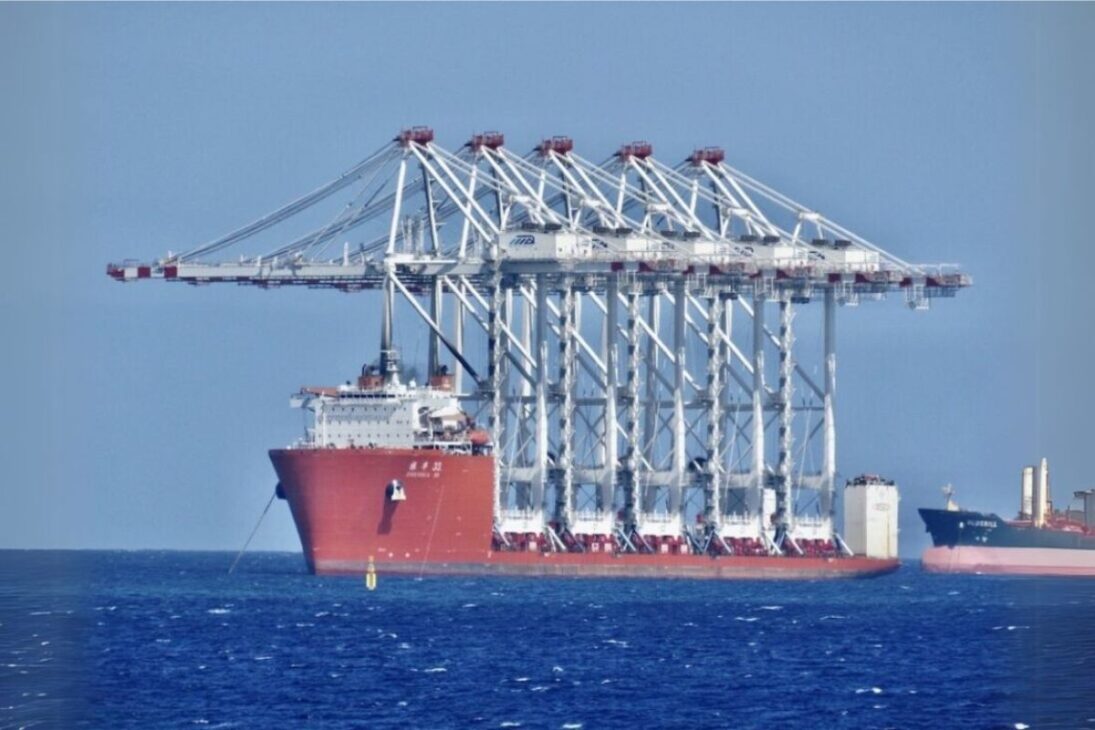
The Zhen Hua 33 is one of the largest semi-submersible ships in the world, owned by the Chinese state-owned company ZPMC (Shanghai Zhenhua Heavy Industries). This type of vessel can literally submerge part of its hull to accommodate colossal loads — such as bridges, oil platforms, or cranes — and then rise again to navigate with everything safely on the surface.
The transport of the Guldbron was not only a naval engineering challenge, but also a geopolitical and environmental feat. The journey lasted nearly two months, with the ship departing from the port of Zhongshan, China, and crossing the Indian Ocean, the Suez Canal, the Mediterranean Sea, and finally the Baltic Sea, where it docked in Stockholm in early 2020.
In total, the Guldbron traveled over 20,000 kilometers, literally going around the world on a ship.

When the Bridge Became a Global Topic
The visual caught attention. Those who looked from afar saw a bridge floating in the sea, as if it had been ripped from a futuristic city and teleported to the ocean. Images went viral on European portals, especially when the ship reached the Swedish coast under heavy maritime escort and drones soaring over the operation.
Upon arrival in Stockholm, Swedish and Chinese engineers worked together to position the bridge with millimeter precision. The installation process took days and required controlled tides, floating cranes, and real-time calculations to align the structure.
The Environmental Impact and Criticisms
Despite the impressive feat, the operation was not without criticism. Swedish environmentalists protested against the international transportation of a structure that could have been built locally, avoiding tons of carbon emissions associated with maritime transport. Stockholm’s city hall responded that manufacturing in China reduced costs by over 30% and that the Zhen Hua 33 used optimized routes to reduce fuel consumption.
Still, it is estimated that the crossing of the Guldbron generated around 3,000 tons of CO₂, a figure that reignited debates about the real environmental impact of the globalization of heavy engineering.
ZPMC: China Moving the World
The company behind the ship is ZPMC, one of the largest manufacturers of port cranes and offshore structures on the planet. It is also responsible for operating a fleet of semi-submersible ships that traverse the world carrying large metal structures.
This type of project exemplifies the current reach of the Chinese shipbuilding industry, which not only manufactures but also delivers large-scale engineering anywhere in the world — something unthinkable just a few decades ago.
The Guldbron bridge is now an integral part of the Stockholm landscape, connecting the Södermalm district to the city center. But few residents know that, before resting on the waters of the Baltic Sea, it traveled the planet on a red maritime colossus with its name in white letters: Zhen Hua 33.