






 Portuguese
  Spanish
  4 min of reading
  0 comments


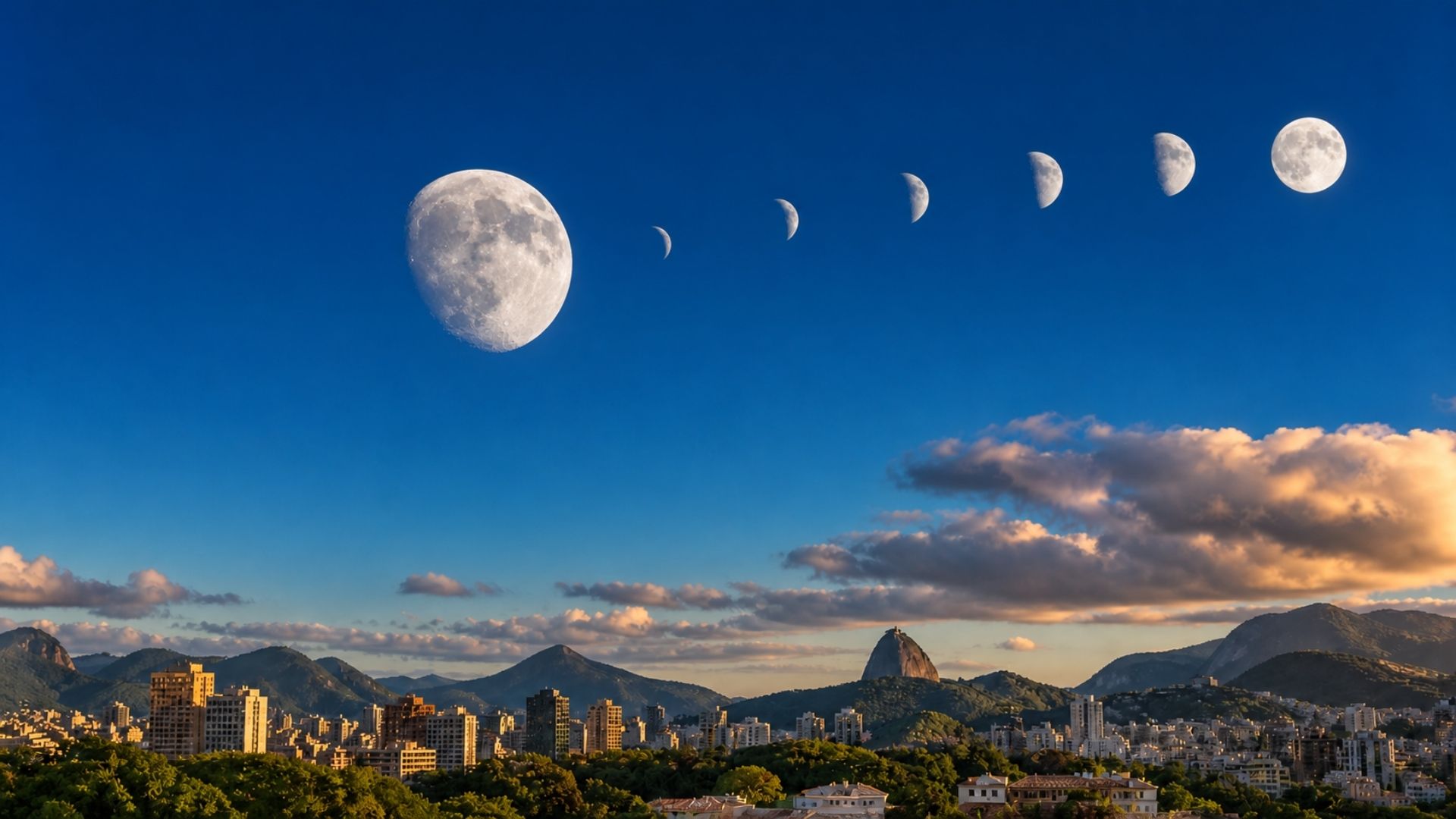
Moon phase today continues with over 90% brightness this Tuesday, May 5, 2026, counting down to the Waning Moon. The detail that makes May’s lunar calendar even more curious is the presence of a second Full Moon on the 31st.
Moon phase this Tuesday, May 5, 2026, appears in a stage of still very high brightness after the Full Moon on May 1st, with over 90% visible illumination and a gradual loss of luminosity before the official turn to the Waning Moon on the 9th. In practice, it’s one of those moments when the Moon remains dominant in the sky, but is already starting to enter the final stretch of the full phase.
According to the portal Olhar Digital, what makes today’s date more than just a simple consultation of the lunar calendar is how May was set up in the sky. Since the first Full Moon occurred right at the beginning of the month, on May 1st at 2:24 PM, the cycle makes room for another Full Moon on the 31st, at 5:46 AM. It is this repetition within the same 31 days that gives the month a curious turn and makes May’s lunar calendar so noteworthy.
The strongest detail is the Moon’s still high brightness this Tuesday

Those who look up at the sky this Tuesday will still find a very illuminated Moon. Although the main full phase is already behind us, the lunar disk maintains a broad and intense appearance, with over 90% illumination, which preserves the visual sensation of fullness even within the decreasing segment of the cycle.
-
Seven neighbors came together, started with little money, rolled out dough by hand, and turned a homemade recipe into a women’s cooperative model that spanned decades in India.

-
A geometry book written 2,300 years ago taught Lincoln to be a lawyer, Einstein to think in physics, and Russell to understand logic, and no MBA in the world has managed to replicate this feat.

-
Absent father may lose child support request against children and still be liable for emotional abandonment
-
Woman loses house in devastating fire and now sees 35 people rebuilding her home with over 350 tires, bottles, and cans in a sustainable project designed to withstand fire.





This is precisely the point that draws the most attention today. The Moon has already moved past the exact peak of the full phase, but has not yet lost the visual impact that usually attracts casual observers, photographers, and the curious. It is a period of transition where the brightness remains strong, but the calendar already points to the arrival of the waning phase.
The curious twist is that May ends with a second Full Moon
May 2026 began with a Full Moon on May 1st and, according to INMET’s official calendar, will also end with another Full Moon on the 31st. This happens because the average lunar cycle lasts about 29.5 days, which allows the same phase to appear twice within a 31-day month when the first occurrence falls right at the beginning.
It is this rare calendar alignment that makes May seem different. Instead of following a simple sequence of four well-spaced phases, the month practically completes an entire cycle and reopens the Full Moon before it ends, creating a repetition that always sparks curiosity.
May’s calendar helps understand why the Moon phase today is in transition

After the Full Moon on May 1st at 2:24 PM, the next major change will be the Waning Moon on May 9th at 6:13 PM. Subsequently, the month will also have a New Moon on May 16th at 5:03 PM, a Waxing Crescent Moon on May 23rd at 8:12 AM, and the second Full Moon on May 31st at 5:46 AM.
This sequence shows why the Moon phase today occupies such an interesting point in the month. It is precisely in the segment where the brightness remains high, but the cycle is already leaning towards a reduction in luminosity, functioning as a kind of bridge between the recent fullness and the beginning of the waning phase.
Why this changes how we look at the Moon this week
Many people tend to think of the Moon in fixed blocks, as if it were simply full or waning. But this Tuesday’s observation shows that the sky works more gradually. The Moon maintains a strong visual presence even after the exact full phase, which helps explain why so many people still perceive it as “almost full” in the following days.
This more careful reading also values the lunar calendar as an observation tool. By understanding that the change is progressive, the observer better perceives how the brightness transforms night after night and how the Moon goes from being the absolute protagonist of the sky to a phase of luminous retreat.
What’s still worth following until the end of May
The next immediate milestone will be the Waning Moon on May 9, when the main phase officially changes. After that, the cycle continues until the New Moon and the Waxing Moon, paving the way for the new Full Moon on May 31, which closes the month with an unusual repetition in the calendar.
In the end, today’s Moon phase is not only noteworthy for still appearing with over 90% brightness. It also serves as a warning that May has entered a special stretch of the lunar cycle, where the light begins to fade, the waning phase approaches, and the month is already preparing a second Full Moon as a farewell.






-

1 person reacted to this.