A skeleton found inside a Roman stone coffin at Westminster Abbey was buried between 987 and 1052 AD, centuries after the coffin was made, and probably belongs to one of two Saxon abbots.
The conclusion comes from Professor Warwick Rodwell, consultant archaeologist at Westminster Abbey, in a study published in the Journal of the British Archaeological Association.
His leading candidate is Aelfwig, an abbot who died around 1020. The second is his successor, Wulnoth, who died in 1049. Both men are believed to have been buried at the Abbey.
A coffin carved for a wealthy Roman Briton
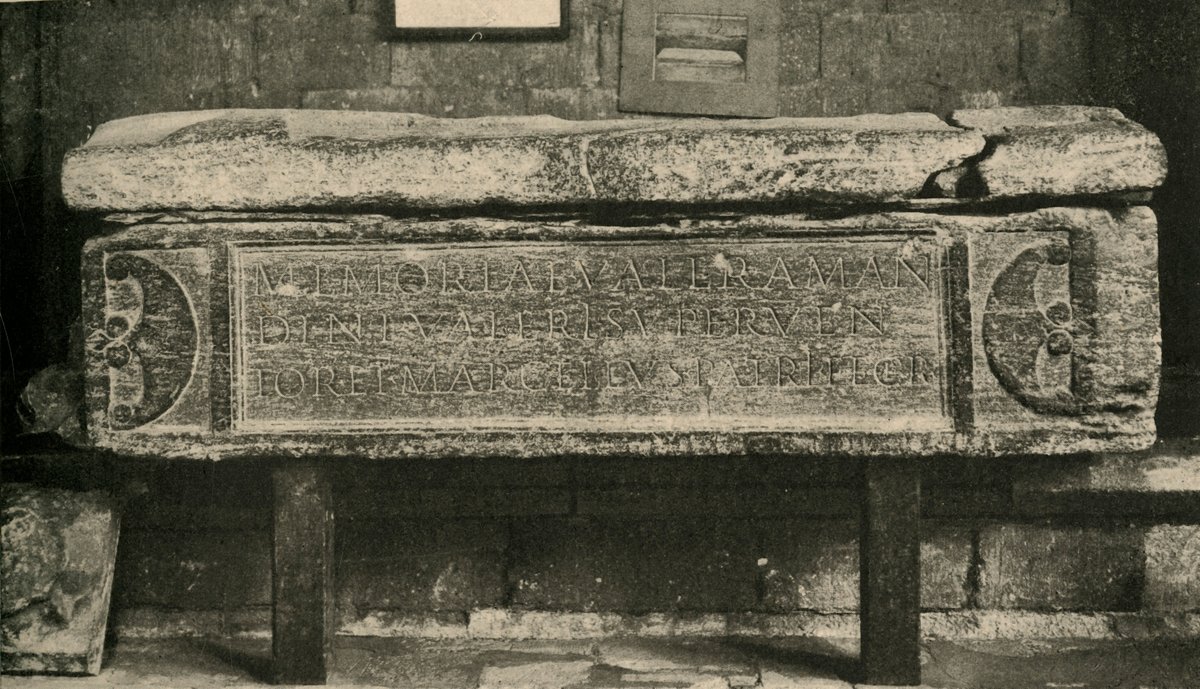
The limestone sarcophagus carries an inscription naming Valerius Amandinus, a wealthy Briton who lived in London sometime between 300 and 400 AD.
-
Elon Musk’s company says brain chip that promises to restore sight is ready

-
Does AI function like the human brain? New test shows machines use different shortcuts to recognize objects
-
The Secret of DNA’s Evolution: Study Reveals How the Molecule Became a Natural Sunscreen Allowing Life to Survive Extreme Radiation on Early Earth
-
Chinese scientists discover light itself can hinder space travel at 75% of light speed



But a large Latin cross carved across its lid dates to around the 10th or 11th century. That suggested for a long time that the person inside lived hundreds of years after the coffin was made.
According to Popular Mechanics, the limestone probably came from Oxfordshire. Rodwell wrote that no clue links the coffin to its original burial site or explains why it was later moved.
Workers broke the lid into six pieces in 1820
The coffin has a long and messy history. Workers came across it by accident in 1820 and broke its lid into six pieces.
It was formally excavated in 1869 on the north side of the Abbey, and the lid was repaired around that time. A written account from 1873 then declared the skeleton lost.
Rodwell also believes that grave goods were stolen from the coffin in the early 19th century, which removed more clues about who was buried there.
The ‘lost’ skeleton was inside all along
The bones turned up again in 2016. When the sarcophagus was moved to a conservation studio and its lid was lifted, researchers found an almost complete human skeleton still inside.
The coffin was later studied again during an excavation of the sacristy area by Pre-Construct Archaeology, one of the UK’s largest commercial archaeology firms. That work was completed in 2025.
The dig was carried out to make way for the King Charles III Sacristy, a new building at Westminster Abbey scheduled to open in 2026.
A man aged 35 to 49, not a ‘robust young man’
Human bone specialist James Young Langthorne of Pre-Construct Archaeology examined the skeleton again. He found a man aged between 35 and 49 who stood about 5 feet 9 inches tall.
That contradicts a 19th-century description of the remains as those of a “robust young man” no older than 30 and about 5 feet 7 inches tall.
Popular Mechanics reported that the analysis also found osteoarthritis in several joints and two healed rib fractures. There was no obvious cause of death.
Radiocarbon dating placed him in the late Saxon period
A bone sample was sent to the Scottish Universities Environmental Research Centre for radiocarbon analysis. The result was a date range of 987 to 1052 AD.
That places the burial in the late Saxon period, about six centuries or more after the coffin was carved for Valerius Amandinus. It also matches the age of the cross on the lid.
“This confirms that the reuse of the sarcophagus, and the associated remodelling of its cover, occurred in the late Saxon period,” Rodwell wrote.
Two abbots fit the dates
The date range overlaps with the deaths of both Aelfwig and Wulnoth. At the time, Westminster Abbey was a Benedictine monastery.
“We have two viable contenders for the occupant of the sarcophagus,” Rodwell said. “We do not know the date of birth of either. But either would fit equally well if we assume the Abbot was in his early twenties when the appointment was made and close to fifty when he died.”
He leans toward Aelfwig. “The fact Aelfwig was already a monk of Westminster might favor him,” he said. He ruled out the abbot before Aelfwig because that man left the area and died elsewhere.
Why an abbot would get a recycled Roman coffin
Rodwell argues that the man was “honored” with a “fine sarcophagus”, an unusual distinction that fits the status of an abbot rather than an ordinary monk.
Instead of making a new stone coffin, those in charge reused an old Roman one. The man’s wooden coffin was placed inside, and the lid was reworked with a large Christian cross.
According to Popular Mechanics, Rodwell believes the burial first took place in the eastern part of the Abbey church, with the recut lid serving as a cross-slab in the floor. Workers then moved the coffin into the new sacristy courtyard in 1258.
A white outline of a coffin that rotted away
The new work produced what Rodwell calls a “remarkable new discovery”. Inside the stone coffin, researchers found the rectangular outline of a structure that had long disappeared.
Its shape was preserved by a white residue left by lime, a material once used in burials. Rodwell says the outline marks the position of the original timber coffin.
“Although no physical traces of that feature remained, it can only have been a timber coffin, which has completely decayed over the course of the seven centuries that the sarcophagus was buried in the sacristy courtyard,” he wrote.
Where to see the sarcophagus today
The man’s identity has not been proven beyond doubt. But the skeleton, the trace of the wooden coffin and the radiocarbon date together support the idea of a medieval abbot buried in a coffin that was already ancient.
The sarcophagus is now on display in The Queen’s Diamond Jubilee Galleries, the museum inside Westminster Abbey.
Do you think Aelfwig, the monk who rose to abbot, is the man who has rested in this Roman coffin for almost 1,000 years?