Portuguese


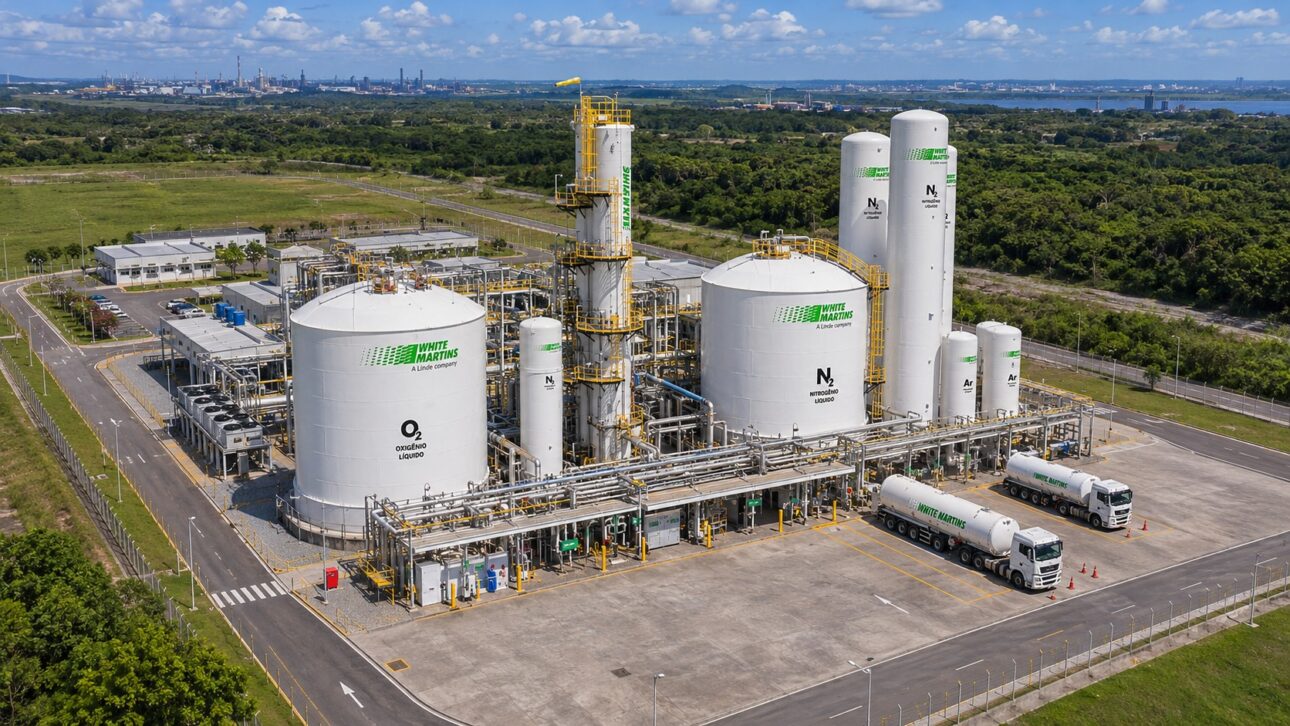

The expansion of the industrial plant in Cabo de Santo Agostinho increased liquid nitrogen production capacity to 500 metric tons per day and oxygen capacity to 180 metric tons, strengthening supplies to industries and hospitals across northeastern Brazil.
A noteworthy development for anyone following industrial growth in northeastern Brazil. White Martins opened an expansion of its plant in Cabo de Santo Agostinho, Pernambuco, on Thursday, Nov. 26.
The investment totaled approximately R$100 million, according to information published by Jornal do Commercio. The project began in 2023 and involved installing equipment manufactured in Brazil.
What caught my attention was the company’s decision to expand its production capacity in Pernambuco to keep pace with growing industrial demand in the region.
-
Major U.S. bank Citigroup negotiates return to Venezuela after five years out of the country

-
China threatens retaliation against new US tariffs of up to 20%, putting trade truce under pressure

-
U.S. threatens tariffs on Brazilian aircraft and sugar, but companies see a path to roll them back
-
Brazil posts $4 billion external accounts deficit despite 19.7% export growth

This is not an isolated move. Recently, CPG, a Brazilian energy news site, also reported that Moura is investing R$200 million in its Pernambuco plant in Belo Jardim to serve the energy storage market.
A plant capable of producing 680 metric tons of oxygen and nitrogen per day
The modernization increased liquid nitrogen production capacity by 70%, bringing it to 500 metric tons per day, according to Diario de Pernambuco.
Oxygen production capacity doubled, reaching 180 metric tons per day.
Gilney Bastos, president of White Martins and Linde in Latin America, said the investment reflects the acceleration of industrial activity in Pernambuco.
Major customers include companies in the petrochemical, steelmaking and metalworking industries, as well as hospitals.
For those unfamiliar with this market, consider how many industrial processes depend on these gases. They are used in steelmaking, welding, food preservation and hospital procedures.
As industry grows, demand for these inputs tends to rise.
Technology new to South America and equipment made in São Paulo
Another detail I find particularly interesting is where the equipment used in the expansion was made.
Both the new liquefier and the three storage tanks were produced at White Martins’ Cryogenic Equipment Factory in Sorocaba, in the state of São Paulo.
The company says the factory is the only facility of its kind in Latin America capable of manufacturing cryogenic plants and related equipment.
The Pernambuco facility also became the first in South America to receive PULSE technology, developed by Linde.
In practice, the new liquefier took over nitrogen production, allowing the plant’s other equipment to increase oxygen output.
Installation took 14 months. The three new tanks doubled the facility’s storage capacity.
It is encouraging to see an industrial investment of this kind using highly complex equipment made in Brazil.
Expansion of the Abreu e Lima Refinery is also on the horizon
Petrobras is another important part of this story.
White Martins supplies nitrogen to the Abreu e Lima Refinery (RNEST), according to a report by Fernando Castilho of Jornal do Commercio.
With the refinery’s expansion, demand for industrial gases is also expected to rise, both for operations and among the suppliers involved in the construction work.
The publication also said that the Northeast accounts for approximately 20% of the company’s revenue.
That helps explain why White Martins has been directing investment to the region.
The company has also spearheaded another major project in Pernambuco: the first green hydrogen production project in South America.
Pernambuco has the potential to further strengthen its industry
In my view, these investments are worth watching, even though they do not always receive the same attention as major refineries, automakers or shipyards.
An industrial gas plant serves multiple economic sectors at once. Its expansion can make it easier to supply other industries and improve logistics across the production chain.
White Martins has already announced plans to invest R$1 billion in Brazil in 2026, covering new facilities, industrial gases and green hydrogen.
I would like to see this growth accompanied by investment in workforce training and the development of local suppliers.
The expansion in Pernambuco has been completed. So far, however, the publications consulted have not provided specific figures on new hires resulting from the project.