






 Portuguese
  Spanish


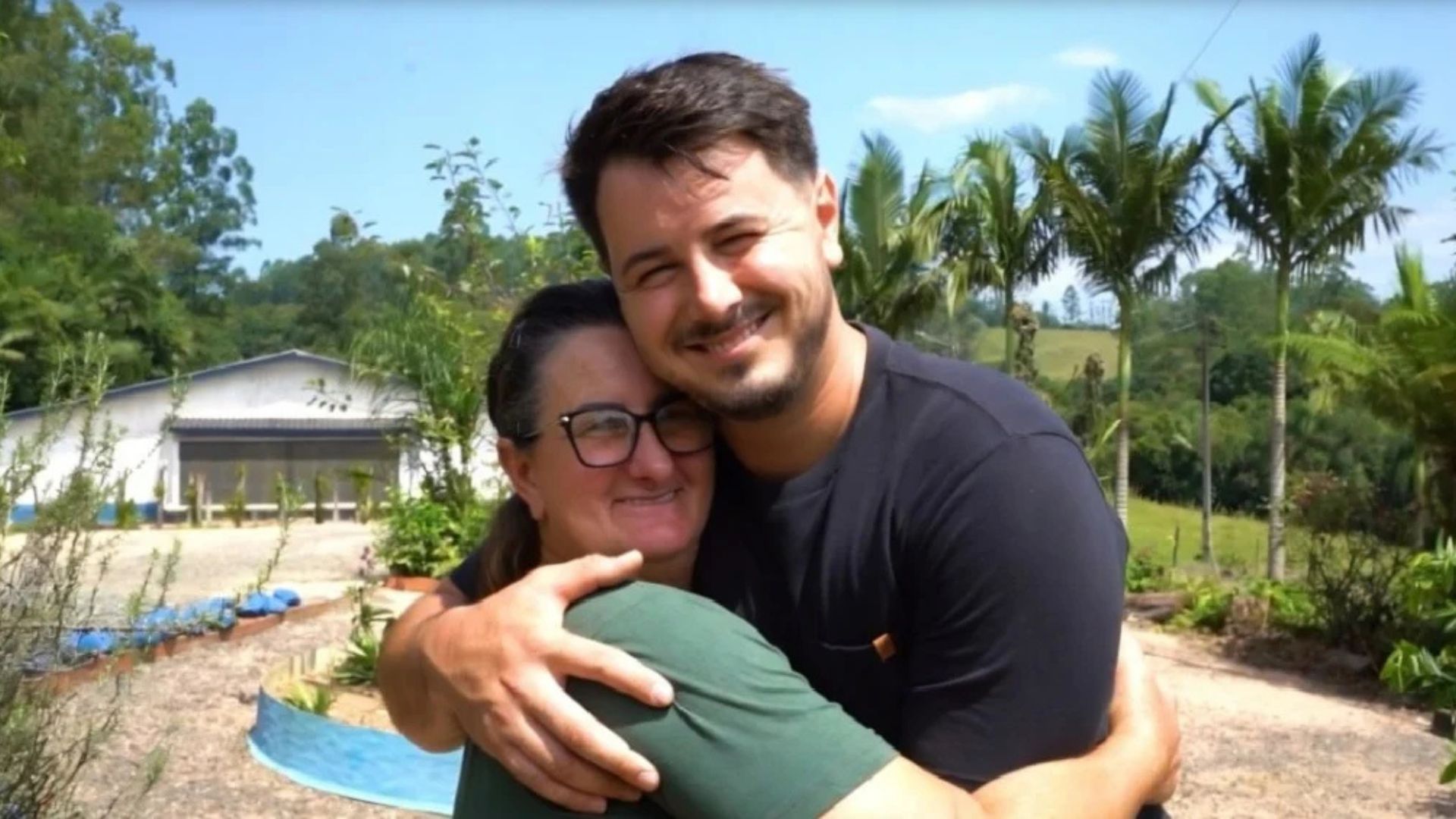


Rural resilience, intense routine, and family turnaround mark the journey of a producer who sustained a farm alone for over a decade and saw productivity grow with her son’s arrival and the adoption of technical management.
Maria Elisa built, in Orleans, in the south of Santa Catarina, a trajectory marked by continuous work, technical adaptation, and permanence in the countryside.
At the helm of a poultry farm with a capacity for 30,000 birds, she sustained the operation practically alone for 12 years, in a routine that combined intensive management, property administration, and family responsibilities.
When her son Guilherme took over the activity in 2023, the farm entered a new phase, with a more technical focus and improved performance.
-
Man Takes on Swarms in Singapore, Saves 6 Million Bees and Encourages Locals to Choose Conservation Over Pesticides

-
In Brazil’s Arid Northeast, Vineyards Now Produce Wine Grapes Year-Round, Accounting for 98% of the Country’s Grape Exports

-
China Limits Brazilian Meat Imports After Returning 20 Soybean Ships, Causing Factory Shutdowns and Concerns in Brazil’s Meat Industry

-
Brazilian Producer Adopts Hydroponic Strawberry Farming in Western Paraná, Achieving Year-Round Harvests and Becoming a Model for Continuous Production


From farming to poultry farming: a change that redefined family income
Before entering poultry farming, the producer came from a life linked to tobacco and corn farming.
During that period, manual labor and animal traction were part of daily life since childhood, a common dynamic for many rural families in the interior of Santa Catarina.
The change to integrated chicken farming occurred in 2012, when the activity began to represent a more predictable income alternative than crops exposed to weather and rural oscillations.

The beginning, however, was marked by operational difficulties and a lack of prior experience with the production system.
Without specific training in the area, Maria Elisa learned management day by day, observing the birds’ behavior and adjusting the routine according to the batch’s demands.
In one of the most delicate phases of the process, she even slept inside the poultry house to closely monitor the temperature of the chicks and reduce losses in the first days of rearing.
This effort occurred in parallel with other demands that pressured the family’s routine.
In addition to keeping the farm running, the producer also balanced work with caring for her sick parents and household chores.
Recalling that period, she summarized the experience as a stage of great challenge and much learning.
Family succession in agriculture transforms management and productivity
Family succession took shape in 2023, when Guilherme decided to leave city life and return to the property.
His entry represented not only the continuity of an already consolidated activity but also a reorganization of work within the farm.
With two people directly involved in the operation, the family began to divide functions more clearly, preserving Maria Elisa’s accumulated experience and making room for a more technically oriented approach.
In practice, the producer remained a reference in daily monitoring, while her son focused attention on management procedures, performance control, and more specific production requirements.
The combination of practical experience and technical organization changed the property’s dynamic.
What once depended almost exclusively on Maria Elisa’s physical endurance and constant observation began to operate with greater planning and decisions guided by operational criteria.
This transition helps explain why the farm began to record improved results after the successor’s arrival.
The growth in productivity, awards, and recognition of the quality of the chicken produced on the property is directly associated with the reorganization of the routine and Guilherme’s exclusive focus on the activity.
More than a generational exchange, the case exposes a recurring point in Brazilian agriculture: the difficulty of keeping children in the countryside and ensuring continuity for family properties.


In many regions, the departure of young people to urban centers interrupts productive cycles and weakens businesses built over decades.
In Maria Elisa’s case, her son’s return altered this path and transformed a story of individual resilience into a succession process effectively put into practice.
Practical experience and technical management shape the farm’s new phase
The relevance of this change expands when observing the type of knowledge accumulated on the farm over the years.
Maria Elisa mastered the work through observation, repetition, and quick response to daily problems, a common logic among producers who learned the activity hands-on.
Guilherme, in turn, began to focus on modern technical management, introducing more systematic procedures into a structure that was already operating based on direct experience.
The result of this combination appears as one of the central points of the story.
The mother continues as a mentor and right-hand in the production routine, while the son takes on part of the pressure for efficiency demanded by the industry.
This division does not eliminate the importance of previous effort; on the contrary, it shows that the farm’s progress was built upon a prolonged period of practically solitary sustenance.
At the same time, the trajectory helps to highlight the female presence in a segment still strongly associated with male leadership.
For 12 years, Maria Elisa single-handedly managed a large-scale operation, responsible for tens of thousands of birds, facing physical demands, production risks, and constant decisions.
In this context, the farm ceased to be merely a source of income and became the axis of family stability and a concrete symbol of permanence in the rural environment.
The transition from hoe and animal traction to a climate-controlled farm, operated with more technical control, summarizes the transformation experienced by the property.
Instead of a rupture, what is observed is a continuity adapted to the times: the business foundation remains familial, but management incorporates new methods and expands its responsiveness to market demands.
Maria Elisa’s experience and Guilherme’s entry thus show how tradition and technique can coexist within the same productive structure.
In this arrangement, the most relevant gain for the family is not limited to the mentioned awards nor to the increased productivity attributed to the new phase.
The central point lies in maintaining the activity with the participation of two generations, in a scenario where continuing to produce in the countryside already represents, in itself, an economic and social challenge.
The farm continues to operate with the security of someone who has overcome years of uncertainty and managed to transform individual effort into a shared legacy.


Thank you Maria for sharing this educative story and your experience…It’s encouraging and inspiring me to push on.