Portuguese
  Spanish


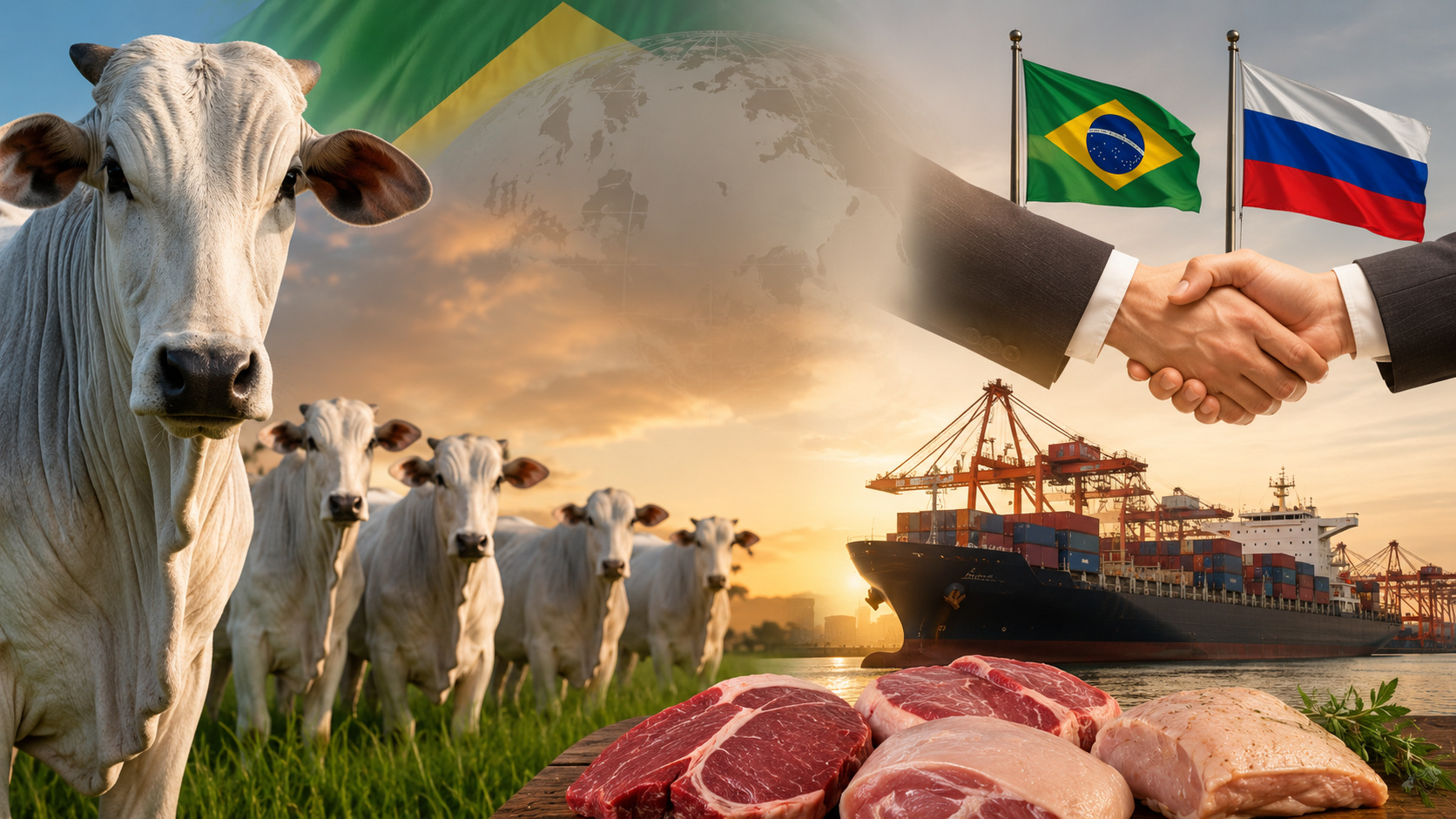
Ship with 40 thousand tons of sustainable Brazilian soy was prepared on February 13, 2026, to head to Bangladesh, in COFCO’s first sale to the country, with certification based on traceability, satellite images, inspections, and independent audits to prevent deforestation and land conversion in agricultural trade.
The ship with 40 thousand tons of Brazilian soy sustainable was prepared on February 13, 2026 to head from Brazil to Bangladesh. The shipment marked COFCO International’s first sale of sustainable soy to the Asian country, according to a statement released on February 24, 2026.
The recipient of the cargo is the Meghna Group of Industries, identified as the largest agribusiness in Bangladesh. The operation places Brazil and Asia on an agricultural route with greater environmental weight, as the soy was certified by COFCO International’s Responsible Agriculture Standard.
Ship carries Brazilian soy in first sustainable sale to Bangladesh
COFCO reported the volume, destination, and certification of the cargo, but did not detail in the statement the name of the ship or the Brazilian port of shipment, keeping the focus of the announcement on the first sustainable sale to Bangladesh and the traceability standard applied to the soy.
-
At 93, Brazilian Farmer Restores 56 Hectares of Forest and Revives Spring in the Amazon, Installs First Climate Tower in the Region

-
Brazilian Cheesemaker Wins European Award for Ant-Infused Cheese with Nutty Flavor Inspired by Indigenous Tradition

-
Brazilian Family’s Cheese, Started with One Cow in 1984, Named Best in the World, Beating 2,700 Competitors from 30 Countries
-
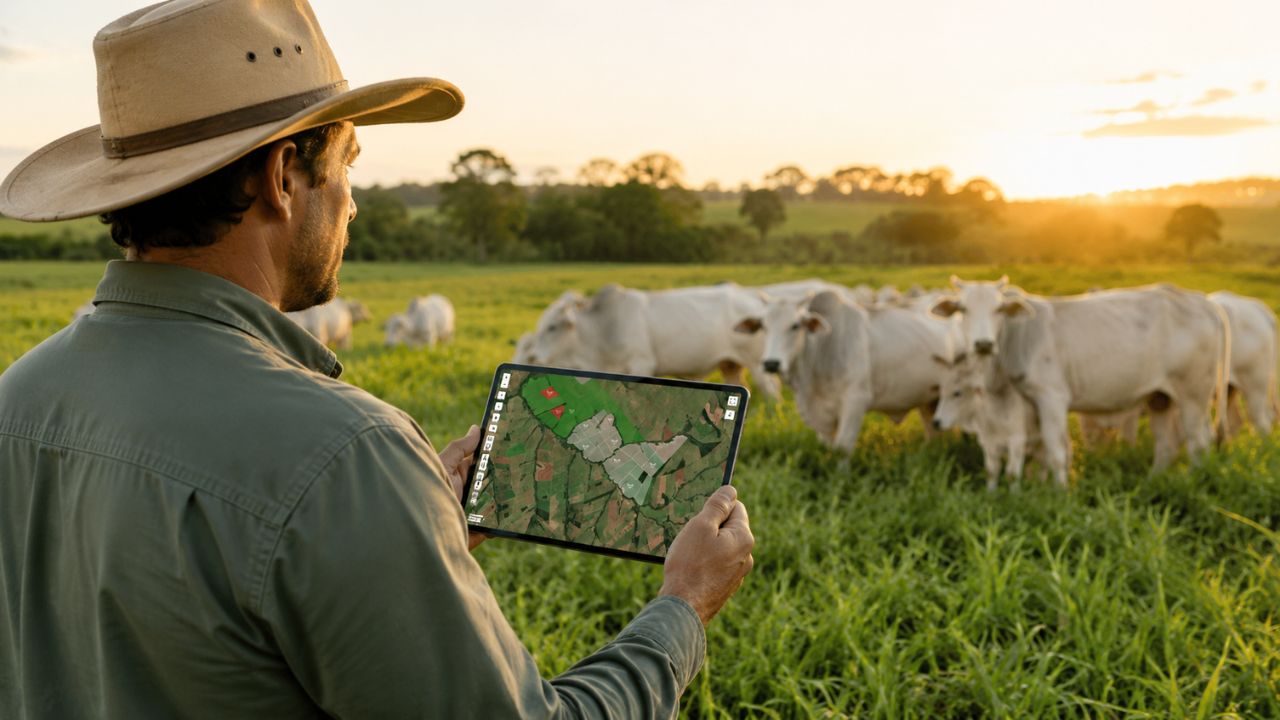
Brazilian Ranchers Use Satellites to Optimize Pasture Management and Prevent Feed Loss in Cattle Farms


The operation involves 40 thousand tons of certified Brazilian soy, ready for shipment to Bangladesh. Although the statement does not disclose the name of the vessel, the volume and destination indicate a significant movement in agricultural trade between Brazil and Asia.
The ship represents more than a grain delivery. It symbolizes Bangladesh’s entry into the list of destinations served by COFCO International with certified sustainable soy, expanding the company’s reach in markets seeking agricultural products with origin control.
Before the agreement with Bangladesh, the company had already supplied sustainable soy to China, European Union, Argentina, and Thailand. Now, the first sale to the Bangladeshi market expands the presence of this type of product in a major Asian consumption route.
The central point of the operation is not just the volume shipped, but the certification that accompanies the cargo. In a market increasingly attentive to the origin of food, tracking production has become a strategic part of the negotiation.
COFCO aims to expand certified soy and corn
COFCO International reported that it has been expanding the supply of sustainable agricultural products to meet the growing global demand. By 2026, the company expects to further increase its portfolio of sustainably certified South American soy and corn.
This move shows that grain exportation is beginning to depend not only on price, scale, and logistics but also on environmental proof. For international buyers, knowing the origin of the production may weigh more and more.
In the case of Brazilian soy sent to Bangladesh, certification acts as a kind of guarantee on agricultural practices. The goal is to demonstrate that the production follows legal, environmental, and human rights requirements.
Export agriculture is now operating under new pressure: to deliver volume but also to provide evidence of origin, compliance, and socio-environmental risk. For Brazil, this may influence how large shipments are negotiated in the coming years.
Certification uses traceability, satellites, and audits
COFCO’s International Responsible Agriculture Standard is described as an independent sustainability certification program for agricultural products. It includes measures such as product traceability, satellite image monitoring, on-site inspections, and independent audits.
These tools are used to verify if agricultural practices follow legal, environmental, and human rights requirements. Special focus is on preventing deforestation and land conversion.
In the soy trade, this type of control has become a sensitive issue. Buyers, companies, and regulators want to reduce the risk of grains associated with irregular areas entering global supply chains.
The shipment sent on the ship to Bangladesh, therefore, carries a documentary and technological layer. The soy does not travel just as a commodity; it is accompanied by a verification system that attempts to prove responsibility at the origin.
Satellites enter the route of Brazilian soy

The use of satellite images is one of the most important parts of the certification standard. This type of monitoring helps track productive areas and identify possible changes in land use.
When combined with independent audits and on-site inspections, the satellite enhances the checking capability. It does not replace all controls, but it allows for observing extensive areas and reinforcing traceability.
This intersection between field, data, and foreign trade shows an important shift in agribusiness. Soybean export now also depends on monitoring technology, not just production and transportation.
In practice, the ship’s route begins before the port. It goes through farms, records, images, audits, and documents that help sustain the product’s certification to the final buyer.
Standard received recognition from international and Brazilian entities
COFCO’s standard was confirmed and approved by the European Feed Manufacturers’ Federation, FEFAC, in 2023. It also received approval from the Consumer Goods Forum, known by the acronym CGF, in 2024.
In 2025, the standard was approved by the Brazilian Ministry of Agriculture and Livestock, MAPA. According to the company, this contributed to the norm being globally recognized as a good practice for sustainable agricultural product certification.
This recognition is relevant because it helps lend credibility to the system used in the cargo. In international markets, trust in certification standards depends on external validation and acceptance by industry entities.
For Brazilian soybeans, the endorsement from international organizations and MAPA can facilitate foreign buyers’ understanding. This does not eliminate debates about sustainability in the field, but it creates a formal basis for certified commercial operations.
Bangladesh enters a strategic agricultural route
Bangladesh emerges as a new destination for COFCO International’s sustainable soybeans. The buyer, Meghna Group of Industries, is described as the largest agribusiness in the country, reinforcing the commercial weight of the first sale.
The operation shows how Asian countries remain relevant for the flow of South American grains. Brazil, as a major agricultural supplier, continues to expand connections with markets that demand soybeans for food and industrial chains.
The difference, in this case, is the association between volume and certified sustainability. The sale relies not only on Brazil’s capacity to produce soybeans but also on the attempt to prove socio-environmental compliance.
With 40,000 tons, the shipment signals that certified agricultural products can gain scale in traditional commodity routes. The challenge will be to maintain traceability as volumes grow.
Ship reinforces a new phase in grain trade
The ship with sustainable Brazilian soybeans for Bangladesh summarizes a trend in the global grain trade: large shipments continue to cross oceans, but now carry more complex requirements of origin and verification.
COFCO International attempts to expand this model by expanding its portfolio of certified South American soy and corn. If global demand continues to grow, the trend is that more buyers will start to require similar proof.
Agribusiness enters a phase where logistics, certification, and technology go hand in hand. Exporting grains depends on ports, ships, and markets, but also on satellites, audits, and anti-deforestation rules.
In the end, COFCO’s first sustainable Brazilian soy sale to Bangladesh shows a route that connects Brazil, Asia, and environmental traceability.
Do you believe that certifications with satellites and audits can change global agricultural trade, or is there still a lack of oversight to ensure full confidence in these chains? Share your opinion.