





 Portuguese
  English
  Spanish
  2 min of reading
  0 comments


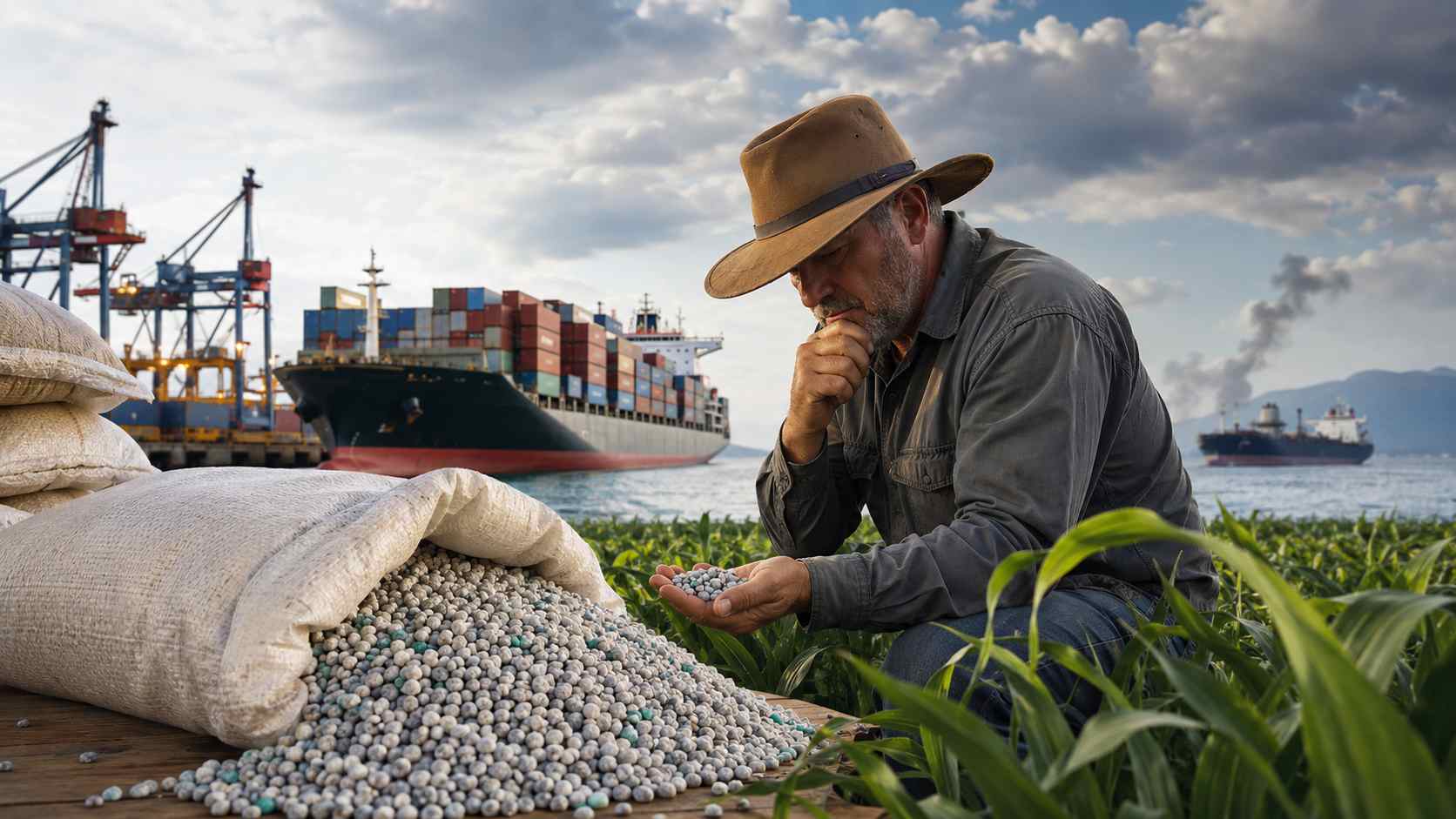
Dependence on 85% to 90% of imports leaves Brazilian agribusiness vulnerable to rising fertilizer prices, while conflict involving Iran and the United States pressures freight, insurance, and production costs
Brazil sees fertilizers as a central concern amid the escalation between Iran and the United States, pressure on oil, and discussions of BRICS foreign ministers in India. External dependence increases risks for agribusiness.
The sector imports 85% to 90% of the fertilizers consumed in the country. Any conflict in strategic regions can raise costs, pressure freight, insurance, and reduce margins for Brazilian producers.
Fertilizers are impacted by the conflict
Eduardo Marrei, commercial director of Brasil Agro, stated that the effects are appearing in the market. Iran is a producer of natural gas, an important input for nitrogen fertilizers, and the Strait of Hormuz concentrates part of the imported flow.
-
Veto on Brazilian meat opens crisis in the Mercosur-European Union agreement, exposes billion-dollar sanitary dispute, and shows who really has more power at the trade table

-
European Union bans Brazilian meat, threatens $1.8 billion in exports and raises alert about prices in the country’s supermarkets
-
Brazil enters Central America with strength, signs an agreement with Guatemala after 50 years of cooperation, and aims for more space for agriculture, livestock, beef, poultry, pork, bio-inputs, and animal genetics.
-
Consumers eat six times more chicken than in the 1960s, global meat supply quadruples in 60 years, and FAO report reveals the invisible cost on the plate: livestock could drive 80% of the increase in agricultural emissions over the next decade.




The instability increases maritime transport and insurance costs related to cargo. This movement makes imported fertilizer more expensive and increases production costs in the field.
Domestic production is still limited
The resumption of production by Petrobras entered the discussion as an attempt to reduce part of the dependence. The state-owned company intends to absorb 35% of the national market, with domestic production of urea and ammonia in Sergipe.
Marrei assessed that the reactivation helps in price composition. Even so, the progress is considered incipient given the weight of imports in the Brazilian supply of fertilizers.
The National Fertilizer Plan returned to the debate after the war between Russia and Ukraine. The cited goal is to reduce external dependence from the current 85% to about 50% by 2050.
BRICS can expand alternatives
With Iran in BRICS since 2024, the search for new partners has gained relevance. Brazil is dependent on suppliers like Russia, China, and Canada, but other countries in the bloc can contribute.
For Marrei, the country needs to be active in diversification. Having more purchasing options can reduce impacts in times of conflict and prevent fertilizers from making agricultural production more expensive.





Be the first to react!