






 Portuguese
  Spanish


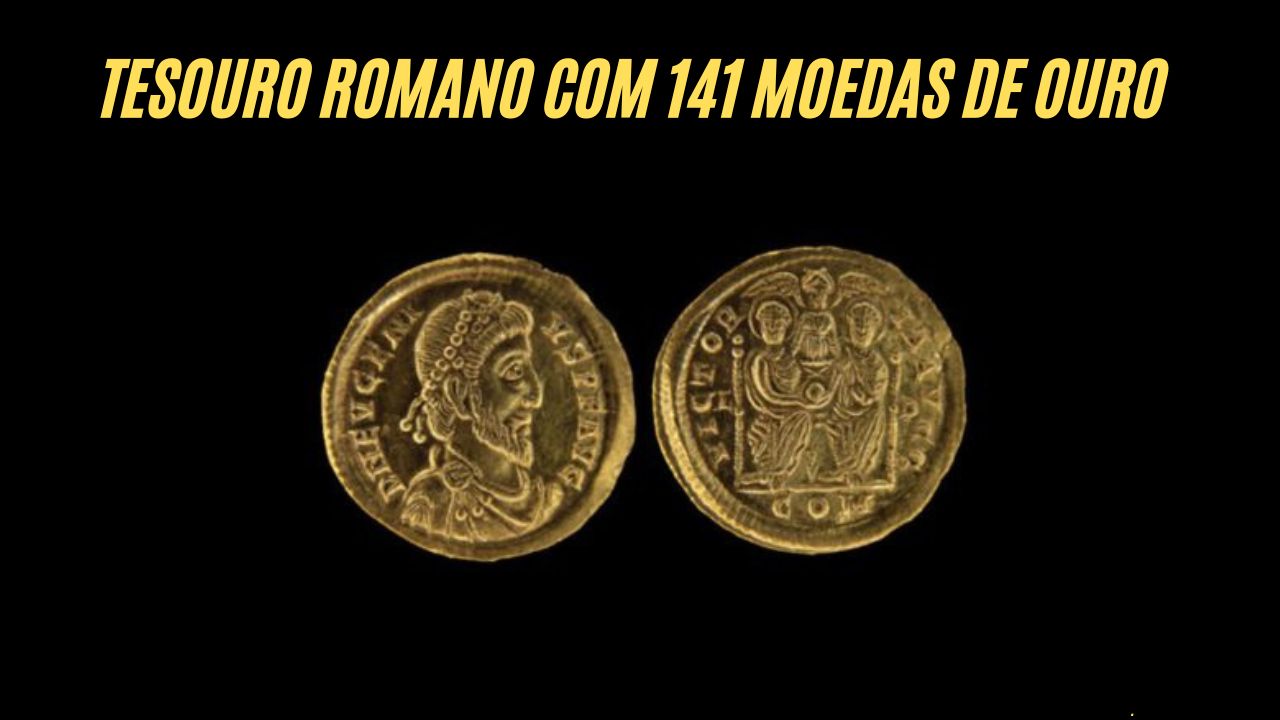


A Roman treasure valued at an impressive 300 thousand euros was found in the Hosingen Park, in northern Luxembourg. During excavations conducted by the National Institute of Archaeological Research (INRA) between 2020 and 2024, archaeologists discovered the foundations of a Roman building, as well as a set of 141 gold coins, known as soldi. The revelation was recently made by the Minister of Culture, Eric Thill, after years of secrecy to protect the site from possible vandalism.
The new discovery included not only the treasure but also the remains of a burgus, a small tower-shaped fortification dating from the Late Roman Empire (364 to 408 AD). This period was marked by profound cultural and political transformations in Roman civilization. Among the gold coins found, nine Roman emperors are represented, highlighting the importance of the find for the study of European history.
“The find is an extraordinary milestone for Luxembourg and for investigations into the Roman era,” emphasized the Ministry of Culture in a statement.
Joint Effort and Challenges
The excavations to find the gold coins required great care due to the presence of munitions and leftover explosives from World War II. A joint effort with the demining service of the Luxembourg Army ensured the safety of the project, highlighting the challenges faced by researchers.
-
Boat Made from 10 Tons of Plastic and 30,000 Discarded Flip-Flops Sails Along African Coast, Serving as a Floating Classroom on Ocean Pollution

-
Rescue Teams Use Flashlights to Find 47 Dogs in Abandoned, Powerless U.S. Home, Offering Them a Fresh Start Through Responsible Adoption

-
Siblings Discover 1939 Superman Comic in Late Mother’s Attic, Sets Record at $9.12 Million Auction
-
12-Year-Old Discovers 80-Million-Year-Old Marine Tylosaurus Fossil During Kansas Field Trip




The Luxembourg government recognized the importance of the Roman treasure by paying 308,600 euros to the legal heirs of the land where the discoveries were made. According to experts, a more in-depth analysis of the coins may reveal why they were buried at the site, as well as provide new clues about the economic and military history of the region.
Importance of the Roman Treasure
Although rare, these gold coins, discoveries like this are essential to understand the complexity of the Roman Empire. “These coins are not just a symbol of wealth, but also a testament to the political and social dynamics of a crucial period in European history,” said Eric Thill.
The revelation of this Roman treasure reinforces Luxembourg’s role as a guardian of a fascinating past that still has much to teach. The new discovery is yet another exciting chapter for European archaeology, opening doors for future studies and exploring the rich legacy of the Roman Empire.


