






 Portuguese
  Spanish
  4 min of reading
  0 comments


In The Australian Desert, Coober Pedy Challenges Extreme Heat With Underground Houses That Offer Comfort, Economy, And Inspiration For Future Cities
In the arid heart of Australia, Coober Pedy has become a symbol of resilience and creativity. Faced with temperatures reaching 52°C, the population found that living underground is the best way to survive. Most live in homes dug into the rocks, a solution that ensures thermal comfort and savings.
This choice, which may seem eccentric, could point the way to the future of cities in a hotter world.
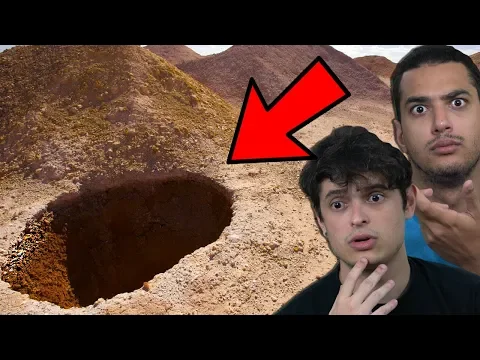
Located nearly 850 km from Adelaide, Coober Pedy impresses with its unique landscape. Sand pyramids mark the ground, a direct result of opal mining.
-
He started with a jigsaw, his father’s screwdriver, and many drawings made during classes; years later, the young man who built a roller coaster in his own backyard went viral on the internet, was hired by Cacau Park, and now coordinates Brazilian and foreign professionals in the installation of an attraction weighing 737 tons, 55 meters high, one kilometer long, featuring moments of zero gravity and a speed of 120 km/h, in a journey that turned curiosity, calculations, and persistence into a professional career.

-
Between Egypt and Sudan, Bir Tawil is no man’s land that neither country wants on paper, but in practice has gold mining, nomadic tribes, and even fake “kings.”

-
Swimming champion Shavarsh Karapetyan dove about 40 times into a frozen lake in Armenia to rescue a sunken bus, saved 20 lives, and lost his career because of it.
-
Júlia Pimentel, an 11-year-old from Minas Gerais, independently invented a new formula to calculate the square root using simple addition and multiplication, and her method was published in one of the most important mathematical scientific journals in Brazil.


These mounds also indicate the presence of underground dwellings. White ventilation pipes are the most visible signs of life below ground.
About 60% of the 2,500 residents live in houses within the rocks, adapting to the hostile desert environment.

The Heat That Drives Innovation
In summer, temperatures reach unbearable levels. Birds fall from the sky and electronic equipment needs to be stored in coolers.
In winter, living underground may seem extravagant, but in the height of summer, this decision proves essential. The thermal stability of the underground ensures living conditions that would be unviable on the surface.
The practice of sheltering underground is not new. Ancient peoples resorted to this resource in different parts of the world.
Tools found in South Africa and remnants of Neanderthals in France confirm this ancient strategy. Even chimpanzees in Senegal have been observed seeking caves on extremely hot days.
One of the most impressive examples is the underground city of Derinkuyu in Turkey, discovered in 1963.
Capable of housing 20,000 people, it featured stables, churches, and ventilation shafts. The constant climate of 13°C underground made life more comfortable and secure.
The Advantages Of Living Underground
In Coober Pedy, the temperature of the underground houses remains stable at around 23°C. While the heat on the surface can be stifling, the interiors of the homes remain pleasant throughout the year.
This condition reduces the need for electricity, making the lifestyle cheaper. Jason Wright, a local resident, explains that living above ground requires high expenses for heating and cooling, something impractical for many.
In addition to the savings, the value of underground properties is surprisingly affordable. Three-bedroom houses can cost 40,000 Australian dollars, far below the 700,000 charged in Adelaide.
Another unexpected benefit is the absence of insects, as flies tend to avoid entering dark and cool environments. The silence and lack of light pollution make underground living even more appealing.
Luxury Underground Houses
Although many homes are simple, some stand out for their luxury. There are houses with underground pools, game rooms, and large bathrooms.
One resident even built a “castle,” made with 50,000 exposed bricks and arched doors. Wright states that there are true surprises hidden beneath the city, visible only to invited guests.
Even security against minor tremors is cited as an advantage, as vibrations often go unnoticed underground.
The Rock That Makes It Easy
One of the secrets of Coober Pedy lies in the type of rock. Local sandstone and siltstone are soft and easy to excavate, often even with a fingernail.
This characteristic allowed residents to expand their homes with simple tools or to utilize abandoned mines as their base.
Today, modern machines speed up the process, removing cubic meters of rock per hour. The structure remains stable without the need for additional reinforcements, allowing for spacious and creative rooms.
Interestingly, occasional mining still yields surprises. One resident found a large opal while making space for a shower.
A hotel discovered stones valued at 1.5 million dollars during a renovation. In Coober Pedy, excavating means both living and having the chance to get rich.
Where This Model Does Not Work
Despite its benefits, underground living cannot be applied everywhere. Humid regions face serious challenges.
The London Underground, for instance, required several layers of waterproofing in the 19th century. Still, mold problems persist.
Caves in Israel, built in porous rock, suffer from doubled moisture, making the spaces inhospitable.
In Coober Pedy, the scenario is different. The city is situated atop dry sandstone, which allows for air circulation through ventilation shafts.
This ensures comfort and prevents the deterioration caused by humidity. The arid climate makes the region a special case, difficult to replicate in wetter locations.
The Risks And The Future
Although there are reports of occasional collapses, such as that of Barry Lewis’s old home, from the local tourist center, residents consider underground living safe.
Wright emphasizes that the experience outweighs any concerns. For him, it is enough to feel the heat of 50°C on the surface to appreciate the cool shelter of his home.
The example of Coober Pedy showcases humanity’s ability to adapt to extreme conditions. With the advancement of climate change, similar solutions may gain ground in other parts of the world.
The underground, often seen as a curious alternative, may become a practical response to an increasingly hot planet.
Thus, if new heatwaves spread, other cities may follow the Australian model. Sand pyramids similar to those in the Australian desert may arise in different regions, marking a future where living underground ceases to be an exception and becomes an essential survival strategy.
With information from Gazeta de São Paulo.


Be the first to react!