






 Portuguese
  Spanish


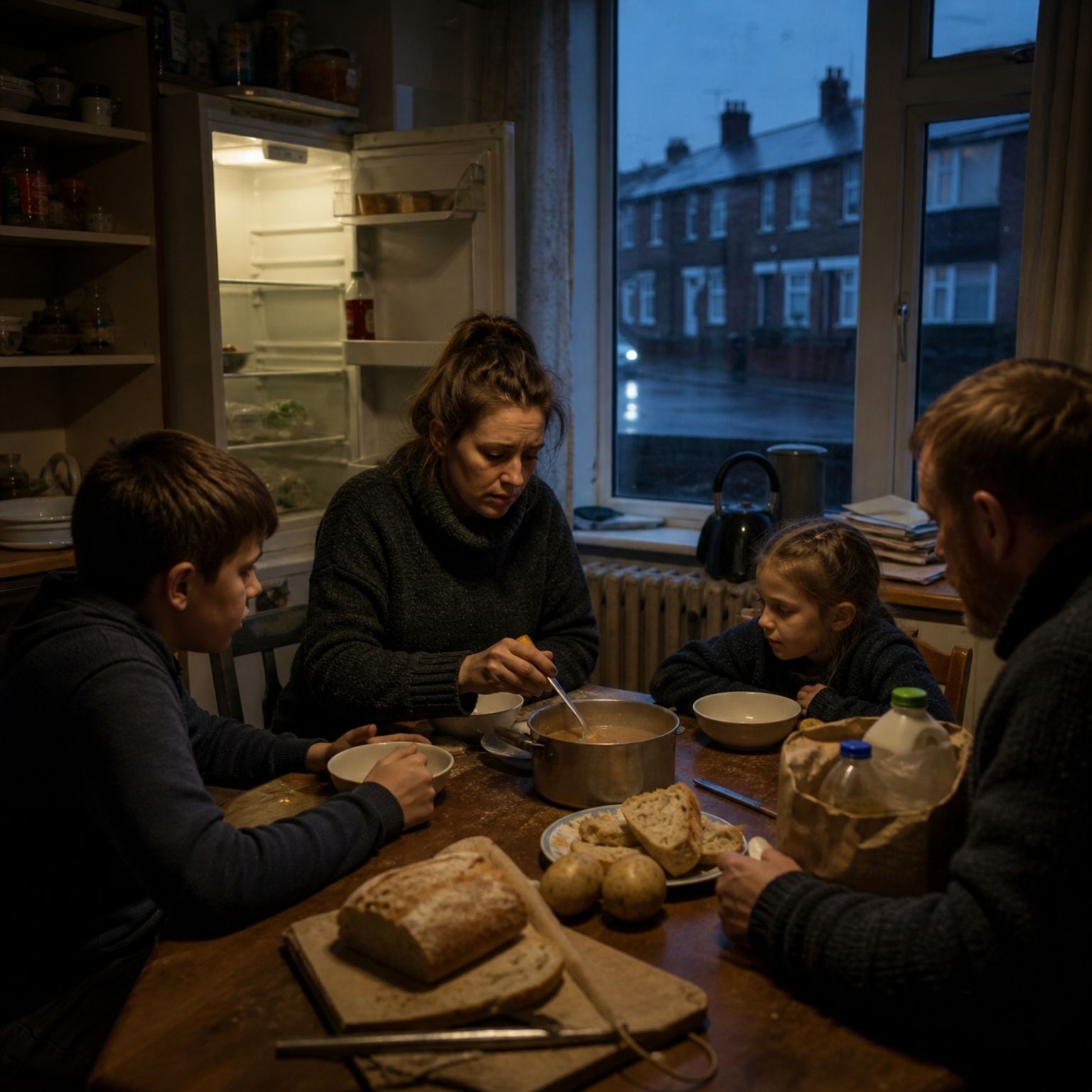

UK families face advancing food insecurity, skip meals out of necessity, and feel the weight of the cost of living, the energy crisis, and more expensive food on health, consumption, and household budgets.
UK families are being pushed to an extreme cost-cutting measure: skipping meals not by choice, but out of necessity. According to the presented data, one in 10 families in the country already lives this reality, a scenario affecting about 3 million households and exposing the worsening of food insecurity in one of the world’s best-known economies.
The situation is concerning because it goes far beyond immediate hunger. The pressure on families affects the quality of food, compromises physical and mental health, weighs even more heavily on children, and also begins to impact the British economy in another way: a drop in consumption. When budgets shrink, spending on restaurants, new clothes, and travel is cut first. When food enters that list, it’s a sign that the crisis has reached a much deeper level.
What is happening to families in the United Kingdom
The rise in the cost of living is changing the routine of millions of British families. The need to cut expenses has reached a point where part of the population is already reducing meals at home to try to balance the budget.
-
China Tightens Control on Antimony, Driving Prices from $22,000 to Nearly $40,000 per Ton as U.S. Rushes to Bolster Strategic Reserves

-
BlackRock Freezes $1 Billion in Brazilian Renewable Energy, Impacting 1.5 GW of Planned Projects and Highlighting Investor Concerns Over Infrastructure Bottlenecks Cutting Up to 25% of Solar and Wind Generation
-
Labor Shortage: Despite Record Average Salary, 90% of Brazilian Bar and Restaurant Owners Struggle to Hire Key Roles Like Sushi Chefs and Head Cooks

-
Supermarket Deli Counter Attendants in Brazil Could Earn Over $2,100 Monthly by 2026, Plus Benefits Package


This movement reveals an unusual level of pressure for a high-income country. The data highlights that this type of problem is often not associated with developed economies, but it is now explicitly appearing in the UK, with families facing food insecurity on a national scale.
The numbers that explain the size of the crisis
The strongest data point is that one in 10 UK families already skips meals out of necessity. In absolute terms, this represents about 3 million households in a situation of food insecurity.
Another decisive number is the price of food. Since 2016, food product inflation has risen by 60%. The comparison presented is direct: a shopping cart that cost 100 pounds now costs 160. This difference helps to show why the squeeze is no longer isolated and has begun to alter basic habits within the home.
Why food became so much more expensive
According to the data, the UK has faced a sequence of shocks in recent years. First came the pandemic. Then, the war between Russia and Ukraine. Now, the energy crisis linked to the conflict between the United States and Iran has once again pressured costs and increased the sense of instability.
This succession of crises affected prices, supply, and purchasing power. The result is most strongly seen in food, one of the most sensitive items in the household budget. When food prices skyrocket, the impact is immediate because it is a recurring and unavoidable expense.
What changes in practice when families start skipping meals
In practice, the most visible effect is the deterioration of diet quality. With less money available, families start consuming foods poorer in nutrients and reorganizing their budgets more and more aggressively.
The data also links this scenario to effects on physical and mental health. In the case of children, the situation becomes even more delicate, because inadequate nutrition compromises development, routine, and well-being. The problem, therefore, is not limited to an empty plate but spreads to other dimensions of daily life.
How the family crisis also affects the country’s economy
The impact is not restricted to the domestic environment. When families start cutting expenses, the economy feels it. The described pattern is clear: first, restaurants, new clothes, and travel are cut from the budget. Then, as the pressure continues, even food begins to be reduced.
This shows that the cost of living crisis erodes consumption at various levels. Instead of affecting only specific sectors, it advances on the base of household spending and helps to slow down the circulation of money in the economy. The problem ceases to be merely social and also becomes macroeconomic.
The Bank of England’s warning about inflation and loans
The base reports that the Bank of England has warned of the economic impacts of the Middle East crisis, including the possibility of a vigorous increase in borrowing costs. This point amplifies the severity of the scenario, as it indicates that the pressure could spread further to credit, financing, and debt.
It was also highlighted that lower food supply and higher prices are pushing up inflation, and that monetary policy cannot completely prevent this shock from hitting businesses and households in the UK. In other words, the problem is not restricted to a one-off correction and may continue to weigh on household budgets.
Why this crisis draws so much attention in a developed country
What makes the British case particularly impactful is the contrast between the traditional image of a first-world country and the current reality of millions of families facing food insecurity. The base reinforces that this association between hunger and extreme need is often not made when looking at advanced economies.
Precisely for this reason, the data that one in 10 families is skipping meals gains symbolic strength. It breaks the perception of stability and shows how inflation, energy, and geopolitical shocks can affect even countries with economic structures considered more solid.
A sequence of crises that pushed the problem into homes


The situation described did not arise from a single event. It was formed by a succession of shocks that accumulated over recent years. The pandemic tightened the cost of living, the war between Russia and Ukraine aggravated the scenario, and the most recent energy crisis deepened the pressure.
This chain of events helps explain why so many families have reached such an extreme point. It’s not just an isolated price hike in one product or a bad month for the budget. What emerges is a continuous erosion of purchasing power, which has ultimately affected food, the most sensitive area of all.
What this scenario reveals about the advance of food insecurity
The picture shows that food insecurity in the UK has ceased to be a peripheral warning and has become a central sign of the cost-of-living crisis. When 3 million households need to reduce meals and cope with much more expensive food, the problem has already surpassed any isolated interpretation.
The situation combines persistent inflation, expensive energy, pressure on loans, and weakened consumption. The result is an environment where families must make increasingly difficult choices, while the economy absorbs the effects of a crisis that no longer fits only in statistics and has come to be reflected directly within homes.
Do you believe that energy crises and inflation can cause more rich countries to face such a strong increase in food insecurity?


