





 Portuguese
  English
  Spanish
  4 min of reading
  13 comments


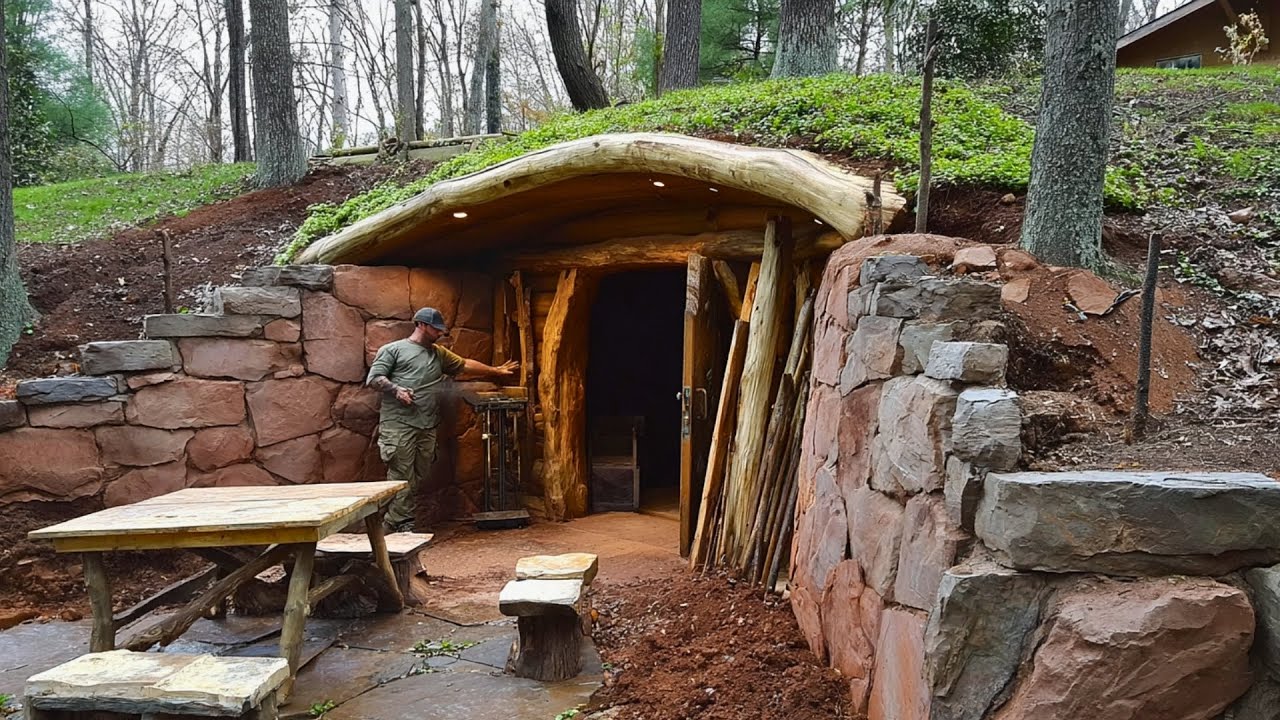


In The Ukrainian Forest, Misha, From The Lesnoy Channel, Builds An Underground Cabin Alone With Clay, Stone, And Wood, Using Only Traditional Techniques.
In the midst of a dense forest in Ukraine, where tall pines muffle external sounds and sunlight pierces the canopy like golden blades, Misha, creator of the Lesnoy channel, decided to abandon any logic of modern construction to follow a much older path. The goal was clear: to dig, alone, a fully functional underground cabin, using only materials found in nature and techniques that date back centuries.
What begins as a simple hole in the ground evolves, step by step, into a concealed dwelling designed not to be seen, not to generate visual impact, and to maintain thermal stability throughout the year.
From The Hole In The Ground To The Functional Underground Structure
The first stage of the project was manual excavation. Without excavators, concrete, or industrial foundations, Misha opened the space directly in the soil, respecting the natural compaction of the earth and the behavior of the terrain.
-
The United Arab Emirates will inaugurate the country’s first passenger train in 2026 — 1,200 km of tracks through the desert, linking 7 emirates in less than 2 hours.

-
Court suspends bidding for the “middle section” of BR-319 on the eve of auctions, cites significant environmental impact, and halts Dnit’s tenders for paving the highway that connects Manaus to Porto Velho.

-
China has erected the towers of the world’s largest double-deck suspension bridge — it has 16 lanes between Guangzhou and Dongguan, and the project has already broken 5 world records.
-
US spends $1.6 billion to renovate a 90-year-old dam in Pennsylvania that controls the shipping of 23 million tons per year on the Ohio River.


The internal geometry is not random: slightly slanted walls help distribute the pressure of the surrounding soil, reducing the risk of collapse.
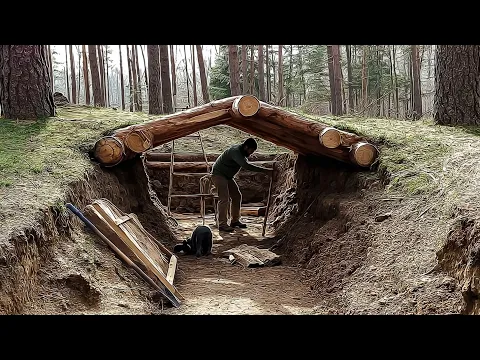

This type of underground construction relies more on understanding the terrain than on brute strength. Each removal of earth is done carefully, maintaining a balance between internal space and external stability.
Clay Walls, Moss Insulation, And Ancient Techniques
With the excavated space, the structural finishing stage begins. The walls are covered with clay, a material used for thousands of years for its ability to regulate humidity and temperature.
Between the layers of clay, Misha uses moss, which acts as natural insulation, filling micro-cracks and helping to keep the interior dry and thermally stable.

This system creates surprisingly comfortable internal environments, even in regions where the weather can vary significantly throughout the seasons.
The Stone Stove That Also Becomes Part Of The Structure
One of the most interesting elements of the cabin is the handmade stone stove. It serves not only to cook or heat the environment. Its weight and positioning were designed to act as part of the internal stability of the structure.
The stones help anchor the center of the cabin, contributing to the structural balance of the excavated space.
This type of solution was common in ancient dwellings, where each element needed to fulfill more than one function at the same time.
Living Roof With Layers Of Earth And Grass
When the time comes to close the cabin, Misha opts for a living roof, made with overlapping layers of wood, soil, and grass. This ancient technique mimics traditional methods of load distribution, spreading the weight of the soil evenly over the structure.
In addition to protecting against rain and wind, the roof helps completely camouflage the cabin, making it practically disappear into the landscape. Viewed from above, the structure blends in with the very ground of the forest.
Doors, Windows, And Handmade Details
Even though it is underground, the cabin does not forgo basic comfort. Misha builds wooden doors with pivot hinges, customized windows, and even an outdoor barbecue made with river stones. Each detail is produced manually, from peeled logs to woven fences and internal surfaces.

The slate table, wooden fittings, and finishes show a level of care that goes beyond survival: there is a clear aesthetic concern aligned with functionality.
Cooking Between Layers Of Clay And Stone
Inside the cabin, food preparation also follows ancient logic. Between the layers of heated clay, Misha cooks simple dishes, taking advantage of the heat retained by the walls and the stove. This technique transforms the very structure of the house into a culinary instrument, reducing firewood consumption and increasing thermal efficiency.
Slow, Silent, And Machine-Free Construction
The entire project is carried out without modern machines, without conventional electricity, and without external help. The pace of the work is dictated by the body, the weather, and the availability of materials. This reduces waste, avoids structural errors, and creates a direct relationship between builder and construction.

Every decision is made based on observation: how the earth reacts, how moisture behaves, how heat distributes inside.
The underground cabin of Misha, from Lesnoy, sparks curiosity because it challenges the current logic of civil construction. In a world of concrete, steel, and haste, he demonstrates that ancient techniques continue to work and work well when applied with knowledge and patience.
This is not merely an improvised shelter, but a practical demonstration of how traditional architecture, empirical engineering, and survival can come together in a discreet, efficient structure that is fully integrated into nature.







Absolutely amazing! This is what we all should have gone to school for and how we should all live. With Mother Earth not against it. Beautiful work!
“Em um mundo com vazios demográficos, mudanças climáticas e concentração de riquezas, esse exemplo é inspirador !”
Amazing as that is, check out the Underground Garden in Fresno Cal. Forestiere dug tunnels under 20 acres of rock, single handed , fish ponds, home vineyards meeting hall and more . A lifetime of dedication