






 Portuguese
  Spanish


A dam built in the 1930s still controls the fate of 23 million tons of cargo per year — and the US is spending $1.6 billion to save it
In the state of Pennsylvania, on the banks of the Ohio River, a concrete structure built almost 90 years ago remains one of the most critical pieces of the United States’ energy logistics.
The Montgomery Lock and Dam regulates the water level and allows the passage of barges carrying 23 million tons of cargo per year, including coal, liquefied natural gas, chemicals, and agricultural commodities.
However, after nearly a century of uninterrupted operation, the structure has reached the end of its service life — and the federal government has authorized a monumental $1.6 billion renovation.
-
Two-Bedroom Home Built in a 40-Foot Shipping Container Delivered and Ready for Same-Day Living in São Paulo Countryside

-
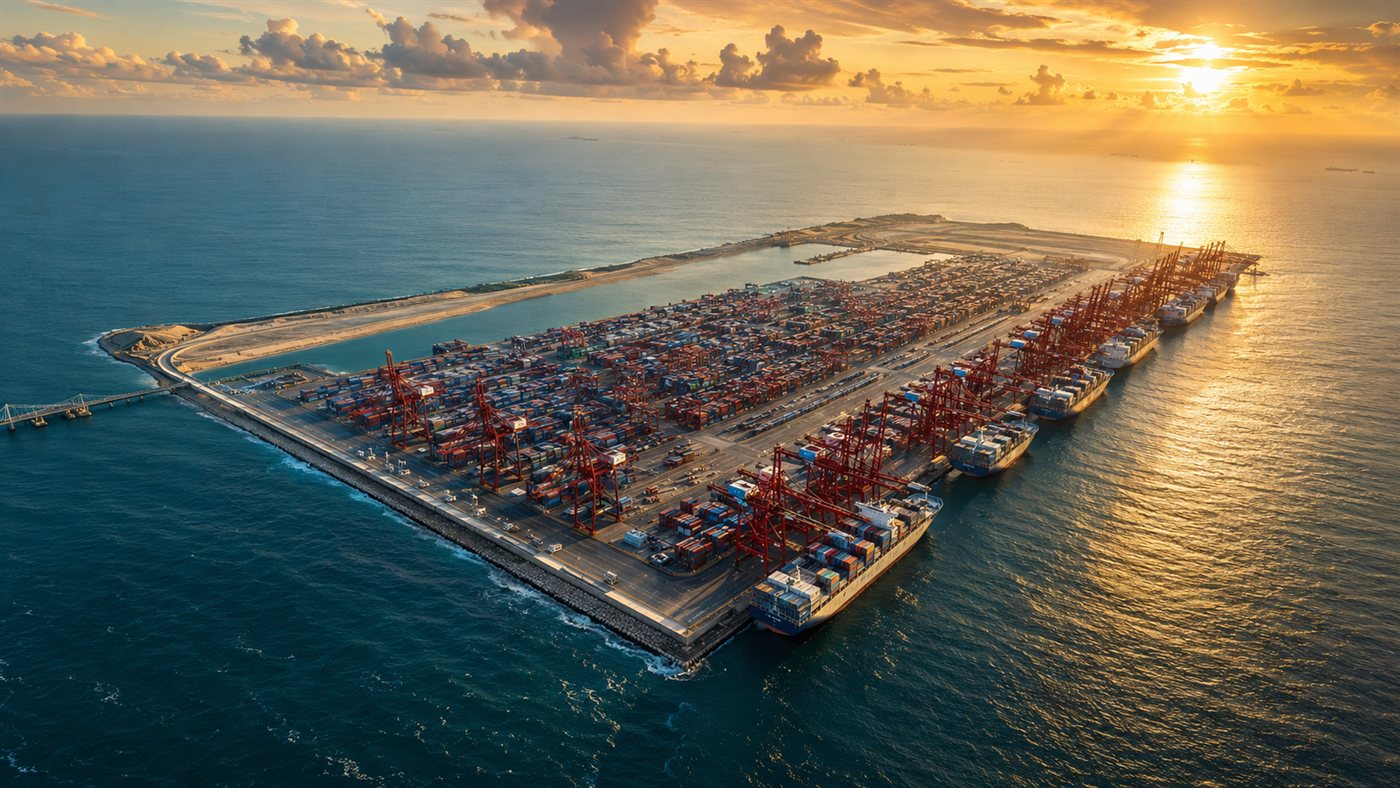
China Constructs Artificial Island 32 km Offshore for Yangshan Port, Connected to Shanghai by 32 km Bridge, Unloading 3,000 Containers in 20 Hours
-
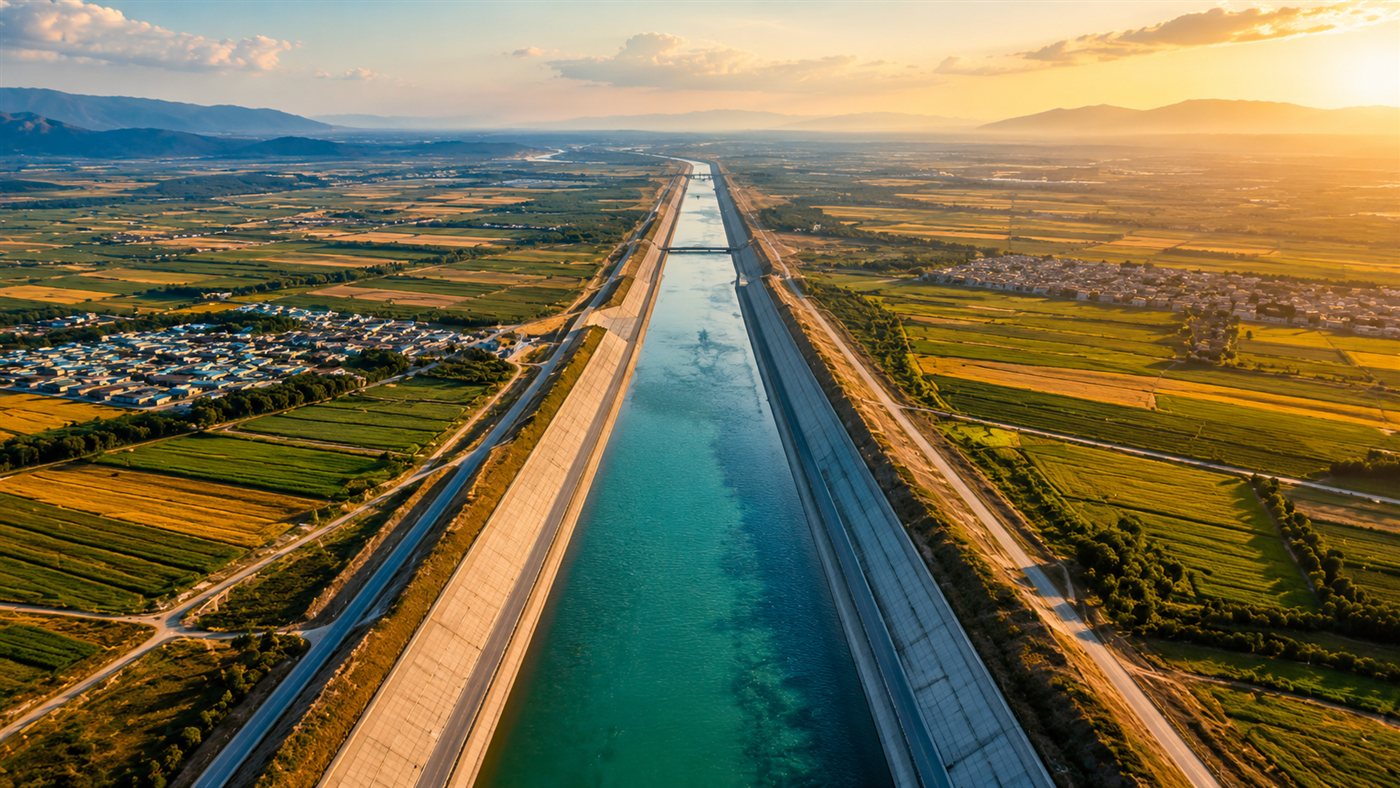
China’s $70 Billion River Diversion Project, the World’s Largest, Moves 44.8 Billion Cubic Meters Annually, Crosses Under the Yellow River, and Displaced 330,000 People
-
Indian Driver Spends 14 Years Digging 10-Meter Tunnel Through Mountain to Connect Isolated Village to the World



According to a report by Engineering News-Record (ENR), the work is already underway and is being conducted by the US Army Corps of Engineers — the military engineering corps that maintains US water infrastructure.
Thus, a nearly century-old structure is receiving an investment equivalent to the annual GDP of some countries — because there is simply no alternative.

The Ohio River is a logistical artery for the US — and without the Montgomery Dam, the flow stops
The Ohio River is 1,579 km long and is one of the most important rivers in the United States for cargo transport — connecting coal and natural gas producing regions in Pennsylvania and West Virginia to terminals on the Mississippi River and the Gulf of Mexico.
Consequently, any interruption in the operation of the locks and dams along the river causes a cascading effect that paralyzes entire energy supply chains.
Furthermore, river transport is up to 10 times cheaper than road transport and 5 times cheaper than rail for heavy cargo — which makes barges irreplaceable for low-value-per-ton commodities like coal.
However, the infrastructure that supports this economic advantage is aging rapidly: many of the system’s locks and dams were built between the 1920s and 1940s.
Therefore, the renovation of Montgomery is not a luxury — it is a matter of logistical survival for the American energy economy.
What the engineers are doing: replacing 90-year-old structures without stopping the river
The renovation of the Montgomery Lock and Dam is an extraordinary engineering challenge because the dam cannot be shut down during the work.
According to the ENR, the US Army Corps engineers need to replace the gates, reinforce the concrete pillars, and expand the navigation lock — all while barges continue to pass through the site.
Similarly, the new lock will have larger dimensions than the current one, allowing the passage of modern barges that are wider and longer than those from the 1930s.
Likewise, the project includes replacing mechanical and electrical equipment that has been operating for decades without interruption — some of which have parts that are no longer manufactured.
In this sense, the renovation is like performing open-heart surgery on a patient who cannot stop running: each step must be executed without interrupting the flow of vessels.
Above all, the schedule is tight: any delay can create queues of barges stretching for kilometers upstream, with losses of millions of dollars per day.

The US faces a silent crisis: the infrastructure they built 100 years ago is deteriorating all at once
Montgomery is not an isolated case. According to an analysis by the American Society of Civil Engineers (ASCE), more than 70% of US navigation locks and dams have already surpassed their designed service life of 50 years.
Consequently, the country faces a backlog of renovation projects totaling tens of billions of dollars — and each year of delay increases the risk of catastrophic failure.
On the other hand, America’s inland navigation infrastructure is one of the largest in the world, with over 40,000 km of navigable waterways and hundreds of locks operated by the federal government.
In fact, the Ohio River alone moves more cargo than the Panama Canal — but with much older structures and less proportional investment.
As a result, the US is being forced to do in decades what it should have done gradually over the last 50 years: overhaul an entire water infrastructure system before it collapses.
What passes through Montgomery: coal that generates electricity, gas that heats homes, and grains that feed the world
The 23 million tons that pass through the Montgomery Dam annually include some of the most important commodities in the American economy.
Furthermore, the coal transported on the Ohio still generates about 20% of the electricity in neighboring states — even with the ongoing energy transition.
Despite this, the dam’s importance extends beyond coal: liquefied natural gas, petrochemical products, steel, and even wind turbine components travel through the same locks.
Therefore, Montgomery is a bottleneck that, if it fails, affects not only the fossil fuel energy matrix but also the renewable energy supply chain.
Still, few Americans know that a 90-year-old dam in Pennsylvania is responsible for keeping the lights on in their homes and fuel at the gas stations.

The lesson the Montgomery Dam leaves for the world: infrastructure is not an expense — it’s a life insurance policy
The $1.6 billion the US is investing in Montgomery seems like a fortune — but it represents a fraction of the damage a failure would cause.
However, the American case shows that even the world’s largest economy can neglect infrastructure for decades until it is forced to act.
Consequently, the Montgomery renovation is a warning for any country that builds infrastructure and then forgets to maintain it — including Brazil, which has 14,000 stalled projects and 14,000 stalled projects and abandoned railways.
The dam was built when Franklin Roosevelt was president, withstood two world wars and the Cold War — but almost did not survive the most silent enemy of all: lack of maintenance.
Will the lesson be learned before or after another critical structure fails — somewhere in the world where maintenance was left for the “next administration”?







