





 Portuguese
  English
  Spanish
  4 min of reading
  0 comments


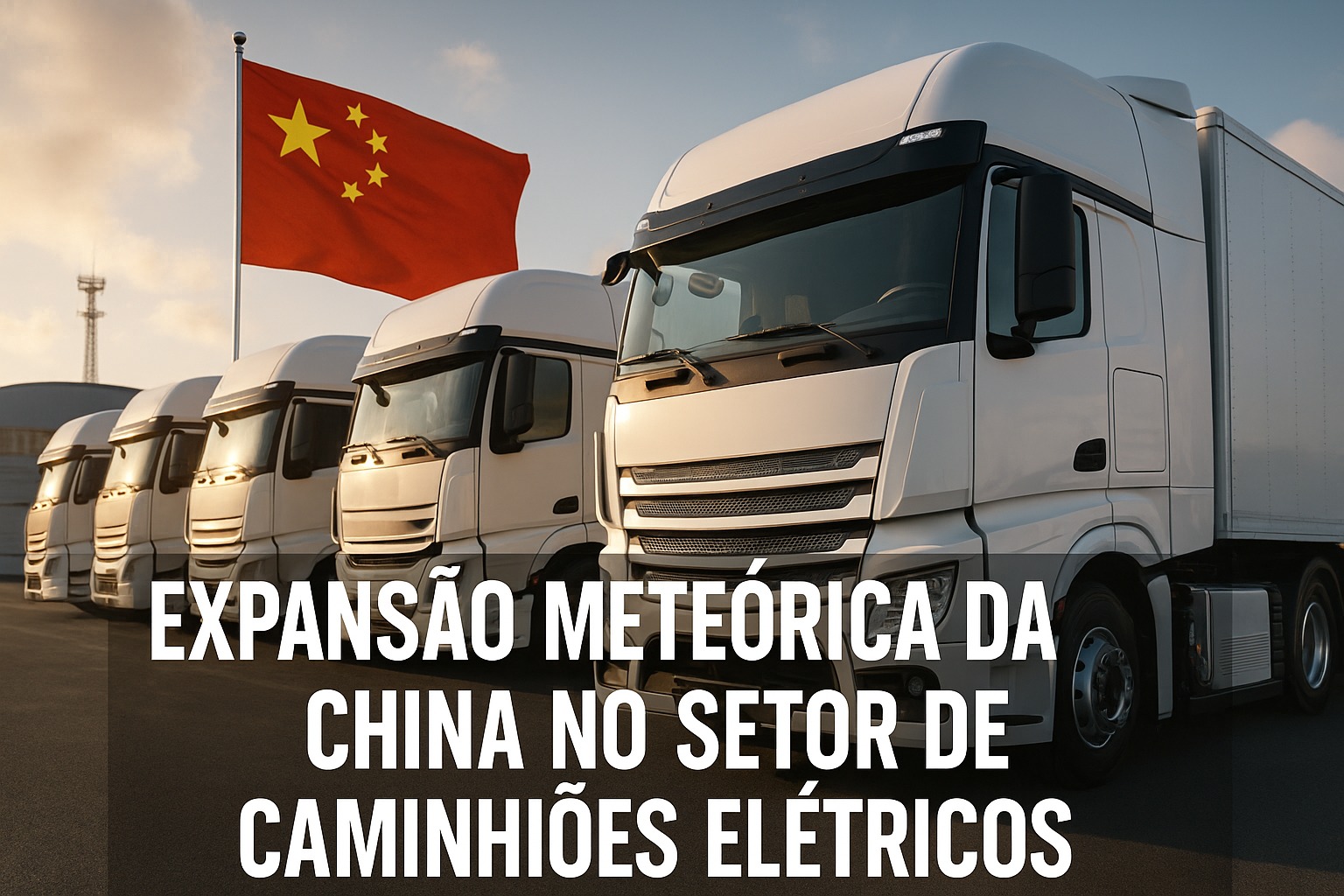
With State Support and Advanced Technology, China Dominates 80% of Global Electric Truck Sales and Threatens Western Dominance in Heavy Transport
In recent years, China has transformed its presence in the global automotive sector. After conquering the electric car market, the country is now repeating the strategy with cargo trucks, gaining an advantage in a segment that is becoming increasingly strategic for the future of sustainable mobility.
The New Chinese Offensive
Manufacturers like BYD — which is already operating strongly in Europe and Latin America — are leading a movement that includes eight other Chinese companies dominating electric truck exports.
According to the International Energy Agency, brands from the country accounted for 80% of the 90,000 global sales of this type of vehicle in 2024.
-
Yamaha sells the FZ-S FI V4 for around $6,200 in direct conversion, cheaper than the Yamaha Fazer FZ15, Honda CG 160 Titan, and Bajaj Dominar 160 in Brazil, with a 149 cc engine, 13-liter tank, ABS, connectivity, and traction control; the urban street bike shows a Yamaha equipped beyond its class in India.

-
Volkswagen breaks its own rule in China and launches the ID. Era 5S plug-in hybrid with a 2,000 km range to shake up the electric market.

-
Toyota launches Rumion cheaper than Chevrolet Spin, Citroën C3 Aircross, Honda City, Nissan Versa, and Toyota Corolla Cross in Brazil, with 7 seats, 1.5 K-Series engine, 6-speed automatic transmission, and fuel consumption of up to 26.11 km/kg; the family minivan showcases an affordable Toyota that Brazilians don’t have in India.
-
Onix Plus, Cobalt, and even Cruze: Chevrolet sedans dominate the used car market with trunks of up to 500 liters, economical engines, affordable maintenance, and versions that have become favorites among families and app drivers in Brazil.

These trucks are already operating in countries like Italy, Poland, Spain, and Mexico, consolidating China’s presence outside of Asia.
This advance is not coincidental: it reflects a carefully planned national strategy supported by the government.
The Environmental Impact and the Expanding Market
The growth of cargo transport has significantly contributed to global emissions.
According to data from Rest of the World, between 2000 and 2018, carbon dioxide emissions from heavy vehicles grew almost 3% per year. Trucks are responsible for 80% of this increase.
Therefore, the electrification of cargo transport is crucial for international climate goals. China understood early on that this was a dual opportunity — economic and environmental — and decided to invest heavily in the sector.
State Strategy and Quick Results
The Chinese dominance did not arise spontaneously. It is the result of a long-term policy that, for about 15 years, has required manufacturers to produce a percentage of electric vehicles relative to their total fleet.
Meanwhile, Western nations opted to offer only tax incentives for individual buyers, without the same industrial impact.
The results are evident: in the first half of 2025, electric trucks already represented 22% of heavy vehicle sales in China.
In Europe, this share is no more than 1%, and in India, only 280 long-distance electric trucks were sold amidst a universe of over 834,000 commercial vehicles.
Lower Costs and Real Gains
Chinese operators claim that the operation of electric trucks is between 10% and 26% cheaper than that of diesel models.
The consultancy Commercial Vehicle World confirms this savings, while battery manufacturer CATL estimates that its systems reduce transportation costs by up to 35% per ton-kilometer.
These numbers explain why companies like Sany Group anticipate that between 70% and 80% of the Chinese heavy truck market will be electric in the coming years.
Technological Solutions and Efficient Infrastructure
One of the main challenges in electrifying heavy transport is the charging time. A truck of this size needs about one megawatt-hour of battery — ten times more than a regular electric car.
In Western countries, mandatory driver stops, such as the 45-minute breaks in Europe, help balance this time.
But in countries like Brazil and India, where drivers operate up to 18 hours a day, the logistics are much more complex.
China solved the problem with a battery-swapping system. Today, nearly 40% of the country’s heavy electric trucks use this technology, allowing for instant replacements instead of long charging periods.
The West’s Delay Compared to China
Meanwhile, the Western industry is progressing slowly. Volvo, the European leader in the sector, has delivered only five thousand electric trucks across fifty countries.
In South Africa, for example, only six units were sold in two years — a number insufficient to justify local production.
Meanwhile, Tesla, which promised to revolutionize the sector with the Semi truck in 2017, has delivered only a few units to Pepsi in 2022 and then practically disappeared from the market, affected by high costs and technical failures.
Chinese Factories Expanding Globally
BYD and other manufacturers already have facilities dedicated to exporting within China and plan to build assembly plants on other continents.
Beiqi Foton, for example, is already shipping trucks to the European Union, even at the risk of tariffs.
In June, Windrose announced plans to set up a factory in the United States, in Georgia.
For consultant Ravi Gadepalli of Transit Intelligence, Chinese companies must adapt their strategies according to local requirements — manufacturing components where necessary and selling directly where there are fewer restrictions.
The Role of Capital and the Future of Cargo Transport
Cargo transport is dominated by small companies, with narrow margins and limited access to financing.
This is the biggest obstacle outside of China, where the government has invested large sums to boost the electric sector.
Gadepalli believes that the same phenomenon observed with electric cars and buses will now be repeated with trucks.
However, the global market is still in its early stages. Grand View Research estimates that the heavy electric truck segment will reach US$ 5 billion by 2030 — a fraction of the electric vehicle market, which is valued at US$ 6 trillion.
Nevertheless, China’s pace of expansion indicates that these projections could quickly become outdated as the country accelerates towards definitive leadership in global electric transport.
With information from Xataka.


Be the first to react!