






 Portuguese
  Spanish


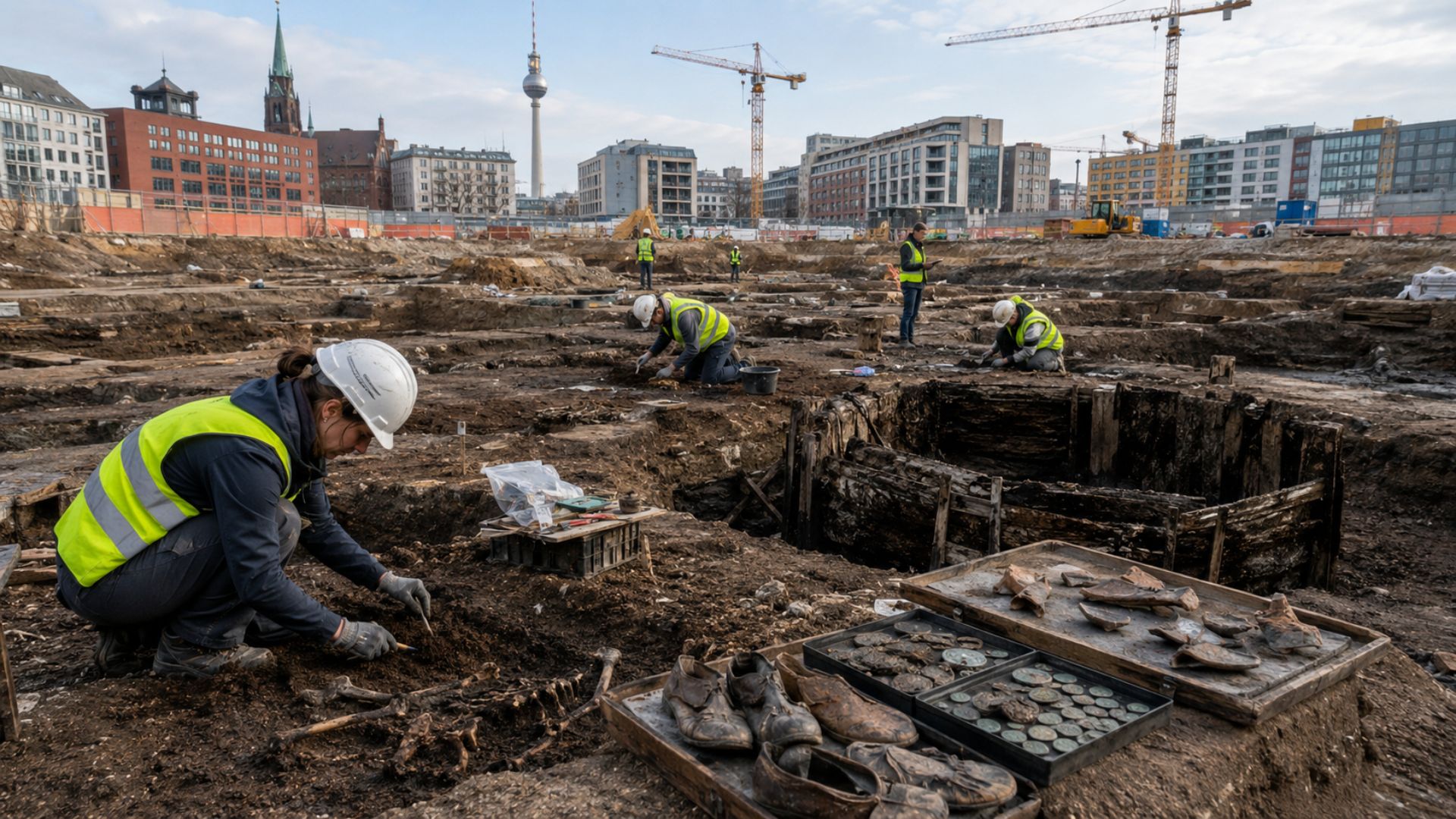


DW Documentary shows excavation in Molkenmarkt, Berlin’s oldest square, where Eberhard Völker leads archaeologists in 25,000 m² before new housing. Finds such as coins, wells, shoes, ceramics, and bones go to PETRI, a workshop-museum dedicated to the first inhabitants of the medieval German capital.
Berlin is reopening a decisive part of its own origin in the city center, near the Television Tower, in a 25,000 m² archaeological excavation in Molkenmarkt, the oldest square of the German capital. The documentary “Indiana Jones in Berlin? Inside the capital’s largest archaeological excavation”, by DW History and Culture, follows the work led by Eberhard Völker, the project director.
The race is on because the land will be filled again and is expected to receive buildings with hundreds of apartments. Before that, archaeologists are trying to save remnants of medieval Berlin, including wells, coins, latrines, ceramics, leather shoes, and bones of the first inhabitants. What seems like just a construction site has become a rare window into 800 years of history hidden beneath the asphalt.
Medieval Berlin appears under layers of war, rubble, and urban renovations

Molkenmarkt is treated by archaeologists as the core of medieval Berlin. It was in this area, according to Eberhard Völker, that the first traces of medieval settlers appeared, in a strategic point near the Spree River, important for trade and circulation in the Middle Ages.
-
Artesian Well Becomes Lifeline for Small Brazilian Farm: Drilling Reaches 60 Meters, Finds Marble, Navigates Rock Fissures, and Strikes Fresh Water

-
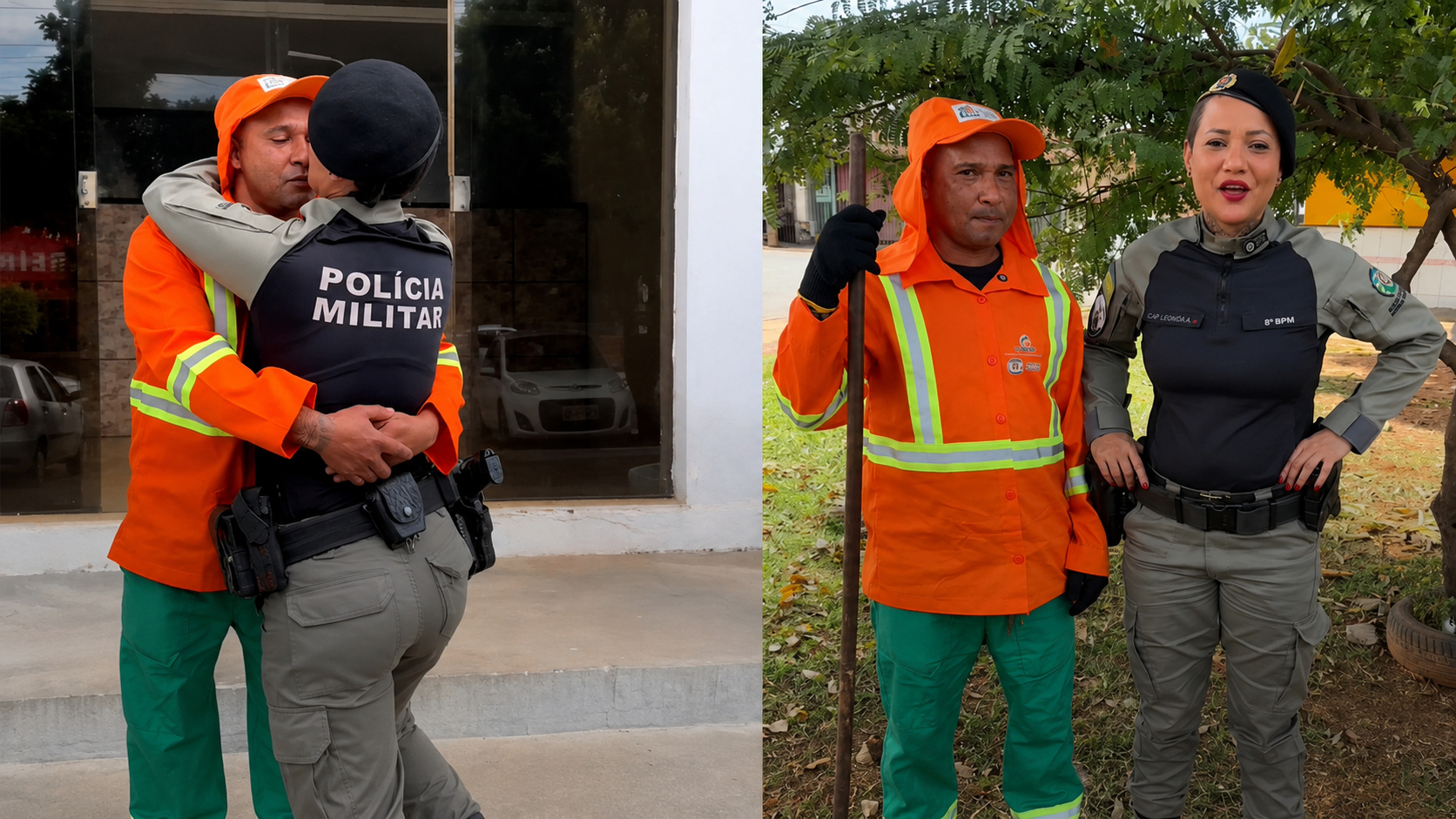
Street Cleaner in Brazil Finds Discarded Books That Helped His Wife Pass Civil Service Exam and Become Police Captain
-
July’s Night Sky to Feature Planetary Alignments, New Moon, Venus at Sunset, Buck Moon, and Two Meteor Showers

-
Fisherman Catches 18kg Catfish Near Brazil’s Itaipu Lake, Among Largest Recorded in Recent Years



The excavation reveals how the city grew over itself. Over the centuries, fires, constructions, destructions, and rubble have raised the ground level by about four meters since the Middle Ages. Every meter excavated not only deepens the hole; it deepens time.
Molkenmarkt holds signs of the first inhabitants

Archaeologists found wooden structures, medieval wells, ceramic fragments, and everyday objects. One of the discoveries includes a clay figure about 500 years old, representing Saint Catherine, a Christian martyr that would have been used in a domestic altar for protection.
Silver dinar coins also appeared, found in the medieval soil. There is no way to say who lost them or why. The hypothesis raised in the documentary is that they could have belonged to a craftsman or common resident. The journalistic value of these finds lies precisely in the fact that they belong to ordinary life, not to palaces.
Latrines and wells reveal habits that documents do not record
The medieval latrines are one of the most important parts of the excavation. Sealed in a humid and oxygen-poor environment, they preserved food remains, discarded objects, and clues about the daily life of the first Berliners.
Eberhard Völker compares each latrine to a “black box,” because you never know exactly what will be found there. Macrobiological remains, seeds, pits, acorns, eggshells, and animal bones help reconstruct eating habits. The city’s history is not only in monuments; it is also in the trash that has survived for centuries.
Ceramics, gold ring, and utensils show a common Berlin


In the old Berlin town hall, next to the archaeological site, the finds are examined and stored. Some of the organic materials need to be refrigerated, while valuable pieces receive special conservation.
Among the rarest objects is a gold ring with garnet, found in a well. There are also gray ceramics with soot marks, used in food preparation. These traces show a Berlin made by workers, families, kitchens, wells, bonfires, and small everyday accidents.
World War II and socialist urbanism erased part of the old center
The destruction of April 1945, in the last weeks of World War II, left deep marks on the center of Berlin. Later, with the capital of the German Democratic Republic, socialist urban planning replaced old streets with wide and functional spaces.
The archaeologist Matthias Wemhoff, director of the Museum of Prehistory and Ancient History, describes this loss as a gap in the understanding of the city. For him, it is necessary to know where Berlin began and how it emerged. For decades, about 600 years of history remained practically invisible in the urban landscape.
Archaeologists work against the clock before the apartments

The excavation of Molkenmarkt is not permanent. The documentary informs that archaeologists have a limited timeframe to recover the objects before the ground is filled again and new residential buildings are constructed.
This pressure changes the pace of the work. It’s not about excavating when convenient, but about documenting, removing, conserving, and interpreting before the construction advances. The city of the future is literally waiting for the medieval city to be removed from the ground.
PETRI became the destination for the finds and the first Berliners
A few meters from the excavation is PETRI, a space that combines a museum, open workshop, and cemetery. It was built in a historic area, on the foundations of the old medieval Latin school and St. Peter’s Church.
The location allows visitors to observe conservators working with ceramics, iron, leather, and bones. The mascot of PETRI is a bear licking honey from its paw, also found in Molkenmarkt. Archaeology ceases to be a closed backstage and becomes a process visible to the public.
Leather shoes need to be saved before hardening
Among the most delicate materials are the leather objects. When removed from the moist soil, this material can shrink, deform, and harden if it dries without technical control.
At PETRI, restorers treat these finds carefully so they become legible again. A dark pile of earth and leather can reveal, after conservation, a typical child’s shoe from the Middle Ages. Without restoration, many objects would cease to tell their story just minutes after being unearthed.
Human bones are studied and reburied with dignity
PETRI also houses an ossuary for human remains removed from the old cemetery of St. Peter’s Church. In 2025, small coffins with bones of Berlin’s first inhabitants were carried in procession to the site.
Researchers study signs of physical exertion, healed fractures, dental problems, metabolism, and nutrition. Afterwards, these anonymous residents receive a new burial. The bones do not reveal names, but they preserve marks of work, disease, diet, and survival.
Findings may reinforce that Berlin is older than the official date
The official anniversary date of Berlin points to 2032 as the celebration of 800 years. But archaeological findings suggest that the city began before the official milestone.
Matthias Wemhoff acknowledges that the celebration should maintain the traditional date, even with the awareness that the real origin is older. Archaeology does not just move objects around; it can change the symbolic age of a capital.
The excavation of Berlin at Molkenmarkt shows that a city is not made only of visible buildings, avenues, and new constructions. Beneath the current center, archaeologists found wells, latrines, coins, ceramics, shoes, and bones capable of reconstructing the life of the first residents.
The paradox is strong: the medieval origin of the German capital appears because the land will be transformed again. Before the apartments, Berlin needs to face its own subsoil. Do you think cities should preserve more archaeological areas in the center or release the land after documenting the findings? Share your opinion.


Absolutely should be conserved, build somewhere else for the apartments! This is a historical and important area that will help the people living in the area or broader areas discover their true heritage and identity! It’s sacrilege to build over something so important! At least until archaeologists have discovered everything there is to find; Without having a Time Limit 😡😡😡