






 Portuguese
  Spanish


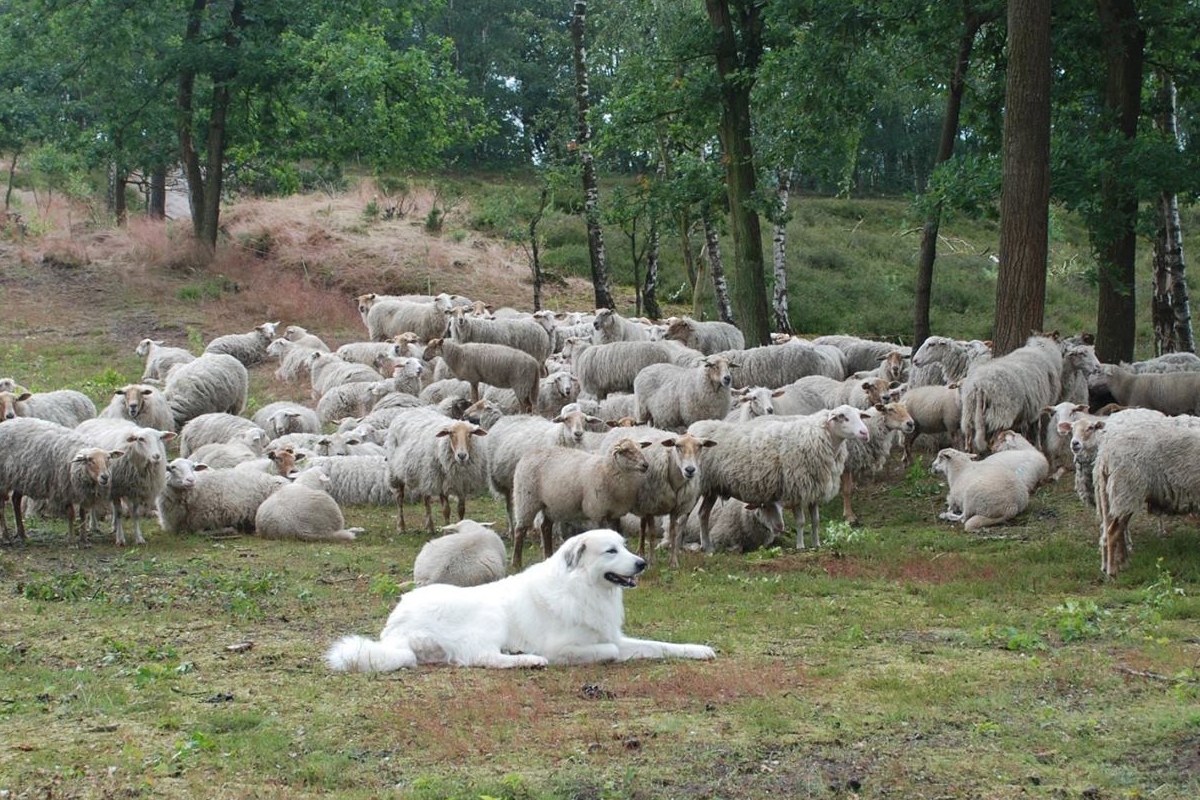


Livestock Guardian Dogs Protected Herds With 10 Dogs for 3,200 Sheep to Reduce Attacks, Resulting in a Decrease in Predation and Attracting the Attention of Producers and Conservation Projects
Livestock guardian dogs are working dogs that stay with the herd day and night, defending it from predators. Today, they are seen as one of the most effective and non-lethal tools for protecting livestock and also wildlife.
The detail that caught the most attention is that they do not function like herding dogs. Instead of moving or directing the herd, these dogs integrate into the group as if they were part of the family, and this bond completely changes the protection dynamic.
In practice, their constant presence, barking, and territorial behavior can be enough to deter carnivores. And when the risk increases, the dog places itself between the predator and the protected animals.
-
In the Amazon Flood Season, Life Transforms: Riverside Family Near Parintins Relies on Fishing Nets, Stingrays in the Yard, and Canoe-Only Transport

-
Man Converts Water Tank into $20,000 Luxury Boat, DIY Video Reaches 571,000 Views on World Tech Channel
-
Inventor Builds Amphibious Vehicle with Kayak and Electric Motors, Gains 223,000 Views on Quiet Nerd Channel
-
Former Yale Hospital Cleaner Returns as Resident Doctor After a Decade; Shay Taylor-Allen Transitions from Janitorial Duties to Medical Practice





The information was released by texnat.tamu, a university website with technical material on wildlife.
What Is a Livestock Guardian Dog and Why Has It Become Prominent
A livestock guardian dog, also known as a livestock guardian, is bred to protect sheep, goats, cows, and other animals from carnivores such as wolves, coyotes, cougars, and feral dogs.
These dogs stay close to the herd, watching the surroundings and patrolling the area. When they sense something unusual, they react with barking and a blocking posture, creating a deterrent effect that drives the threat away before an attack occurs.
What seems simple turns into a huge advantage: the dog acts as a living barrier, not relying on human commands for each movement.
How 24-Hour Coexistence With the Herd Works in Practice

The central difference for a herding dog lies in the objective. The herding dog is trained to move the livestock. The guardian dog is trained to coexist and watch over.
From a young age, it is placed with the sheep or goats to sleep, eat, and spend time alongside the group. This creates a bond of attachment and makes it treat the herd as its own social group.
In day-to-day life, it patrols the territory, marks its presence with territorial signs, and uses barking when it perceives unusual noises, scents, or movements. In most situations, this warning already makes the predator avoid the area.
Protective Instinct, Low Aggression Toward Livestock, and Independence: The Trio That Defines Effectiveness
Effectiveness depends on three characteristics that need to go hand in hand.
The first is a strong protective instinct, which keeps the dog alert to risks. The second is low aggression toward the livestock, as the animal cannot become a threat to its own herd. The third is independence, as it makes decisions on its own, without constant human commands.
When well-raised and socialized, these dogs tend to protect with presence, barking, and territorial marking. They only resort to chasing or physical confrontation when the threat persists and comes too close.
Most Used Breeds and Why Some Have Become References in Various Countries
Some breeds have become well-known precisely for this type of work in regions where predation has always been a challenge.
Among the most cited are:
- Great Pyrenees, known as Pyrenean Mountain Dog
- Maremma, also known as Maremmano Abrucense
- Kangal, Anatolian Shepherd, Kuvasz, and Pyrenean Mastiff
The choice usually considers size, resilience, temperament, and adaptability to climate and terrain. In many systems, it is not just a single dog but rather a group of dogs distributed throughout the herd.

Numbers That Explain the Scale, 80% to 90% Fewer Attacks With Up to 10 Dogs in a Single Herd
Experiences and studies report significant reductions in livestock predation, with some projects achieving close to 80% to 90%. This directly impacts the producer’s bottom line, as it decreases losses and reduces the incentive to use aggressive methods against predators.
An example cited in systems with large herds shows the use of 10 guardian dogs for about 3,200 sheep, with much lower losses than would occur without their presence.
This type of data helps understand why the strategy has gained traction again, especially where protected predators have returned to rural areas.
Impacts for Producers and Wildlife: Less Loss and Fewer Retaliatory Deaths
When the herd suffers fewer attacks, the producer loses fewer animals and reduces the impulse to respond with traps, poisons, or hunting. This changes the landscape in regions with ongoing conflict between livestock farming and large carnivores.
In contexts like Namibia, programs with guardian dogs have helped reduce attacks on livestock while simultaneously decreasing retaliatory killings of cheetahs. In other cases, such as in the United States, there is recognition of the use of these dogs as a cost-effective and efficient tool to reduce attacks by coyotes, wolves, and bears in sheep farming.
The impact goes beyond the farm: the strategy creates space for conservation policies and more dialogue between producers and those who protect wildlife.


Maremano umas das melhor raça, é ele e usado no Sul do Brasil,protege as ovelhas de cães selvagens é javalis e outros predadores,bom cão forte é imponente.