






 Portuguese
  Spanish


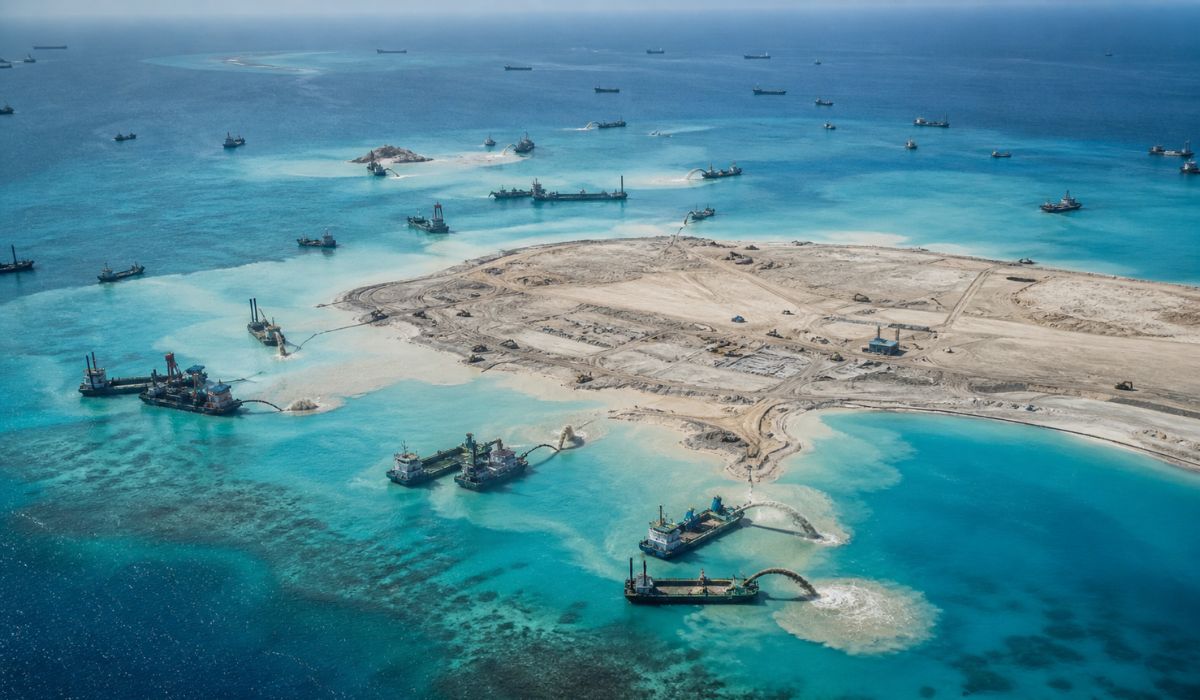


Satellite images show a new transformation at Antelope Reef, in a disputed area of the South China Sea, reigniting debates on coastal engineering, environmental impact, and territorial control in the ocean.
China has once again artificially expanded coral formations in the South China Sea and transformed Antelope Reef, in the Paracel Islands, into one of the region’s main recent land reclamation projects.
Satellite images analyzed by research centers and international media indicate that Beijing resumed, since October 2025, a practice used in the last decade in disputed areas: dredging sand from the seabed and depositing it on reefs to create dry land.
The case involves territorial dispute, coastal engineering, and environmental impact.
-
Bruno Guimarães, 28, Misses Crucial Penalty Against Norway in World Cup After Replacing Vinicius Jr.

-
Inspired by a school lesson on Africa’s water crisis, a young boy raised money through chores to fund a well that transformed a Ugandan community.

-
Brazilian Construction Worker Moves to France, Earns Up to €2,500 Monthly with Home Renovations, Gains Social Media Attention

-
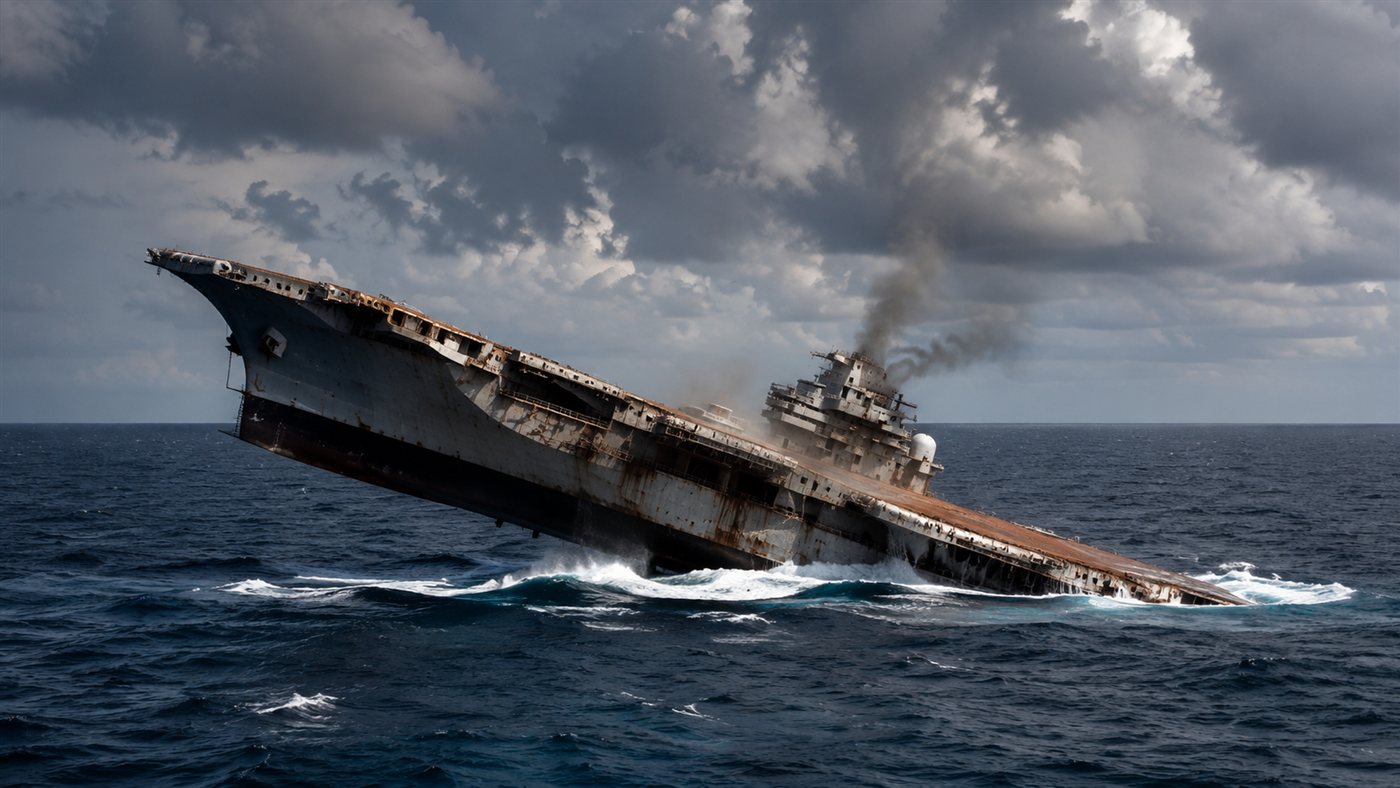
US Navy Sinks USS Oriskany with 230 kg of C-4, Creating World’s Largest Artificial Reef in 37 Minutes




According to a survey by the Asia Maritime Transparency Initiative, linked to the Center for Strategic and International Studies, the reclaimed area at Antelope Reef reached about 1,490 acres, equivalent to approximately 603 hectares.
This dimension brings the reef close to the size of Mischief Reef, in the Spratly Islands, identified by the entity as the largest Chinese outpost in the South China Sea.
Antelope Reef is located in the Crescent Group, in the southwestern portion of the Paracels.
The formation is approximately 162 nautical miles from Sanya, on China’s Hainan Island, and approximately 216 nautical miles from Da Nang, Vietnam.
The area is controlled by China but is also claimed by Vietnam and Taiwan, in a region marked by disputes over sovereignty, fishing, shipping lanes, and military presence.
How China transforms reefs into artificial islands in the South China Sea
The transformation of a reef into an artificial island depends on a large-scale coastal engineering process.
Dredgers remove sediments from the seabed, usually sand and coral fragments, and dump this material onto shallow areas until a usable surface is formed.
Then, machines level the terrain, reinforce the edges, and make space for roads, piers, buildings, and, in some cases, runways.
At Antelope Reef, commercial satellite images from Vantor, cited by AMTI, show rapid progress of the reclamation.
Reports published in 2026 indicate intense movement of dredgers and support vessels in the area, although the exact number of equipment in operation varies according to the date of the analyzed images.
The work revived the association with the expression “Great Wall of Sand”, used by officials and analysts to describe Beijing’s creation of artificial islands in the South China Sea.
The metaphor gained international prominence in 2015, when the United States began to publicly criticize Chinese expansion over reefs and sandbanks.
Between 2013 and 2016, Beijing built over 3,200 acres of new land in disputed areas, especially in the Spratly Islands.
After 2017, according to AMTI, there was no record of another significant Chinese artificial reclamation project in the South China Sea.

Antelope Reef could receive runway, port, and sensors
Given the estimated area, the land at Antelope Reef would have the capacity to accommodate large structures.
AMTI states that the new landmass already has sufficient dimensions to accommodate a runway of about 9,000 feet, a measurement similar to the runways built by China on Woody Island, Mischief Reef, Subi Reef, and Fiery Cross Reef.
This assessment is based, among other elements, on the shape of the northwestern edge of the reclamation.
In the analyzed images, this stretch appears to be over 11,000 feet long and rectilinear in design, a characteristic that, according to maritime monitoring experts, could be compatible with the implementation of a runway.
So far, however, there is no official confirmation that China intends to build such a structure at the site.
The reef’s internal lagoon is also observed by analysts for its possible logistical use.
If adapted for port operations, the area could accommodate Chinese Coast Guard vessels and boats associated with the so-called maritime militia.
This pattern of presence has already been recorded in other disputed points of the South China Sea, where civilian ships, fishing vessels, and state units operate in areas claimed by more than one country.
Satellite images show structures on the disputed reef
Permanent construction is not yet consolidated, but there are initial signs of occupation.
Images assessed by AMTI indicate the installation of more than 50 small structures with gray roofs near the lagoon entrance.
A helipad was also identified, as well as foundations for a larger construction, approximately 100 by 60 yards, in the southern portion of the lagoon.

In the same area, piers have begun to take shape, indicating preparation for the unloading of materials, machinery, and personnel.
In previous Chinese projects in the Spratly, initial structures served as temporary support before the installation of more permanent buildings.
In the case of Antelope Reef, however, there is no public confirmation about the final design of the artificial island.
The closest comparison is with Woody Island, also in the Paracel.
The island houses an air base, naval facilities, and the administrative headquarters of Sansha, a city created by Beijing to manage its claims in the South China China.
According to AMTI, Woody Island is about 890 acres, an area smaller than that estimated for the current landfill at Antelope Reef.
Environmental impact and dispute in the South China Sea
In addition to the military and diplomatic dispute, the construction of artificial islands on reefs raises environmental concerns.
Coral reefs are ecosystems formed by living organisms that support marine food chains, protect coastal zones, and serve as shelter for fish and invertebrates.
Dredging can bury corals, spread fine sediments through the water, and reduce the light needed for photosynthetic organisms.
In tropical regions, researchers point out that this type of alteration can affect not only the reclaimed area but also nearby areas.
Particles suspended by dredging can be carried by marine currents and reach other reefs.
Suspended material interferes with the water, harms larvae, algae, and filter-feeding organisms, in addition to modifying the physical structure of the environment.
From a geographical point of view, Antelope Reef shows how shallow natural formations can be converted into platforms for permanent presence.
In a few months, an area previously limited by tides, lagoons, and coral banks began to be analyzed by experts as a possible base for a runway, port, radars, and defense systems.
Vietnam contests Chinese work in the Paracel Islands
The Chinese advance provoked a reaction from Vietnam, which claims the Paracel and calls the reef Da Hai Sam.
In March 2026, Vietnamese Foreign Ministry spokeswoman Pham Thu Hang stated that the country “resolutely opposes” the activities and considers foreign actions carried out in the archipelago without Hanoi’s authorization to be “completely illegal and invalid.”
China maintains the position that it has sovereignty over the Paracel and over a large part of the South China Sea.
This claim overlaps with areas claimed by Southeast Asian countries and Taiwan.
The region brings together maritime routes relevant to international trade, fishing areas, possible oil and gas reserves, and points used in naval operations.
In 2016, an arbitral tribunal in The Hague rejected central legal bases of Chinese claims in the South China Sea in a case brought by the Philippines.
Beijing did not recognize the decision and continued to expand its presence in disputed areas of the region.


Artificial island alters the ocean landscape
The creation of an artificial island does not resolve sovereignty disputes nor does it, by itself, alter maritime rights recognized by international law.
Even so, it modifies the physical landscape of the ocean.
Where there was once a reef and lagoon, there is now a land area capable of accommodating people, equipment, runways, antennas, and vessels.
At Antelope Reef, the scale of the reclamation is the central data point.
If the measurements released by AMTI are maintained, the formation could be among the largest artificial islands built by China in the South China Sea.
Analysts interviewed by international media assess that the installation would expand Beijing’s surveillance capabilities in the northern part of the region and add a new support structure to bases in Hainan, Woody Island, and other occupied positions.





They shouldn’t be doing that. The International Tribunal on the Law of the Sea ruling is a jurisprudence that works as a Status Quo Ante Order. It disposes clearly that the country’s claim has no basis in international law. If the country violates the ruling like the manner of continuing island building, it meets the ire of contempt by any member state of the United Nations.💪