





 Portuguese
  English
  Spanish
  5 min of reading
  0 comments



With 85% Growth In 2025, Starlink Reaches 606 Thousand Active Accesses, Becomes The 13th Largest Operator In The Country And Expands Presence In Remote Areas, Despite A Monthly Fee Of R$ 235 And An Initial Kit Of R$ 999, Surpassing The Average Advance Of The Brazilian Broadband Market.
Starlink ended 2025 with 606.2 thousand active accesses in Brazil, after advancing 85% in the year and climbing to the 13th position among the largest fixed internet operators. In an industry that grew about 3% in the same period, the difference in pace repositions the satellite service in the debate about national connectivity.
The scale change stands out because it occurs in an already large market, with 53.9 million fixed broadband points. The recent trajectory is straightforward: 133 thousand accesses at the end of 2023, 326.8 thousand at the end of 2024, and over 606 thousand by the end of 2025. It’s not just about growing; it’s about growing at a pace well above the sector average.
Customer Surge And Jump In National Ranking

The advancement of Starlink in 2025 was not incremental. In two years, the base moved from a still limited presence to a level that placed it among the 15 largest operators in the country. The ranking evolution reinforces this movement: from 24th place to 15th, and then to 13th. This type of progression in a mature market usually indicates a structural change in demand.
-
Hidden at the bottom of a dam in Turkey, the submerged ruins of a 2,400-year-old ancient city reveal mosques, tombs, gravestones, madrasas, civil buildings, and even a Byzantine bath, found by police officers during a training dive.

-
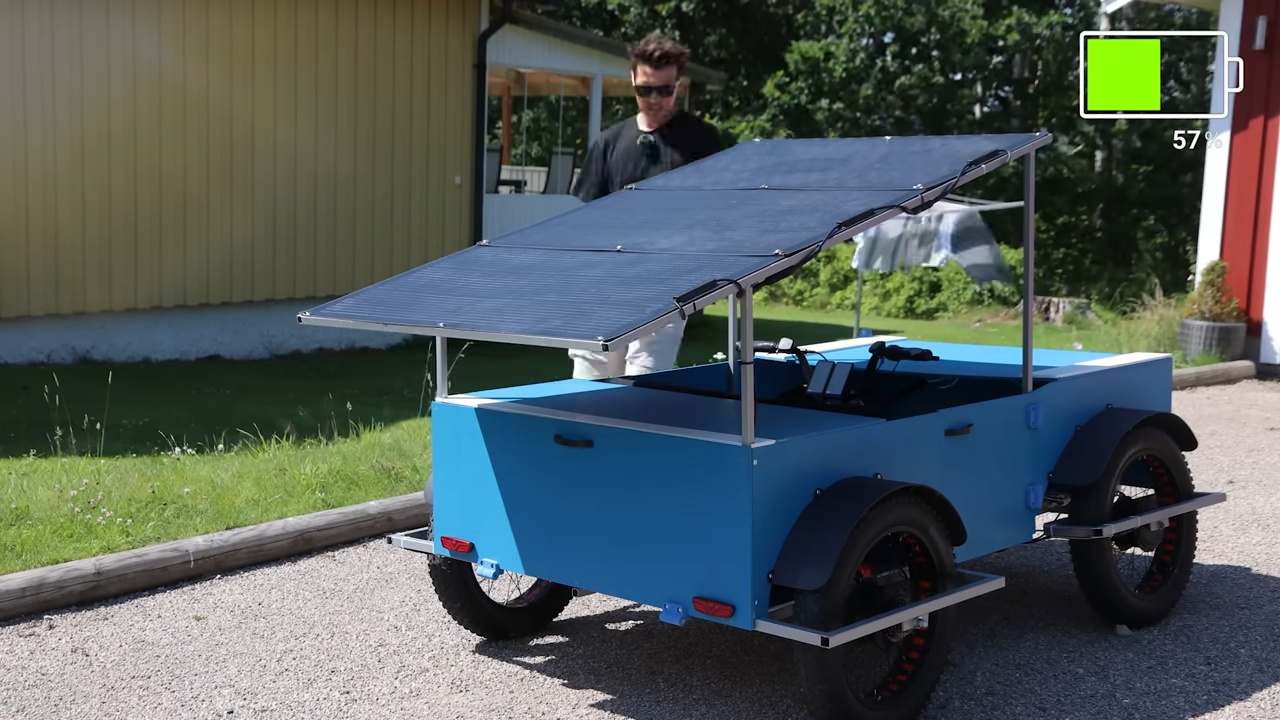
A young inventor has built a homemade two-seater solar car with electric bicycle parts, four 1,000 W motors, a range of up to 100 km, and completed a 29 km test powered solely by the energy from solar panels.

-
Liquid sugar enters Alzheimer’s radar: Framingham study with over 4 thousand participants links sodas, industrialized teas, and sugary drinks to smaller brain volume, worse memory, and silent signs of brain aging.

-
James Webb Telescope reveals rocky exoplanet ‘very close’ to Earth: The exoplanet LHS 3844 b has a dark, arid, and airless surface, with temperatures of up to 725 °C and is 48 light-years from Earth




In absolute numbers, the leaders remain far ahead: Claro, with 10.6 million customers, and Vivo, with 8 million. Nonetheless, what distinguishes the recent dynamics is the relative pace: while large operators grew more moderately, Starlink expanded its base with a rare intensity among the largest companies. The result does not eliminate the distance to the leaders but alters the competitive reading of the sector.
Why Starlink Grew Above The Market

The expansion of Starlink is linked to the proposal of coverage in areas where fiber optic still faces limitations in terms of reach and implementation costs. In places with low population density, long distances, and more complex terrestrial infrastructure, satellite internet gains traction because it reduces reliance on extensive physical networks. Where the cable takes time to arrive, the satellite shortens the access time.
This helps explain why the company’s growth was well above the average sector advance in 2025. Brazilian fixed broadband is already growing from a high base, which naturally compresses annual percentage rates. Starlink, on the other hand, was still operating from a smaller base, focused on high connectivity needs niches, a scenario that favors more aggressive rates when the proposition finds practical adherence.
High Price, Specific Proposal And Purchase Decision
There is a central point in the equation: entry cost. The cheapest initial kit was priced at R$ 999, and the monthly subscription at around R$ 235.52. In parallel, traditional operators often offer residential plans close to R$ 100 per month, frequently without an enrollment fee. On paper, the price difference is significant and may deter part of the urban audience already well served by fiber.
Even so, the service continues to advance because the value comparison changes according to the territory. For those living in areas with limited, unstable, or nonexistent fixed broadband offerings, the question shifts from “which plan is cheaper?” to “which technology actually works here?”. In these cases, the higher cost can be interpreted as effective access, not just as additional expense.
Where Traction Was Stronger: North And Remote Areas
The geographical distribution of demand helps to understand the phenomenon. States in the North region, historically more challenging for terrestrial telecommunications infrastructure, concentrate a higher density of active points per inhabitant in the Starlink operation. Satellite technology enters precisely where the logistics of physical networks tend to be slower, more expensive, or difficult to maintain.
This behavior also appears outside urban centers: country houses, rural areas, camps, trails, and locations far from traditional fiber routes. The usage pattern indicates that Starlink does not compete solely on price in high coverage neighborhoods; it competes for space where connectivity has always been irregular. In practice, this expands digital inclusion in territories previously relegated to precarious solutions.
The Technological Base Behind The Expansion
Starlink operates with about 8,000 satellites in low orbit, at approximately 550 km altitude. This architecture differs from the traditional model of more distant satellites and is designed to keep the network active 24 hours a day, promising a more agile connection for the end user. The engineering of the constellation is an essential part of the performance perception.
In the Brazilian context, this structure creates an alternative coverage logic distinct from terrestrial expansion. Instead of relying solely on extensive linear works, the delivery of the service goes through local equipment and proper alignment to the sky. This does not eliminate operational challenges but changes the deployment equation in hard-to-access areas, favoring expansion in points where the conventional model advances slowly.
Direct Competition And Repositioning In The Sector
Among the 15 largest operators by accesses, Starlink recorded the largest expansion in 2025 (+85.5%), followed by Brasil TecPar (+61.6%). In the same scenario, Nio Fibra experienced a retraction of 15.9%, while other giants advanced at a more contained pace. The market did not stop growing, but it grew at very different speeds among companies.
This contrast suggests a competitive repositioning: on one side, consolidated operators with large urban scale; on the other, a satellite operation accelerating in underserved coverage segments. It is not necessarily about total replacement of fiber by satellite, but a new division of roles in the ecosystem. The technical reading is one of complementarity with localized competition, and not of a single technology’s victory.
Political Noise, Public Image And Continuity Of Operation
The brand also circulates in a sensitive political environment, with public episodes involving Elon Musk, the federal government, and the Supreme Court. This context amplifies the reputational noise around the company and may influence perceptions on social media, press, and public debate.
Still, access numbers show that, from an operational perspective, demand continued to advance throughout 2025.
In telecom markets, consumer behavior tends to respond more to the real availability of service, perceived stability, and practical utility than to the cycle of political statements.
This does not make the institutional environment irrelevant, but it helps explain why commercial expansion can continue even under a polarized image. In connectivity, at the end of the day, daily use weighs more than narrative disputes.
Starlink’s movement in 2025 indicates an important inflection in Brazilian broadband: satellite internet has ceased to be just a sporadic alternative and has begun to occupy a strategic position in areas where traditional infrastructure still does not respond with the same speed.
When the growth of an operation greatly exceeds the sector average, the entire market needs to recalibrate its strategy.
Now, the decisive point is the balance between reach and cost. In your city or region, does fiber serve well or does the connection still fail in remote areas? Would you pay a higher monthly fee — with an initial kit — for stable coverage everywhere, or would you prioritize cheaper plans even with reach limitations?






-

-

-

-

37 people reacted to this.