Portuguese
  Spanish


The viaduct work at km 59 of BR-282 in Rancho Queimado reached 80% completion at a cost of R$ 19 million according to DNIT, with delivery scheduled for July 2026, but the highway that cuts across Santa Catarina from the coast to the West needs greater investments along its entire length.
The most anticipated work by the population of Rancho Queimado in the last two years is 80% complete. The viaduct that DNIT (National Department of Transport Infrastructure) is building at km 59 of BR-282, at a cost of R$ 19 million, is scheduled for delivery in July 2026 and represents a structural intervention on a highway with a history of serious accidents in the Greater Florianópolis region. The structure will be 18 meters long with access ramps of 900 meters and 775 meters on the left side, and so far, the infrastructure (foundations), mesostructure (pillars), and superstructure (viaduct slab) stages have been completed, with the access ramps finished and already receiving diverted highway traffic to allow the advancement of services on the main structure.
The work is important for the flow of a region with significant economic potential, but it alone does not solve the problems of BR-282. Rancho Queimado, known as Santa Catarina’s Strawberry Capital, had been awaiting the delivery of this work for at least two years, and the viaduct should improve traffic flow and safety in the section where it was built; however, the highway needs investments along its entire length because BR-282 cuts across the state from the coast to the far West and presents infrastructure problems that go far beyond km 59. For the completion of the work, paving, drainage, signaling, and other complementary works on the viaduct and its accesses still need to be executed, stages that DNIT expects to complete within the July deadline.
What the viaduct work changes on BR-282 in Rancho Queimado

The viaduct at km 59 addresses a specific point on BR-282 where the crossing of traffic flows generated congestion and risk of accidents. The work replaces a level intersection with an elevated structure that separates vehicle flows, eliminating the need for direct crossing on a highway where trucks, buses, and passenger vehicles competed for space in a section that serves as access to the mountainous region of Greater Florianópolis. With 18 meters of extension and access ramps of 900 meters and 775 meters, the viaduct allows the main BR-282 traffic to flow without interruption while vehicles accessing secondary roads use the already completed side ramps.
-
28-meter, 156-ton titans traveled 20,000 km from China to the port of Santa Catarina: Portonave received 7 fully electric megacranes, part of a R$ 210 million package, to double container handling.

-
They exchanged the idea of a large house for a 35 m² warehouse, spent US$ 12,000 on the structure, and created a tiny house in Colorado with space to live and work.

-
A newly opened terminal in the middle of the Amazon has begun transporting soy and corn through Amapá, eyeing the queue of ships that is congesting the ports in the South.

-
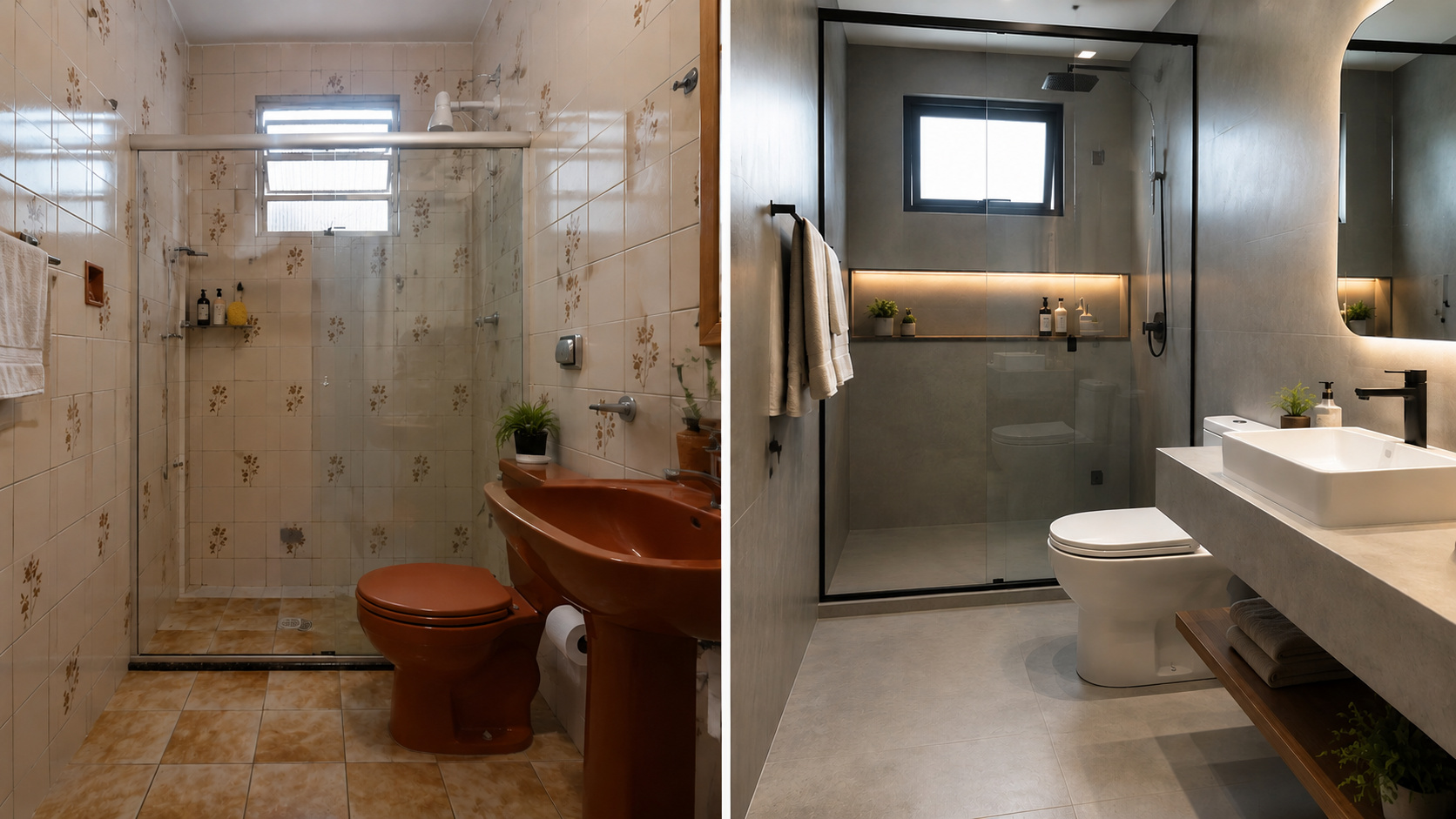
Goodbye to old tiles: renovation technique without construction transforms bathrooms in a few hours, eliminates debris, and reduces costs with coverings using special paints, high-resistance adhesives, and modern finishes that completely renew the space.


The execution of the work followed a technical sequence that DNIT documents in stages. The foundations and pillars (infrastructure and mesostructure) were completed first, followed by the viaduct slab (superstructure), and the access ramps are already ready and in operation, allowing BR-282 traffic to continue flowing while the teams work on the main structure. The remaining 20% of the work focuses on finishing services: paving the viaduct surface, installing the drainage system to prevent water accumulation on the elevated roadway, horizontal and vertical signaling, and complementary works on the accesses, stages that depend on favorable weather conditions to be completed within the July 2026 deadline.
Why BR-282 needs more than a single project
The delivery of the viaduct in Rancho Queimado is a concrete advance, but the scale of BR-282’s problem far exceeds the R$ 19 million of the current work. The highway cuts across Santa Catarina from end to end, connecting the Greater Florianópolis region on the coast to the far West of the state, and along its entire length, it presents sections with deteriorated pavement, dangerous curves, absence of adequate shoulders, precarious signaling, and conflict points between local and long-distance traffic that result in accident numbers that local authorities classify as almost tragic. The Rancho Queimado viaduct solves one point, but the highway has dozens of others that demand similar or greater intervention.
The economic importance of BR-282 reinforces the urgency of investments that go beyond the current work. The highway is a route for the flow of agricultural and industrial production from western Santa Catarina towards the coastal ports, including the Itajaí-Navegantes Complex and the Port of Imbituba, and the traffic of heavy trucks loaded with grains, meats, industrial products, and agricultural inputs increases pavement wear and the demand for road infrastructure that the highway does not receive in the necessary proportion. Rancho Queimado, with its economy based on fruit growing that earned it the title of Strawberry Capital, is just one of the municipalities along BR-282 that depend on the highway to transport production and receive tourists, and that live with traffic conditions that compromise both the safety and economic competitiveness of the region.
What’s left for the work to be delivered and what comes next
The remaining 20% of the viaduct work concentrates on finishing stages that DNIT needs to complete by July to meet the announced deadline. Paving of the viaduct surface, drainage system, complete signaling (horizontal, vertical, and luminous if applicable), and finishing of the connections between the viaduct and the side accesses are the pending services, a set that under normal execution conditions and favorable weather is compatible with the remaining two-month deadline. The population of Rancho Queimado, who has lived with the construction site and traffic diversion for two years, follows the progress with the expectation of those who have seen infrastructure deadlines postponed before.
After the viaduct’s delivery, the question that remains is when BR-282 will receive investments proportional to its importance for Santa Catarina. The R$ 19 million project is a specific response to a localized problem, and the entire highway would need a modernization program that includes duplication of critical sections, recovery of degraded pavement, implementation of shoulders, improved signaling, and construction of safety devices at conflict points along hundreds of kilometers between the coast and the west of the state. While such a program does not exist, each completed work like the Rancho Queimado viaduct is celebrated as a local victory, even if it represents a fraction of what BR-282 actually needs.
And you, do you use BR-282? Do you think the viaduct will improve traffic in Rancho Queimado? Leave your opinion in the comments.