Portuguese
  Spanish


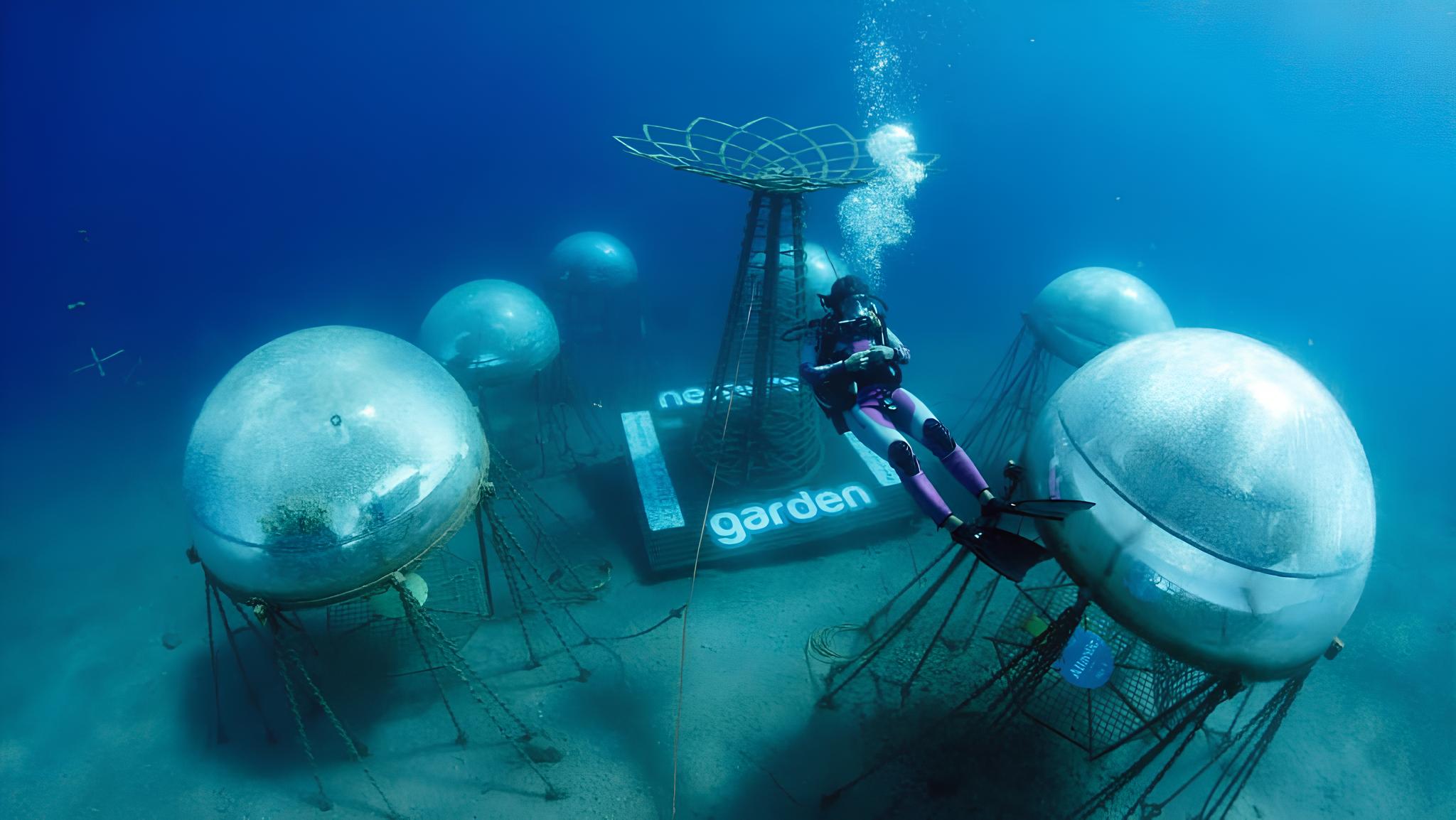


On The Italian Coast, Nemo’s Garden Grows Lettuce, Basil, and Strawberries in Underwater Biospheres, Taking Advantage of Solar Light, Thermal Stability, and Hydroponics.
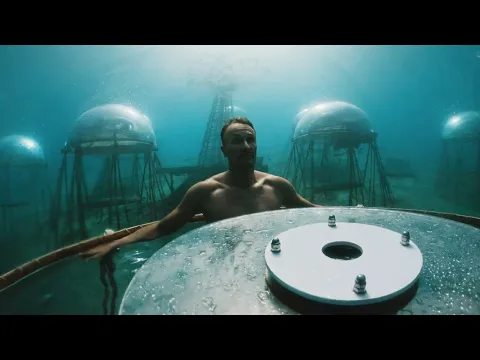
When it comes to innovative agriculture, few ideas sound as surreal as growing vegetables on the seafloor — and yet, the first project of its kind already exists and works in Italy. Located just a few dozen meters off the coast of Noli, in the Liguria region, Nemo’s Garden is a pioneering facility of underwater farms in translucent domes, where lettuce, basil, beans, strawberries, and other species grow in a controlled environment beneath the surface of the Mediterranean Sea.
This “submarine garden,” conceived by Sergio Gamberini, founder of Ocean Reef Group, began with a question: would it be possible to grow terrestrial plants underwater, taking advantage of natural conditions such as stable temperature and high humidity? The answer proved to be yes, and with benefits that make this system a living laboratory for the future of sustainable food production.
How The Underwater Domes Work
The central idea of Nemo’s Garden is relatively simple yet ingenious: translucent plastic biospheres are anchored to the seabed, between 6 and 11 meters deep, where sunlight still penetrates enough to sustain photosynthesis.
-
The Trap of Modern Technology: How Screen Overload and Digital Connections Can Impact Your Mental Health and Well-being

-
Wyoming Couple Grows Tropical Fruits Year-Round in -40°C Using Geothermal Greenhouse, Demonstrating Earth’s Heat Can Produce Oranges and Lemons in Snow Without Traditional Heating

-
Ship Returns from Brazilian Coast with Thirty Newly Discovered Life Forms
-
Nigerian Professor Invents Electricity-Free Refrigerator Using Clay Pots and Wet Sand, Extending Shelf Life of Vegetables to 27 Days; 7,000 Units Distributed in Energy-Deprived Villages



Each dome is filled with about 2,000 liters of air, creating growing microsystems with their own atmosphere.

Inside these domes that resemble futuristic balloons floating above the seabed, hydroponics is the technique used to grow the plants: nutrient solutions replace soil, and roots are exposed to nutrient-rich water, eliminating the need for traditional arable land.
This approach allows for 80–95% water savings compared to conventional agriculture, according to studies on hydroponics.
Seawater plays an indirectly important role: the walls of the biosphere, heated by the sun, generate condensation that provides fresh water for the plants. This natural cycle of evaporation and condensation reduces dependence on external resources and supports a practically self-sustaining growing environment.
Why Grow Underwater?
Gamberini and his team’s proposal goes beyond scientific curiosity. The underwater domes were designed as a response to global challenges such as arable land scarcity, climate change, and water stress, issues that threaten food production on a global scale.
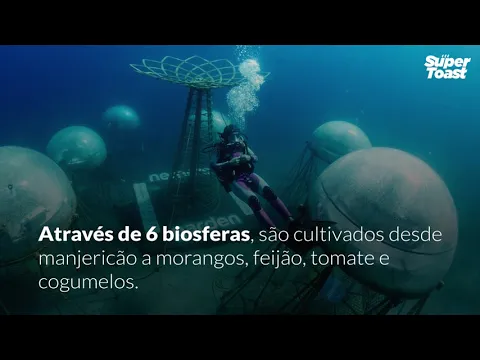

By leveraging the sea as cultivable space, the project explores unique advantages:
- More stable temperature that minimizes thermal shock for the plants;
- Natural protection against pests and extreme climate variations from the surface;
- Intensive use of filtered sunlight, combined with solar panels and wind turbines for facility energy;
- Food production in locations where land is limited or unproductive.
These characteristics make Nemo’s Garden a pioneering experience in sustainable agriculture, potentially relevant for arid coastal regions and islands dependent on fresh food imports, like the Maldives, where terrestrial agriculture is limited, and costly supply chains import nearly everything.
What Is Being Grown and The Challenges
Currently, dozens of species have been successfully planted and observed inside the underwater biospheres, including:
- Lettuce and other leafy vegetables
- Basil and other aromatic herbs
- Beans and peas
- Strawberries
- Tomatoes and other smaller vegetables
This diversity shows that the system can accommodate over 100 plants per biosphere, something that surprised researchers due to the nutritional and aromatic quality of the plants, which in some cases proved to be richer in certain compounds than their land-grown counterparts.
Preliminary research indicates, for example, that basil grown underwater may exhibit differences in the composition of essential oils and pigment compounds valued both in gastronomy and pharmaceutical applications.
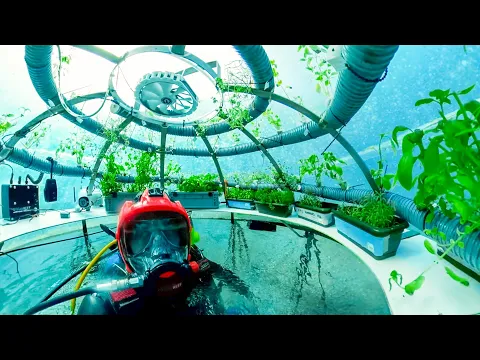
But not everything is easy: maintaining a farm on the seafloor requires dealing with water pressure, salinity, and material corrosion, as well as complex logistics for harvesting and transportation, done by divers who periodically access the biospheres to monitor, adjust, and harvest the plants.
Energy, Sustainability, and Integration With The Surface
Although much of the idea functions naturally, the project also relies on renewable energy on the surface, such as solar panels and wind turbines, to power sensors, supplemental lighting, and monitoring systems, especially during periods of lower light.
The on-land base, the Control Tower, supervises via sensors and communication the parameters inside each biosphere, such as temperature, humidity, and CO₂ levels, allowing for remote adjustments and real-time data collection for research.
What Nemo’s Garden Represents For The Future Of Food
More than a technological curiosity, Nemo’s Garden serves as a living laboratory for agricultural solutions in the 21st century. By proving that essential plants can grow underwater in a controlled environment, the project opens doors to:
- cultivation alternatives in coastal areas with poor soil;
- hybrid agricultural models in island and remote regions;
- experimental systems that could inspire agriculture in extreme environments, including space missions.
In a world where the global population is expected to exceed 9 billion by mid-century, initiatives like this that combine technology, biology, and the environment in unconventional ways — offer clues for new paths to increase food security and reduce pressure on traditional ecosystems.
Despite technical difficulties and scalability challenges, Nemo’s Garden stands as a compelling example of how human creativity can reimagine our food production systems, utilizing spaces that were traditionally not considered cultivable.
Whether a bold experiment or a prototype of a hybrid future of coastal and oceanic agriculture, Nemo’s Garden is sowing seeds — both literal and figurative — for the next chapter of global agricultural innovation.