






 Portuguese
  Spanish


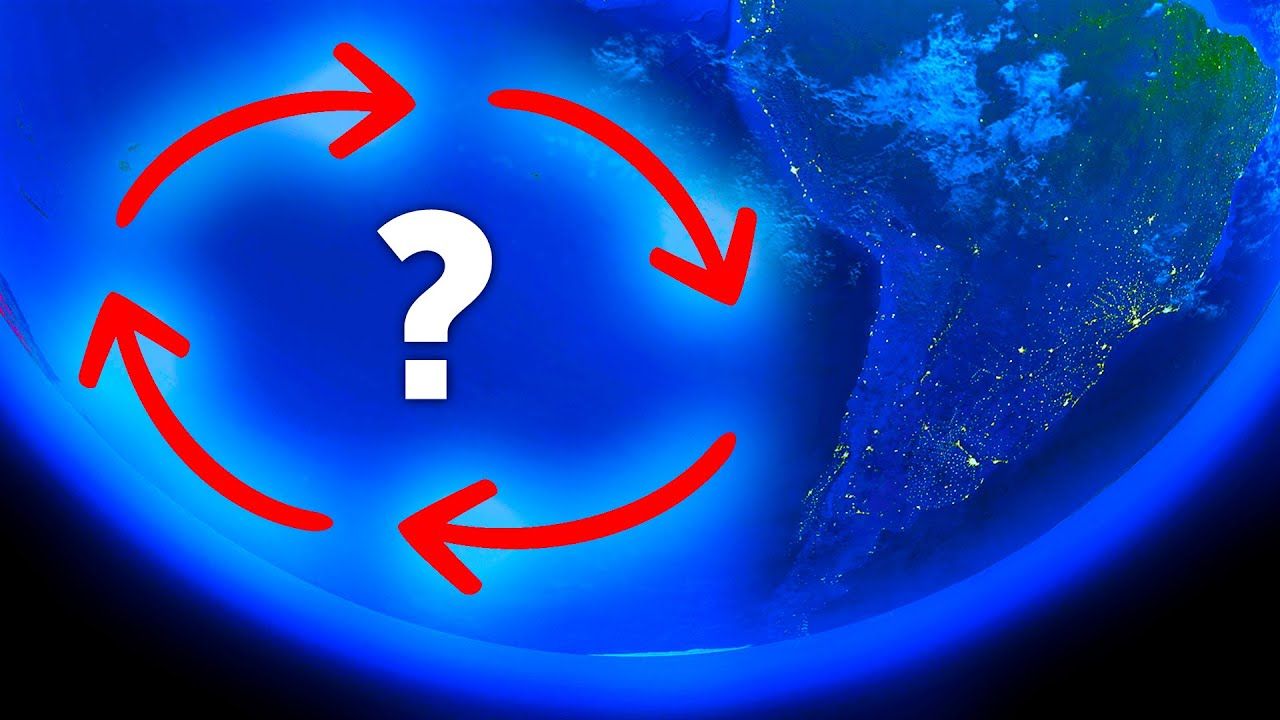


When We Talk About Remote Places, We Think of Vast Deserts, Isolated Islands, and Unreachable Mountains. However, the Most Inaccessible Place on Planet Earth Is Not on Solid Ground, But in the Middle of the Pacific Ocean, Surrounded by Chilly Waters and Far from Any Civilization.
Many people dream of escaping the hustle and bustle of everyday life to a distant refuge. But if you imagine a paradise island, you need to rethink that concept. The most remote place on Earth is so isolated that even humans avoid passing through there. Known as Point Nemo, it has become the true epicenter of terrestrial isolation.
What Is Point Nemo and Where Is It?

Point Nemo, or Oceanic Pole of Inaccessibility, is the location farthest from any land on the planet. The name was inspired by Captain Nemo, a character from Jules Verne’s classic “Twenty Thousand Leagues Under the Sea,” an explorer who chose the solitude of the depths of the sea.
Located at coordinates 48°52.6′S 123°23.6′W, Point Nemo is about 2,688 kilometers from the nearest land, which includes Ducie Island in the Pitcairn Islands to the north, Motu Nui near Easter Island, and Maher Island in Antarctica. It was only in 1992 that its location was accurately determined by Croatian engineer Hrvoje Lukatela, using advanced calculation programs.
-
ChatGPT Alerts FBI to Prevent Planned Murder of 8-Year-Old in Brazil’s Espírito Santo

-
Scientists Discover 125-Million-Year-Old “Pregnant Fossil” with Preserved Embryos and Microscopic Larvae Inside Mollusk in England

-
17-Year-Old Justin Bernstein Develops Bacteria to Produce Glass on Arctic Ice to Reflect Sunlight, Wins $50,000 U.S. Scholarship

-
The 19-Meter Rocket-Helicopter: A Private Industry Prototype That Challenged Space Race Logic




An Ocean Without Life: Why Is Point Nemo So Uninhabitable?
Unlike other oceanic regions, Point Nemo is not a place full of marine life. Ocean currents prevent nutrients from reaching the surface, making this area almost a submarine desert. As a result, few organisms survive there, and even fish avoid these waters.
The isolation is also ensured by the fact that virtually no ships cross this region. Commercial and maritime routes pass very far from Point Nemo, making it a true vacuum of human activity. If you were at Point Nemo, the closest person to you would not be on Earth, but on the International Space Station, which orbits at a closer distance than any solid land from that point!
The Space Cemetery in the Middle of the Ocean
The isolated location of Point Nemo has made it a perfect place for something unusual: disposing of decommissioned spacecraft. Since the 1970s, NASA and other space agencies have used this region as a “cemetery” for deactivated satellites and spacecraft.
When a satellite or space station reaches the end of its useful life, it can pose a risk when reentering the atmosphere. To prevent debris from falling in inhabited areas, engineers use the last remnants of fuel from these spacecraft to direct them to Point Nemo, ensuring that they sink in a safe place.
To date, more than 260 spacecraft have been left at this location. The most emblematic case is the Soviet space station Mir, which was decommissioned and directed to sink at Point Nemo in 2001. And the future promises more residents in this “cemetery”: the International Space Station is also scheduled to fall at this point in 2031.
Is Point Nemo Really Unreachable?
Although it is extremely remote, Point Nemo is not completely unreachable. Boats could get there, but the region has nothing interesting to attract visitors. The ocean is dangerous and unpredictable, making the journey there a challenge.
Explorers, scientists, and adventurers have tried to approach Point Nemo, but few have succeeded to date. However, advances in ocean exploration may, one day, reveal more about this part of the planet that remains so mysterious.


Muito interessante!