






 Portuguese
  Spanish


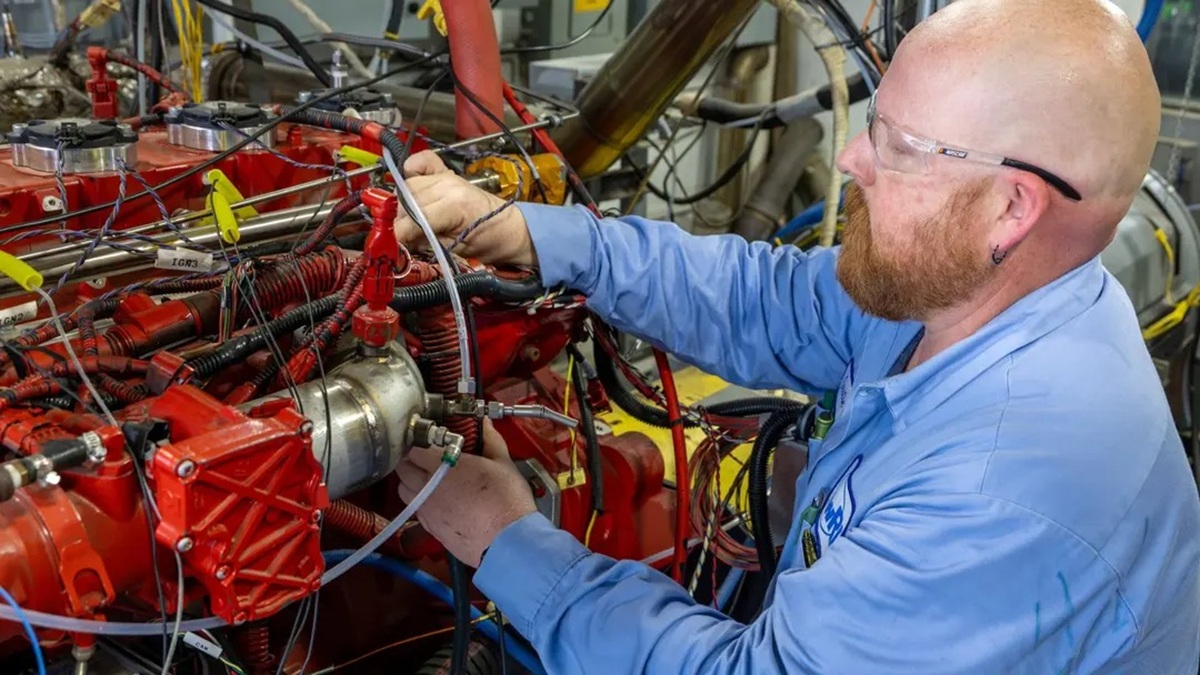


Updated Hydrogen Engine by SwRI Achieves 440 HP, Increases Torque, Improves Efficiency and Approaches Diesel Trucks Performance with Almost Zero Emissions
The turbocharged hydrogen engine achieves 440 HP and starts to rival diesel trucks in efficiency. The advancements were obtained by the Southwest Research Institute, which modernized its hydrogen internal combustion engine for heavy-duty service by incorporating a new turbocharger.
The latest tests reveal significant gains in power, torque and efficiency, maintaining almost zero emissions.
The results bring the engine’s performance closer to that of long-haul diesel trucks. Additionally, the institute claims that the solution maintains emissions from exhaust close to zero, reinforcing the goal of creating viable alternatives for heavy transportation.
-
Xiaomi Unveils Smart Glasses in Brazil with 12MP Camera, 4K Video, and AI Features, Challenging Ray-Ban Meta

-
Volkswagen Unveils Bold Strategy to Compete with Chinese Automakers in Brazil, Featuring 5,000 Parts, 76% Localization, and a Surprising Turnaround
-
Three Teens Win Global Prize for Low-Cost AI Microscope Diagnosing Malaria Species in Seconds for Remote Villages
-
Xiaomi Unveils Revolutionary Fridge: Eliminates Odors in 3 Minutes, Sterilizes in 2, Offers 508 Liters in Compact Design, Operates at 31 dB, and Is Smartphone-Controlled.


Engine Conversion and Project Proposal
In 2023, the institute began development by converting a conventional natural gas engine to operate exclusively on hydrogen.
According to the team, the adaptation required minimal changes, indicating that existing engine platforms can be repurposed without the need for entirely new propulsion systems.
The converted engine was integrated into a Class 8 demonstration truck as part of the H2-ICE project, which seeks an economically viable solution with zero carbon emissions for heavy vehicles.
The objective also involves providing an alternative to battery-electric trucks and fuel cell models, preserving technologies and manufacturing structures known to the industry.
Gains in Torque, Power and Efficiency
The installation of the new turbocharger significantly raised the engine’s performance. The maximum torque increased from 1,494 to 1,760 pound-feet, while power rose from 370 to 440 horsepower.
This advancement places the hydrogen engine within the common range of modern long-haul diesel engines, which typically deliver between 1,450 and 1,850 pound-feet and operate between 400 and 500 horsepower.
Chris Bitsis, assistant director of the Institute’s Transmission Systems Engineering Department, stated that the update was crucial.
He explained that the new turbocharger provided the necessary airflow to continue improving performance and highlighted that the maximum efficiency reached 44%, which he classified as a leader in the spark ignition engine category.
Bitsis also noted that these advances bring the hydrogen engine closer to the typical consumption of diesel trucks. Moreover, he emphasized that the model maintains almost zero emissions, reinforcing the environmental advantage of the technology.
Solution for Airflow Challenges
The institute states that hydrogen engines typically face airflow limitations, especially during rapid accelerations. Lack of air at the right moment can cause pre-ignition and increase nitrogen oxide emissions.
To eliminate this risk, a specific turbocharger for hydrogen combustion was developed in partnership with a commercial supplier.
The new design differs from traditional turbochargers as it combines exhaust gases with a mechanical connection to the crankshaft. Through a variable drive, the system provides on-demand pressure, ensuring stable combustion even when the engine operates under varying loads.
Advancements in Hydrogen Adoption for Heavy Transportation
The institute announced that the update demonstrates real progress toward the implementation of hydrogen engines in practical applications.
Bitsis classified the new data as a significant milestone in the hydrogen combustion engine program and stated that they reinforce the technology’s readiness for use in large-scale applications.
The team will continue working on improving the engine as part of clean transportation research.
Daniel Stewart, vice president of the Propulsion Systems Engineering Division, highlighted that the United States already has factories and supply chains capable of producing these engines on a large scale, indicating a path for faster adoption if the sector moves toward the technology.


