Portuguese
  Spanish


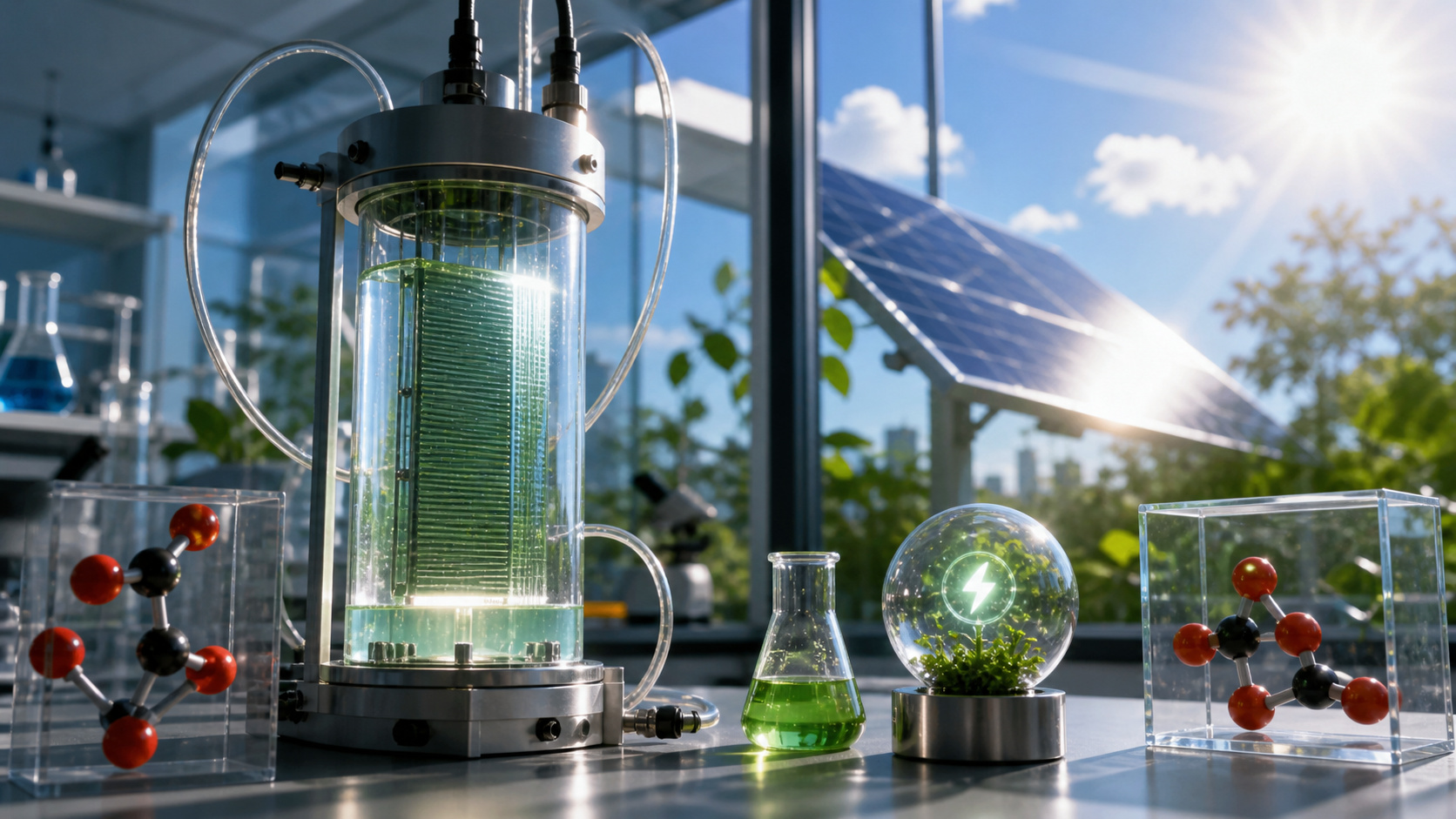

Technology created by Brazilian researchers converts carbon dioxide into clean energy with sunlight and points to an innovative solution against climate change
A new technology developed by Brazilian researchers could redefine how the world deals with excess carbon dioxide in the atmosphere. According to an article published by Júlio Bernardes in the USP Journal on April 20, the system is capable of converting CO₂ into clean energy using only sunlight, offering a practical and innovative solution to two of the biggest current challenges: the climate crisis and the growing demand for energy.
The study was published in the international scientific journal Applied Energy Materials and presents a device that functions as a kind of “smart solar plant.” This equipment simultaneously converts the polluting gas into renewable fuels and generates electricity, something that is still rare in technologies of this type.
In practice, it is a solution that not only reduces pollution but also transforms waste into valuable resources. This advance highlights Brazilian researchers on the global scientific stage and reinforces Brazil’s role in sustainability innovation.
-
Harvard Researchers Develop Biological Clock to Estimate Life Expectancy, Potentially Transforming Human Aging Studies

-
Methane, natural fuel lakes, ice, and a nitrogen-rich atmosphere make Titan central to NASA’s plans for the first “space fuel station” to speed up missions beyond Mars.
-
16-Year-Old Kentucky Student Solves Long-Standing Biomedical Challenge, Wins Top Young Scientist Award at $9 Million Science Fair
-
Teen Invents Biodegradable Material from Shrimp Shells That Decomposes 1.5 Million Times Faster Than Regular Plastic




Nature-inspired technology transforms carbon dioxide with sunlight into fuels and electricity
The system’s operation is based on direct inspiration from photosynthesis. Just as plants use sunlight to transform carbon dioxide into chemical energy, the developed device reproduces this process artificially and in a targeted manner.
When exposed to light, the equipment activates chemical reactions that convert CO₂ into useful compounds, such as ethanol and methanol. These fuels can be used in various daily applications. At the same time, the system also generates clean energy in the form of electricity.
One of the most relevant aspects of this technology is its integrated efficiency. Instead of relying on multiple systems, everything happens in a single device, which represents a significant advance in terms of practicality and cost.
Among the main characteristics of the system are:
- Simultaneous conversion of carbon dioxide into fuels and electricity
- Exclusive use of sunlight as an energy source
- Operation under normal environmental conditions
- Simplified structure, without the need for complex membranes
This set of factors makes the technology more accessible and with greater potential for future application.
Participation of Brazilian researchers from various institutions strengthens national innovation
The development of the technology involved the participation of Brazilian researchers from different teaching and research institutions. These include universities such as USP, the Federal University of Mato Grosso do Sul (UFMS), the Federal University of Jequitinhonha and Mucuri Valleys (UFVJM), and the Aeronautics Institute of Technology (ITA).
Names like Renato Vitalino Gonçalves and Heberton Wender are among the main researchers responsible for the study. In addition to them, Bárbara Sá, Márcio Pereira, Luiz Felipe Plaça, Maximiliano Zapata, Cauê Martins, Glaucia Alcantara, André Luís de Jesus Pereira, Mohammed Bajiri, and Niqab Khan also participated.
According to the scientists involved, the great differential of the technology lies in the integration of processes and the simplification of the system. This allows the solution to be more easily adapted for real-world applications, bringing scientific research closer to practical use.
Another important point is the support received from institutions such as Fapesp, Capes, CNPq, and Fundect, which contributed directly to the project’s advancement.
Clean energy from carbon dioxide can reduce climate change impacts
The transformation of carbon dioxide into clean energy using sunlight has a direct impact on reducing greenhouse gas emissions. This type of technology specifically works on reusing one of the main pollutants responsible for global warming.
By capturing CO₂ and converting it into useful energy, the system helps reduce the concentration of this gas in the atmosphere. This can help mitigate effects such as rising global temperatures, extreme weather events, and changes in ecosystems.
Among the most relevant environmental benefits are:
- Reduction of air pollution
- Utilization of waste as raw material
- Incentive for the use of renewable sources
- Decrease in dependence on fossil fuels
In this way, the technology not only generates clean energy, but also acts directly in environmental preservation.
Difference between this innovation and traditional solar energy systems
Conventional photovoltaic systems use sunlight to generate electricity directly. However, the technology created by Brazilian researchers expands this concept by integrating different functions into a single system.
While traditional solar panels focus only on electricity production, the new device also transforms carbon dioxide into fuels. This means that energy can be stored in chemical form, increasing its versatility.
This difference places the innovation at a new level within the energy sector. In addition to producing clean energy, the system also contributes to solving a critical environmental problem.
Economic potential of clean energy generated from carbon dioxide
The possibility of transforming carbon dioxide into clean energy with the use of sunlight opens space for new economic opportunities. The technology can drive the emergence of markets focused on sustainability and energy innovation.
Among the main economic impacts are:
- Creation of new business models in renewable energy
- Reduction of long-term operational costs
- Incentive for decentralized energy production
- Job creation in the technology sector
Furthermore, the simplicity of the system can facilitate its adoption in developing countries, where access to energy is still a challenge in many regions.
Another relevant point is the possibility of small-scale use. Communities, businesses, and even homes could, in the future, produce their own clean energy, using the CO₂ available in the environment and sunlight.
Practical applications and paths for the expansion of Brazilian technology
Even though it is still in the development phase, the technology already presents great potential for application in different sectors. Brazilian researchers highlight that, with more investments, the system can be adapted for large-scale use.
Among the possible applications are:
- Industries with high carbon dioxide emissions
- Urban centers with high energy demand
- Sustainability projects in companies
- Production of renewable fuels for transport
Another important factor is that the system operates under common conditions, without the need for controlled environments or complex infrastructure. This facilitates its implementation and expands its possibilities of use.
What this advance represents for the future of energy and sustainability
The innovation developed by Brazilian researchers shows that it is possible to transform an environmental problem into an efficient energy solution. By using sunlight to convert carbon dioxide into clean energy, the technology points to a new model of energy production and consumption.
This advance represents more than a scientific achievement. It indicates a viable path to reduce pollution, diversify the energy matrix, and promote sustainable development.
If it continues to evolve, the technology could play an essential role in the global energy transition. By uniting science, innovation, and sustainability, Brazilian researchers demonstrate that the future of energy can be cleaner, more accessible, and smarter.
With information from Jornal da USP