Portuguese
  Spanish


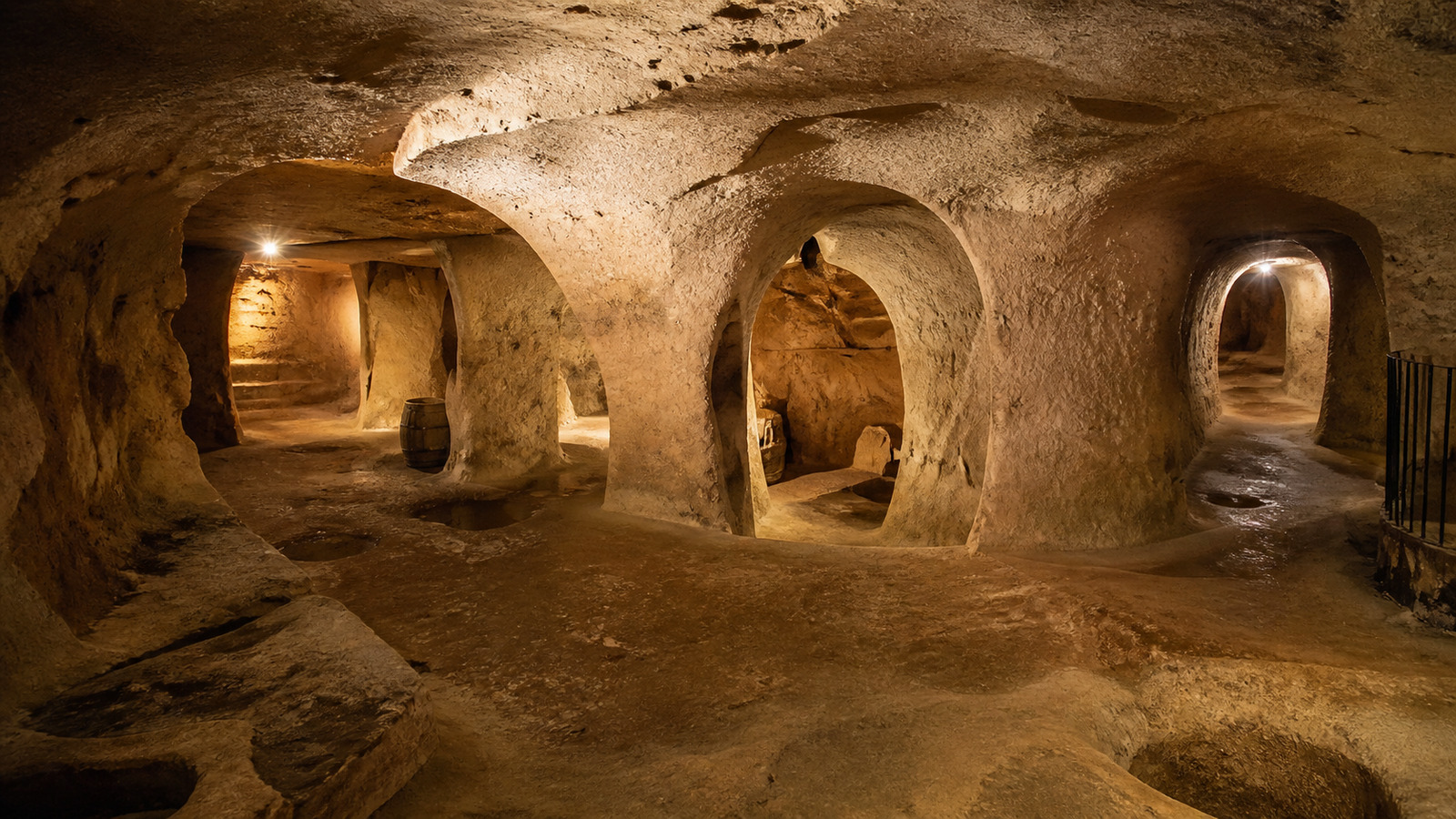

Nottingham, in the United Kingdom, has reached a thousand underground caves registered by archaeologists, consolidating the largest artificial network in Europe and revealing centuries of urban, industrial, domestic, and military uses beneath the city
Nottingham, in the United Kingdom, has reached a thousand underground caves registered by archaeologists, a milestone that consolidates the city as the largest set of artificial caves in Europe and expands the understanding of its urban history below the surface.


Underground caves: European landmark beneath the city
The number is the result of years of historical research and investigations. The count confirms the unusual size of a network created over centuries, in a city whose formation was shaped underground.
The underground caves spread beneath the urban territory and appear as an essential part of the local trajectory.
-
Scientists Convert Food Waste into Aviation Fuel, Successfully Test 50% Blend with Conventional Kerosene to Cut Emissions and Promote Sustainable Flights

-
OnePlus N6 Smartphone to Launch in India with 8,000mAh Battery and 45W SuperVOOC Charging, Lasting Up to Three Days
-
Scientists Plan to Release Air Bubbles Underwater to Protect Antarctica’s “Doomsday Glacier” from Melting

-
Chinese R6000 Drone Combines Airplane and Helicopter Features, Carries Up to 12 People for Multiple Missions




They help explain how residents, workers, and authorities used the available sandstone to create useful spaces at different times.

Sandstone facilitated excavations
The origin of this network is linked to the geology of Nottingham. The city was built on a base of soft sandstone, a material easy to excavate, which favored the creation of environments below street level.
This condition allowed several generations to expand the set of underground caves as new needs arose.
The underground occupation accompanied social, economic, and urban changes, always connected to the practical use of these spaces.
Cataloging began in the 2000s
The systematic survey began only in the 2000s, when about 425 structures were known.
Since then, the total has more than doubled, driven by historical documents and discoveries made during urban works and excavations.
In recent years, new caves have been located with increasing frequency. Many finds occur in construction projects, when previously hidden areas appear under properties, streets, or transforming lands in the city.
Uses span centuries
The diversity of functions helps explain the large number of structures. Some of the earliest references date back to the 9th century, when Nottingham was already described as a place of many caves.
A large part of the current structures dates back to the medieval period. During this period, the caves were used as storage, work areas, and even dwellings, integrating daily life in a direct and functional way.
Over time, the uses multiplied. There are records of cellars under pubs, industrial spaces linked to tanning and malting, as well as improvised dwellings during the urban overcrowding of the 19th century.
During World War II, part of the network was adapted as an air-raid shelter. This use added another historical layer to the set and showed the adaptability of these spaces in times of risk.
Preservation is ongoing
Even today, many caves remain hidden under private properties. In some cases, the owners themselves only discover these structures when archaeological studies or inspections reveal the underground space.
After structural evaluations, some areas are repurposed for modern functions, such as recreational rooms. Despite occasional concerns about risks, experts indicate that most remain stable.
The current work seeks to map and preserve the structures before new constructions, avoiding damage and keeping new research opportunities open.
For archaeologists, a thousand records do not end the search, as hundreds of historical documents still await analysis.
With information from Aventuras na História.