






 Portuguese
  Spanish
  3 min of reading
  0 comments


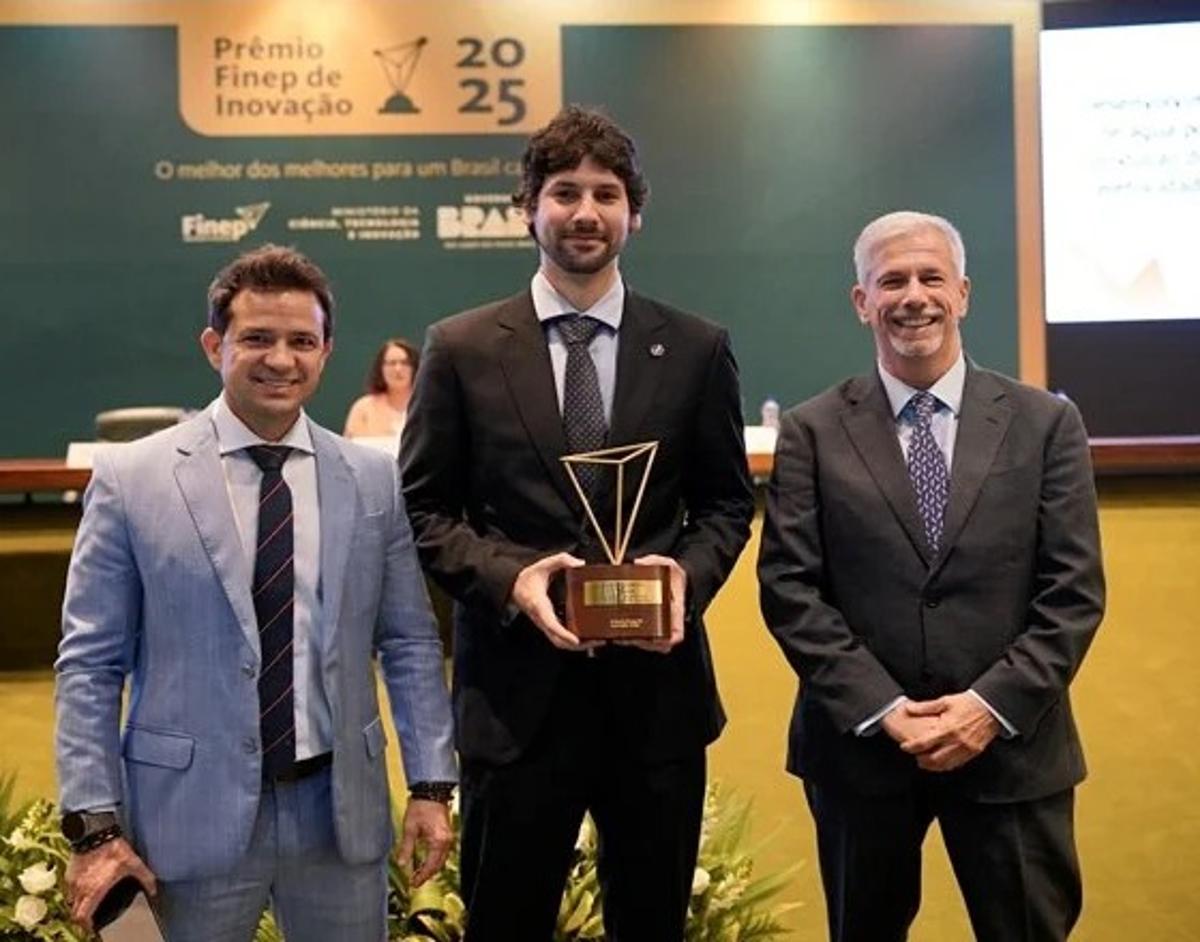
Award-winning project boosts 100% Brazilian technology to transform renewable energy into clean fuel and accelerate industrial decarbonization
A relevant technological initiative for the Brazilian energy industry gained prominence after Clark Solutions won the FINEP Innovation Award. The project also secured an investment of R$ 9.5 million from FINEP, consolidating the company’s position in developing solutions focused on green hydrogen.
The project is directly aligned with the National Hydrogen Program (PNH2), which seeks to position Brazil among global leaders in the production of low-emission hydrogen. The proposal reinforces the advancement of national engineering in building a more independent and competitive production chain.
National technology advances with innovative modular system
Clark Solutions developed an alkaline electrolyzer with 100% national technology, capable of converting renewable energy into clean fuel. The system features a modular structure and was designed to operate under optimized temperature and pressure conditions, ensuring greater operational efficiency.
-
Helicopter Drops 180 Tons of Sand and Gravel on Swedish River to Revive Ecosystem Damaged by Decades of Exploitation

-
Brazilian Company Launches Retro Smartphone with 48 MP Camera, T9 Keyboard, and Privacy Features for Social Media-Free Use

-
Self-Taught Chinese Farmer Builds 5-Ton Submarine from Scrap, Launches It in Anhui River
-
Invisible Induction Technology Enables Wireless Power for Blenders, Coffee Makers, and Air Fryers, Reducing Countertop Cables




The solution allows for decentralized production, enabling installation close to the point of consumption. This model also allows for the utilization of surplus renewable energy, known as curtailment, expanding the efficient use of available energy resources.
Project enters advanced phase with goals until 2027
The technology development is already in an advanced stage. The company is working on building a semi-industrial prototype with a capacity between 150 kW and 220 kW, a fundamental step for technical validation of the system.
The timeline establishes the evolution to industrial scale by the end of 2026, with the creation of an electrolyzer greater than 1 MW. Tests and calibrations under real conditions are planned for 2027, ensuring complete validation before market entry.

Industrial applications expand solution’s impact
The project presents high potential for positive environmental impact. The technology can replace fossil fuels in various energy applications, contributing to emission reduction.
The target market includes strategic sectors such as green ammonia, fertilizers, refining, and steelmaking. These segments concentrate high energy demand and seek more sustainable alternatives for their operations.
Recognition strengthens Brazilian engineering in the global scenario
The recognition obtained with the FINEP Award validates Clark Solutions’ long-term strategy. The achievement demonstrates the Brazilian industry’s capacity to develop high value-added technologies and international competitiveness.
The initiative strengthens the construction of a more robust national production chain. This advancement expands Brazil’s potential in the global market for sustainable energy solutions.

Company structure sustains technological advancement
Clark Solutions has over 30 years of experience in industrial engineering, with solutions focused on complex processes. The company operates in all stages, from design to manufacturing, including assembly and after-sales.
The company maintains a global presence, with units in Brazil and Chile, serving sectors such as chemical, petrochemical, energy, and fertilizers. The Research and Development team excels in creating national technologies that replace imported systems.
This technological advance reinforces a strategic question: will Brazil be able to consolidate its leadership in the global green hydrogen market with its own competitive solutions?



Be the first to react!